
Watching the Sunrise with Dad - A Prostate Cancer Caregiving Journal
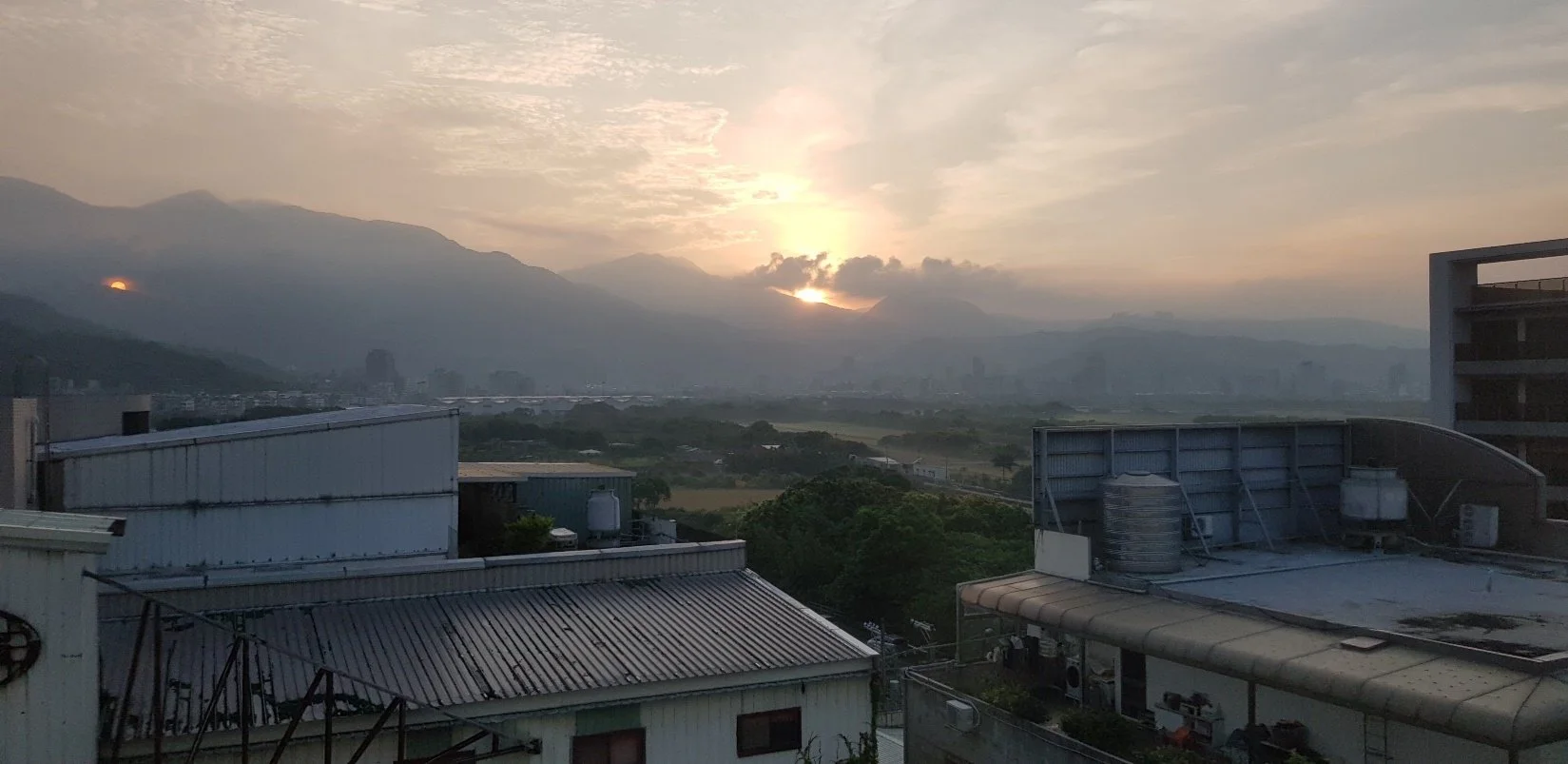
Today marks the four-year reunion since Dad's surgery, and the time spent at the Koo Foundation Sun Yat-Sen Cancer Center during his surgery and hospitalization has become a profound memory!
Body aches, sensation of a foreign body during bowel movements, difficulty urinating, fever
On April 23, 2019, Dad started to experience body aches and took some anti-inflammatory painkillers on his own, thinking he had a colorectal issue because it felt like there was a lump during bowel movements. Five days later, on April 28, when Dad was out, he exhibited symptoms similar to heatstroke: fever and an inability to urinate, so he took more anti-inflammatory painkillers. However, the symptoms persisted without improvement, and it was not until the next day that he went to a traditional Chinese medicine clinic, where the doctor treated him for "heatstroke." The following day, Dad's fever continued, and he had even more trouble urinating. After work, I hurried to register him for an evening consultation at the nephrology clinic. The immediate test results showed a high white blood cell count, and the doctor diagnosed a urinary tract infection, but expressed doubt since it is rare to see male patients with urinary tract infections. He suggested that we continue to observe or visit the hospital the next day. However, since the next day was Labor Day on May 1, many medical institutions were closed, and the urologist we usually saw had been on an extended leave, so we decided to see another experienced urologist at a different hospital.
At first, the diagnosis was benign prostatic hyperplasia.
On May 1st, during the outpatient visit, the doctor performed a digital rectal exam and an ultrasound, diagnosing benign prostatic hyperplasia, and scheduled a transurethral resection of the prostate with laser for May 7th. Preoperatively, only chest and abdominal X-rays, an electrocardiogram, and routine blood tests were performed. At that time, besides the high white blood cell count, the PSA level was 29.8. I still remember after the surgery was completed, the doctor from National Taiwan University Hospital reassured us (me) by showing the removed tissue, commenting that it looked clean and without any abnormalities... Although it felt somewhat strange at the moment, I couldn't pinpoint what exactly was odd... The hospital stay lasted three days, and discharge followed on May 9th.
Severe edema of the right lower limb
Just when everything seemed to follow standard procedure, on May 15th, my father developed severe edema in his right lower limb. When we returned to the clinic on May 17th, the doctor informed us that we should "feel very fortunate that cancer cells were found in the prostate biopsy," diagnosing it as prostate cancer. He earnestly asked the nurse to help us apply for the catastrophic illness card. However, he was unable to address the swelling in the right lower limb effectively, only prescribing some diuretics and arranging a whole-body bone scan in the nuclear medicine department for June 28th.
Deciding to seek treatment at Koo Foundation Sun Yat-Sen Cancer Center
After returning home, the family was deeply troubled, uncertain of what to do next. Apart from the cancer diagnosis, what everyone was aware of was the swollen right leg that couldn't wait until June 28th. At that moment, I remembered a classmate from my school days telling me that her mother was diagnosed with bladder cancer, and she asked me where she could seek medical treatment. Since my grandmother was also receiving treatment for bladder cancer at Chang Gung Hospital, although we rarely kept in touch after graduation due to being busy, it was fortunate we could still contact each other. My classmate told me that because her mother lived in Hualien and traveling to Taipei for medical appointments was more convenient, they later chose to receive treatment at Koo Foundation Sun Yat-Sen Cancer Center. Moreover, the Center had an American style of management, providing treatment in a team-based approach. In urgent cases like ours, it didn't matter which doctor we saw; the sooner we could get there, the better. She believed that the American style of Koo Foundation Sun Yat-Sen Cancer Center would suit us well!
Understanding Prostate-Specific Antigen (PSA)
Honestly, it was quite fortunate! After registering on Saturday, I got an appointment for Monday with Dr. Shu-Jen Chang from the urology department. After scheduling the appointment, I started researching online and came across many articles written by Dr. Chang. Certain phrases caught my attention, such as:
"The crucial goal of the surgery is to 'completely remove the tumor' to achieve the best survival rate. If the prostate cancer surgery is successful, the postoperative PSA level should return to zero. 'This is more objective and accurate than the pathology test's "positive margin rate",' Dr. Chang believes. Pathology can be influenced by subjective judgment, but 'PSA is like an impartial judge; if the tumor is not completely removed, the value will not return to zero. This is the most rigorous test for a surgeon.' Therefore, he thinks that to compare surgical outcomes in the future, one should look at the proportion of patients whose postoperative PSA levels return to zero.
To diagnose prostate cancer early, the public can rely on a blood test for Prostate-Specific Antigen (PSA). If the PSA level is higher than 4, one should seek further examination from urology and pair it with a digital rectal exam to not miss the golden treatment window.
Prostate cancer surgery is quite difficult because the prostate is located deep within the pelvic cavity, and the surgical space is very limited, which is a real test of the surgeon's skill. In traditional surgery, the surgeon makes a 12 cm incision below the patient's navel, then separates the nerves attached to the prostate, isolates the prostate from the bladder and the dorsal venous plexus, and then performs the removal. The complex surgery process can easily lead to substantial blood loss, usually between 3000 to 5000 cc, and patients often experience severe pain after surgery, requiring about 6 days of hospitalization for recovery.
Nearly Suffered from a Sepsis Infection
As I aligned the content of these articles with my expectations, the moment of truth arrived at the outpatient clinic. Dr. Chang's furrowed brow upon seeing my father’s condition was a sight I'm reluctant to describe; he seemed more upset than both the patient and the relatives. The doctor informed us that the swollen leg was due to an infection! Apparently, the previous hospital hadn't properly managed the infection before proceeding with surgery, which could have led to the worst-case scenario: sepsis. I was stunned... Dr. Chang also performed a digital rectal exam and informed us that the lesion was still there after the surgery, "It hasn't been removed at all!" I thought, what? It's still there? Then what was the BPH surgery for? Moreover, the process was indeed very painful and uncomfortable, with continuous bleeding from the urethra during the IV infusion! Eventually, Dr. Chang prescribed antibiotics and other medications, advising that we needed to lower the white blood cell count before considering another surgery. Furthermore, he requested the biopsy from the previous hospital to re-confirm the cancer staging at KFSYSCC and arranged for a bone scan and MRI on the same day, May 24th, the following week. He also warned us to rush to the emergency room in case of a high fever, as sepsis is truly dangerous! Thankfully, the test results remained the same, maintaining a stage II diagnosis: a hard nodule was palpable during the rectal examination, but it was confined within the prostate.
Preparation for Prostate Cancer Surgery
Fast forward to July 1, 2019, two weeks before the surgery. In the morning, I went through the preoperative hospital checkups, which included blood tests, X-rays, electrocardiograms, and explanations of self-paid options like consent to use devices to prevent hypothermia during surgery. On July 15, in the afternoon, I made preparations for admission and had a low-residue dinner (no vegetables allowed). Unlike other hospitals, KFSYSCC encourages everyone to sleep early, offering a special sense of tranquility and peace. They also advise patients to take the last chance to enjoy a shower, as bathing isn’t possible post-surgery. Dad could only listen enviously to the sound of the caretaker showering, uttering a wishful compliment, “I'm so envious watching you shower.”
Watching the Sunrise at KFSYSCC with Dad
On the morning of July 16, the first day of surgery, in the hospital room at KFSYSCC, we saw the sunrise over Guandu Plain for the first time. Dad, who was about to go into surgery, said to me, “When you were little, I took you to Alishan, but we never saw the sunrise! Who would have thought we’d come to KFSYSCC to see it!”
Waiting for Surgery to be Completed
At 07:30 AM, I was the first to accompany my father to the operating room. From then on, I started to intently watch the surgery status display on the wall screen. Seeing that we were the earliest to arrive at the operating room and many had left since, a sense of urgency began to brew within me. Around 11 AM, I received a relieving call from the surgeon outside the operating room, reassuring us that the final suturing was in progress and that my father would spend the next two hours in the recovery room for monitoring, allowing us to rest easy. That call was truly a weight lifted off my shoulders! The next day, the doctor explained that the left side of my father's prostate was smoother; the right side, with the tumor, was rougher, likely due to previous surgeries and infections. The area operated on before was severely adherent all the way to the urethra, and it took some time to address.
Postoperative Care for Prostate Cancer
The family returned to the ward at 1:00 PM, and I must commend the self-paid "Surgery Hypothermia Prevention Instrument" which was excellent. It enveloped my father like a space blanket, which was a comfort especially since he kept complaining of the cold on the way back to the ward. Post-surgery, the patient continued fasting, was not allowed to get out of bed but could turn over. The surgical incision above the navel was covered with a cosmetic adhesive and did not require changing. Once the drainage tube was removed, he could be discharged. The catheter was to be removed 7-10 days later at a clinic visit, and during this period, sitting at a 90-degree angle was not allowed. For a month, he could not lift heavy objects (more than 3 kilograms), exercise (though a 15-minute walk was okay), or ride a bike (driving was not allowed if sitting at 90 degrees). There might be slight incontinence for 2-3 weeks, for which wearing diapers initially was recommended, followed by gradual recovery. There was no rush to train for urination as it could lead to frustration; adopting an attitude of "letting things take their natural course" was best, and it was important for the family to be patient with time. Including the removal of tissues and surrounding lymph nodes, since they needed to be examined in small pieces, the pathology report would take about a month.
On July 17th, the day after the surgery, having rested for a full 24 hours, the hospital informed my father that he could try sitting on the edge of the bed and gradually begin walking. At this time, he was on a liquid diet: 30ml of rice syrup per meal, with the need to observe gas passage, and a limit of no more than 10 minutes at a time in the restroom. For dinner, he had a small bowl of porridge and a small bowl of high-protein soup. Although it is not recommended to drink tea or coffee, as it might affect gastrointestinal motility. Nurse Hsu Cheng-Hsien also showed great concern for the patients, and given my father’s past habit of drinking alcohol, suggested an annual abdominal ultrasound. According to the hospital report, there was a higher level of white blood cells in the urine, for which vitamin C was recommended to acidify the urine. During the hospital stay, my father often felt the urge to defecate, but this was only because of the urinary catheter in place, which prevented the retention balloon from slipping inside the body. It is necessary to cleanse the secretions near the urinary opening every morning and evening, with nurses assisting during the hospital stay and patiently teaching how to take care of my father after discharge.
Removing the Catheter and Preparing for Discharge
On July 18, three days post-operation, a large bowl of porridge was served for lunch, and since my father had a bowel movement, preparations for discharge began, including the removal of the abdominal drainage tube.
At the first outpatient follow-up on July 24 after discharge, the removal of the urinary catheter was also quite special—my father said it didn’t hurt at all! He even concluded he didn’t understand why he had to suffer so much during previous hospital stays elsewhere. At the second follow-up on August 27, blood and urine tests were conducted, along with a renal ultrasound to examine the reconnected ureter, among other things. All tests, including hemoglobin levels, were normal. Dr. Chang told us, "You are very healthy!"
The PSA index is now back to 0!
On August 23, at the third outpatient follow-up, we reviewed the pathology report: classified as stage II (no hormone therapy needed), marking an end to the treatment. My father’s urine report was back to normal, with no issues such as red blood cells or bleeding. Just as described in Dr. Chang’s article, as of today, July 17, 2023, my father’s PSA index remains at zero!
We are grateful to the team at KFSYSCC. Everyone is always kind and polite at every follow-up visit. Although the pandemic broke out shortly afterward, to avoid taking up the precious time of the medical staff, we tried to keep it short and sweet with a "Fine, thank you" only. But truly, the deepest appreciation we felt at each follow-up visit was never fully expressed. I hope to take this opportunity to share my family's experience with those in need. As I look back and compile these records, I see hope! This hope has turned into four precious years for us. I wish to dedicate the sunrises and rainbows during the hospital stay to Dr. Shu-Jen Chang and all members of the urological cancer team! I sincerely thank you!
Author: A KFSYSCC Patient's Family Member