
My Journey with Prostate Disease and Treatment
In November 2016, during a routine health check-up, my Prostate Specific Antigen (PSA) level was found to be 4.984. The doctor recommended further testing. Consequently, in April 2018, I visited the Shu Tien Clinic. After a digital rectal exam, the physician recommended surgery to remove the prostate. I was unprepared emotionally and lacked someone to discuss this with, so I postponed the decision.
By March 2022, I began experiencing difficulties with urination and increased frequency. A local clinic's blood test showed my PSA had surged to 12.5. Concerned, I went to Taiwan Adventist Hospital where the PSA was again tested at an elevated 12.61. Based on these results, the doctor admitted me for a biopsy on June 14th, which revealed a Gleason score of 3+3=6.
Arrangements were made by the doctor at Taiwan Adventist Hospital for a CT scan at Taipei Veterans General Hospital on June 30th. The results indicated that the cancer cells had not metastasized. On July 28th, I had an MRI at Taiwan Adventist Hospital, which showed roughness on the surface of the prostate capsule, suggesting it might be compromised. The Taiwan Adventist doctor issued a referral for surgery at National Taiwan University Hospital. However, considering the large number of patients there and after consulting with a friend who had a history of prostate disease, I chose to go to KFSYSCC instead.
On August 8th, I visited KFSYSCC. The facility's unique architectural design stood out. Dr. Shu Jen Chang reviewed my past medical reports and proposed using the da Vinci minimally invasive surgical method to remove the prostate. After discussing with my family and ensuring they would be available to care for me during my hospital stay, the surgery was confirmed for August 10th.
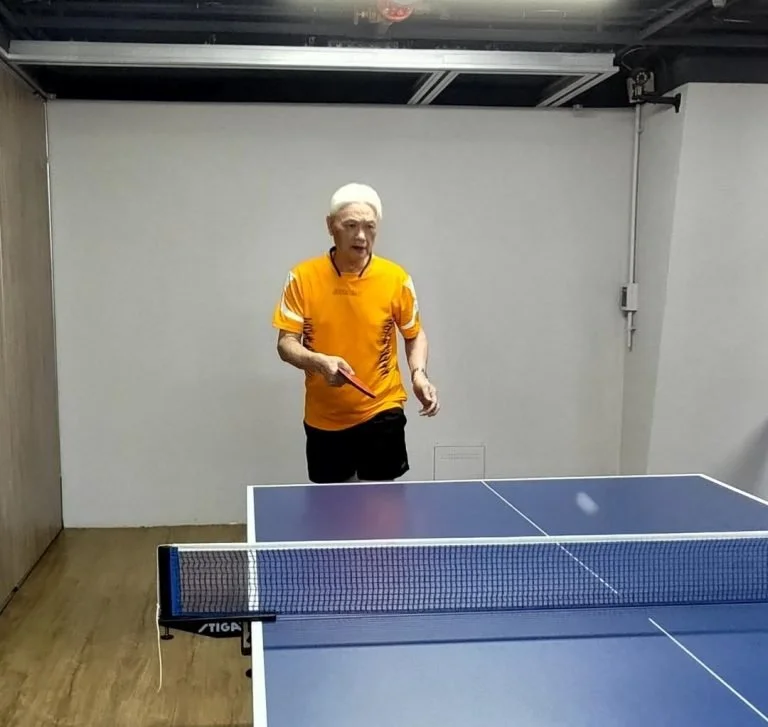
The operation took place on the morning of August 18th, and I was discharged as planned on August 21st. Approximately two weeks post-surgery, I resumed my daily table tennis activities. However, I had to wear adult diapers to prevent urine leakage.
Following my treatment, the Koo Foundation Sun Yat-Sen Cancer Center scheduled me for quarterly check-ups. After three visits, my PSA consistently registered at 0. By April 5th, 2023, my incontinence had substantially improved, with only occasional episodes. I switched to using incontinence pads, which made daily activities and sports more manageable.
I chose to share my personal journey to raise awareness about prostate issues. Though it's an age-related condition and might not always be viewed as severe, it can be highly disruptive to daily life. Early detection and intervention significantly increase the chances of a successful outcome. The older one gets, the more concerns arise, and this can be overwhelming for both the patient and their families.
Author: Mr. Lin