
Pre-Surgery Radiation for Colorectal Cancer – Reducing Recurrence and Preserving the Anus
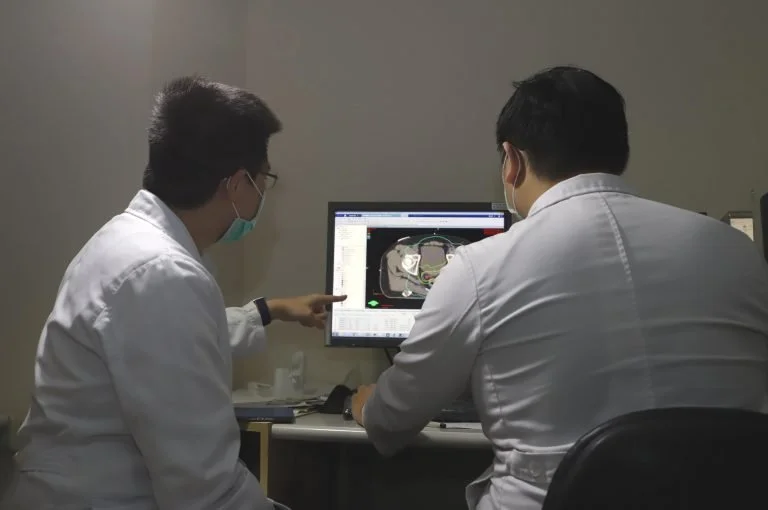
by Dr. Yih-Lin Chung (Radiation Oncology)
The rectum, close to the anus, is a stable target for radiation therapy, which is not typically used on the colon due to its movement and variability. Radiation therapy is beneficial primarily in reducing local recurrence of colorectal cancer. For rectal tumors close to the anus, pre-surgery radiation can shrink the tumor enough to increase the likelihood of preserving the anus, potentially avoiding a permanent colostomy.
Thanks to advancements in radiation technology, treatment duration has significantly decreased. What once required about five weeks can now be completed in one week with five sessions, each lasting only 2-3 minutes. This shorter treatment period reduces side effects, and surgeons can proceed with surgery without concerns about post-radiation complications.
Who Needs Radiation Therapy?
Not all of the rectum requires radiation. MRI and endoscopy help determine tumor size, spread, lymph node involvement, and proximity to the anus. The medical team assesses these factors to evaluate the patient’s recurrence risk. Stage III colorectal cancer patients, with a higher recurrence risk, are usually recommended for pre-surgery radiation, a current treatment trend.
Potential Side Effects of Radiation Therapy
Side effects depend on treatment duration. The short-course treatment involves a higher daily dose over five days, totaling 2500 cGy, and generally causes minimal discomfort. Patients can undergo surgery immediately after. They are informed that they’ll experience minimal side effects, as irradiated tissue will soon be removed in surgery, leaving little time for side effects to develop.
However, patients undergoing a longer treatment course experience higher residual doses and must wait a month for surgery. During this period, they may face bowel discomfort, increased bowel movements, and mild pain around the anus due to skin exposure to radiation. These effects typically ease within a month.
In the long term, concerns about wound healing after surgery have been mitigated by modern techniques. Both short- and long-course radiation therapies are now carefully controlled to avoid damage to key organs, such as the bladder, small intestine, and bones, leaving few to no lasting side effects for colorectal cancer patients.