Pioneering Cancer Care: The First 35 Years of KFSYSCC
By Dr. Andrew T. Huang, CEO/President
Founded During a Time of Cancer Fear
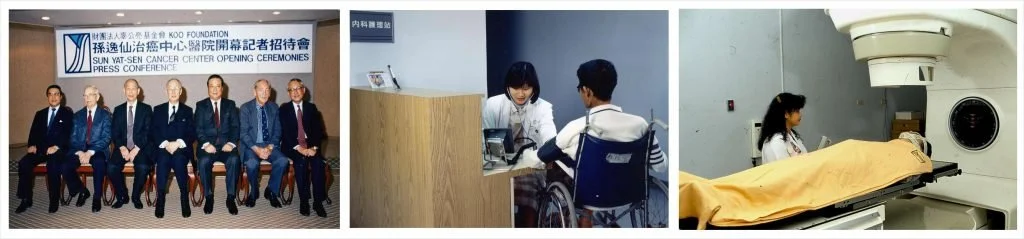
Thirty-five years ago, Taiwan had no specialized oncology field, let alone multidisciplinary team care. At that time, the five-year survival rate for cancer patients in Taiwan was only 25%, and cancer was a terrifying diagnosis for many.
When our hospital was established, there was a significant debate about whether to include the word "cancer" in our name. I believed that since our mission was to care for cancer patients, it was essential to let the public know. However, some feared that including "cancer" would scare patients away.
Motivation to Establish Taiwan's First Cancer Specialty Hospital
My motivation to return to Taiwan and establish the first cancer specialty hospital was simple. In the 1980s, whenever I visited my parents, my mother would ask me to look after relatives and friends with cancer. I realized that Taiwan's cancer care was significantly behind the U.S. in terms of knowledge, medication, and equipment.
Building on 25 Years of U.S. Experience in Cancer Care
I was fortunate to study and practice in the U.S., starting with a residency at the University of Pennsylvania Hospital and then completing hematology and oncology training at Duke University Medical Center. I also participated in planning the first cancer center at Duke, funded by the NIH. By the time I returned to Taiwan, I had 25 years of experience in cancer care.
Given the opportunity to establish a new hospital, I aimed to create the best hospital based on my ideals. Although I had no traditional burdens, I needed to employ people shaped by tradition and gradually change their mindset.
Creating Taiwan's First Cancer Care Team
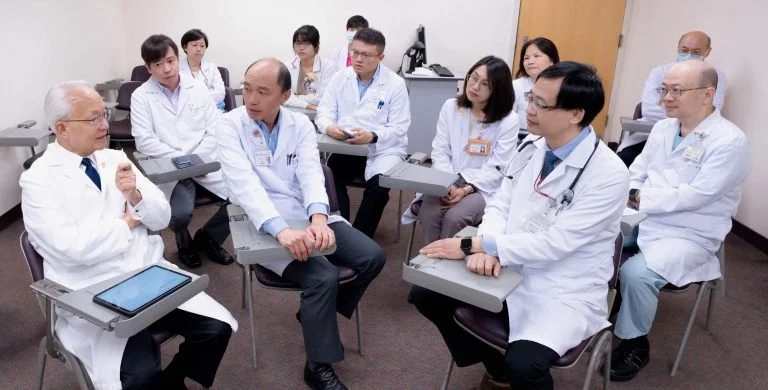
We started with a small prototype hospital with less than 150 employees and around 60 beds. Every day, I led all attending physicians, including radiologists and pathologists, along with nursing supervisors, in morning meetings to discuss new patient treatment plans and afternoon rounds to visit each inpatient. This is how our multidisciplinary team was formed.
Nursing is the largest team in the hospital. At the hospital's inception, I was fortunate to recruit three nursing supervisors with master's degrees in oncology and critical care nursing from the U.S. Additionally, I sent the first group of attending physicians to Duke Cancer Center for several months of observation before our hospital opened.
Training Doctors in the U.S.
Two doctors had longer training periods. Dr. Shu-Jen Zhang, now Taiwan's top oncologic urologist, completed his residency in urology at the Veterans General Hospital. I had him pass the U.S. medical licensing exam and arranged for him to undergo two years of specialized oncologic urology training under Dr. Scardino, a top expert in the field. This was possible because Dr. Scardino, a Duke alumnus, had maintained a good relationship with me.
Dr. Yen-Kun Chiu, who completed his residency in obstetrics and gynecology at National Taiwan University, received three years of specialized training in gynecologic oncology at the University of Virginia. Unfortunately, he left us after a few years due to family reasons.
Training Nurses and Radiation Therapists
Before the hospital opened, I invited Mr. Kevin Sowers, then nursing director at Duke Cancer Center, to train our nursing staff for six months. Twenty years later, he became the president of Johns Hopkins Hospital.
Dr. Leonard Prosnitz, head of radiation therapy at Duke Cancer Center, helped select our equipment and led his team to establish our radiation therapy department over three months. Most of our radiation therapists have trained under him for at least a year.
Ensuring Patient-Centered, Multidisciplinary Care
My initial goal was to cultivate cancer care professionals in Taiwan and implement patient-centered, multidisciplinary team care in our hospital to maximize every patient's chances of a cure.
Supporting Colleagues and Managing Risks
Upon returning to Taiwan, I realized there was no medical malpractice insurance system or awareness of ensuring medical quality and patient safety. Therefore, I told all colleagues that everyone can make mistakes, and when they do, they must report it immediately to minimize harm. We review each case to prevent recurrence. The hospital handles any disputes, so doctors can focus on patient care without fear of litigation.
Controlling Infection Rates
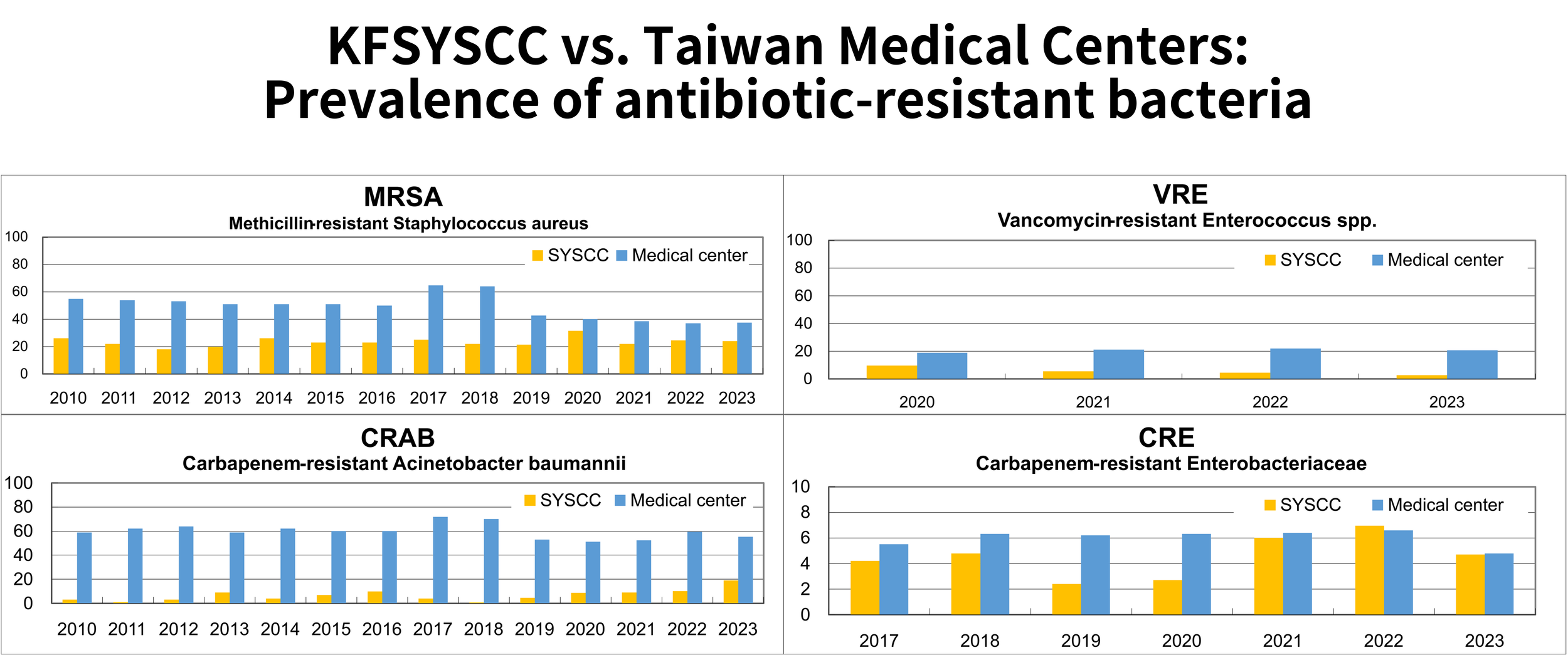
Infection control is crucial in any modern hospital, especially since about one-third of cancer patient deaths are due to infections. From the beginning, we prioritized infection control, achieving the lowest antibiotic-resistant infection rates in the country, making our hospital the safest.
Rejecting Performance-Based Pay
Uniquely, our hospital does not use performance-based pay, which often leads to over-treatment. Instead, we emphasize patient-centered care, promoting collaboration among specialists to achieve the best outcomes efficiently.
Raising Survival Rates Through Team Care
At Duke Cancer Center, I saw that multidisciplinary team care improved five-year survival rates by 30%, simply by integrating different specialists' expertise and focusing on overall patient well-being. We aim to maximize each patient's survival chances from the start.
Overcoming Challenges with Comprehensive Patient Care
Our doctors invest time in understanding patients and analyzing their conditions to provide the best care, even under Taiwan's fee-for-service health insurance system. Despite financial constraints, we maintain high standards through efficiency and patient donations.
Maintaining Efficiency and Quality
Efficient infection control, high nurse-to-patient ratios, and maintaining specialized equipment contribute to our financial stability. Patient donations support updates and renovations, allowing us to continue our mission.
Gratitude for 35 Years of Support
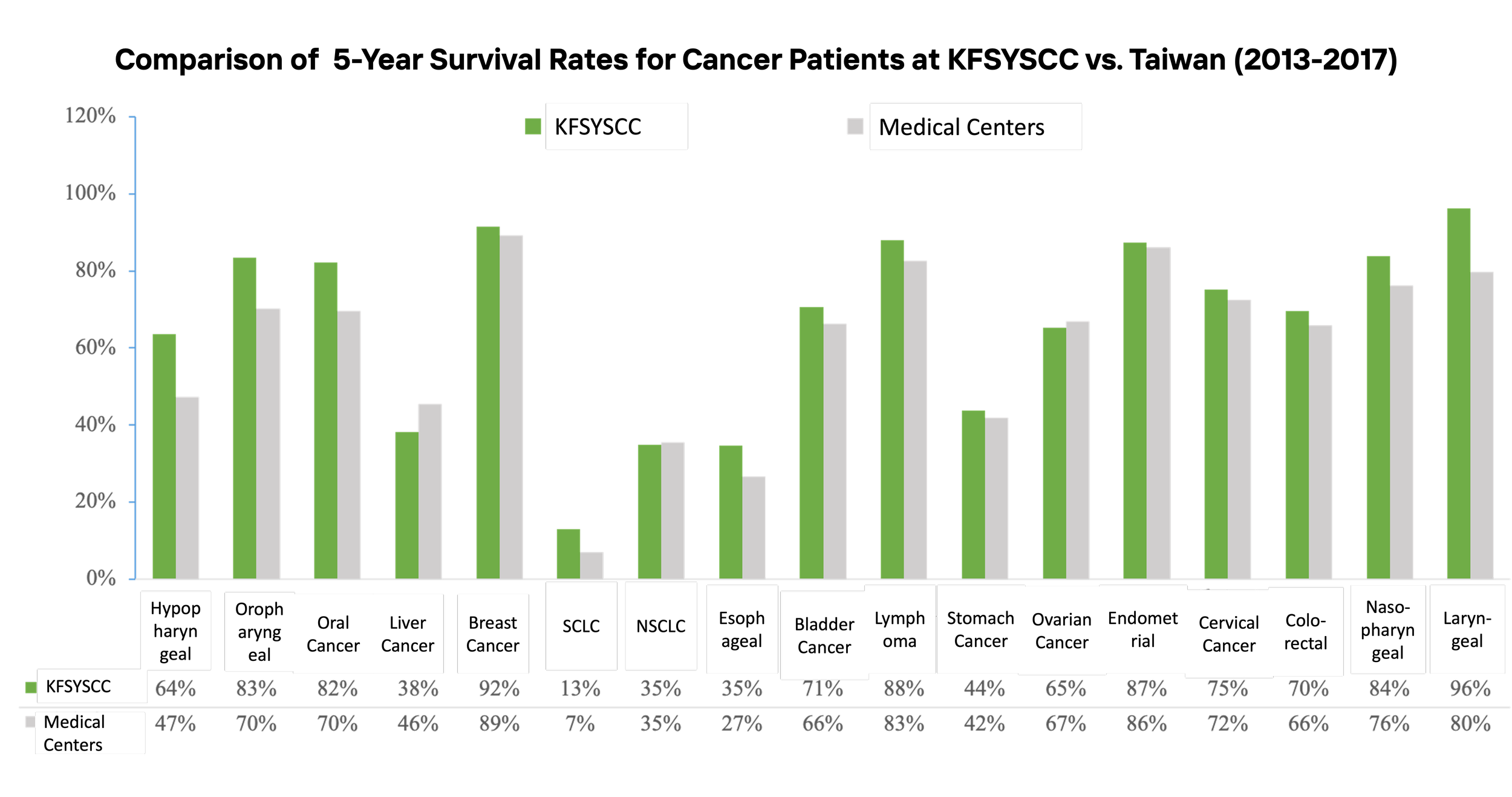
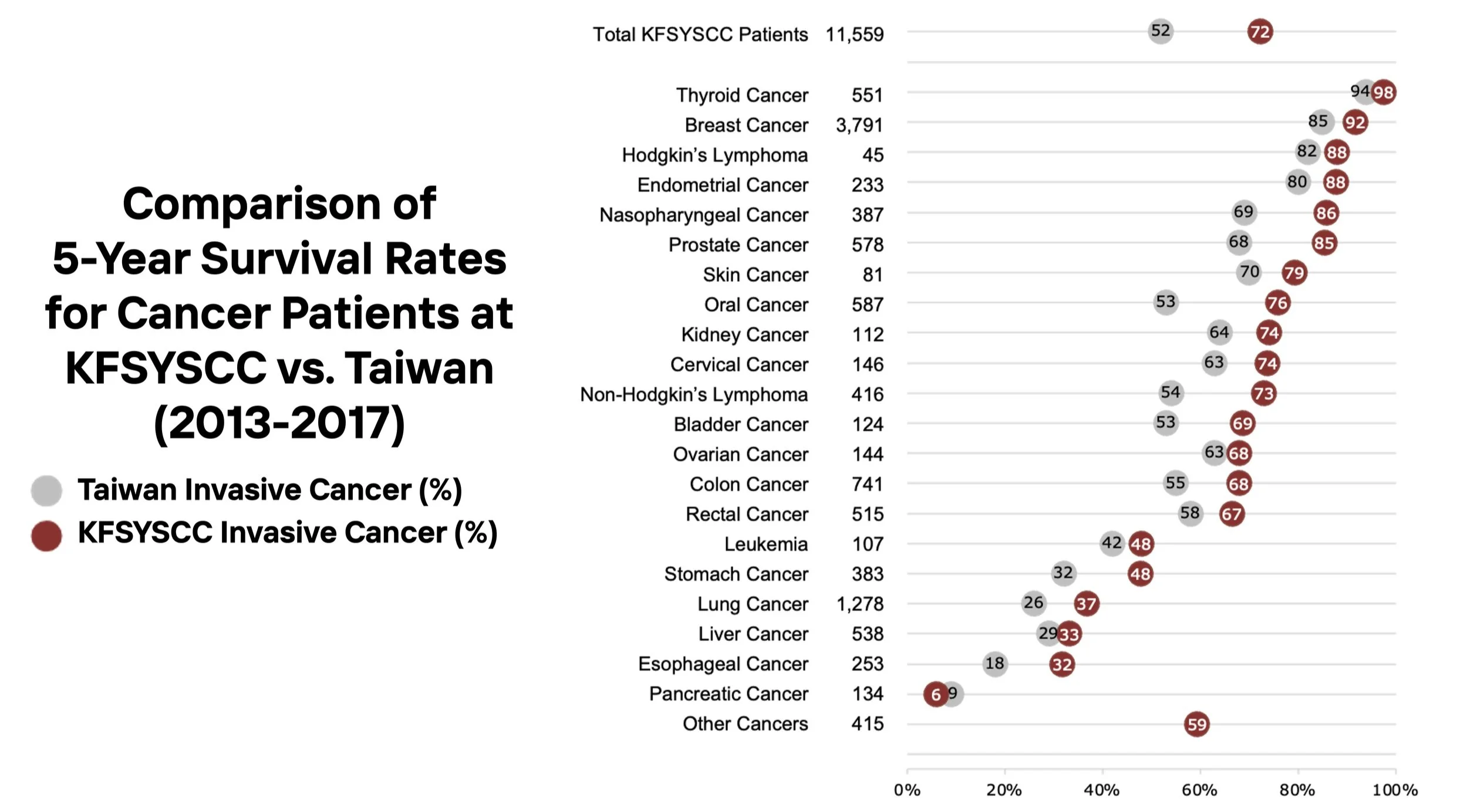
We have built a team that shares our values and dedication. Seeing colleagues strive to improve patient care is inspiring, and increasing survival rates reflect our efforts. We thank our patients and their families for their trust and support over the past 35 years. Your support, whether through volunteer work, donations, or other means, helps us improve Taiwan's cancer care quality and save more lives.