
Living with Cancer: A Journey of Resilience
Originally written by Joanna Lin (Department of Culture and Education)
When we hear news about cancer patients, whether from media or personal accounts, terms like "successful cancer warrior," "fighter for life," or on the flip side, "angels who left love behind," and "final dreams realized" often come to mind. These phrases imply that when someone is diagnosed with cancer, a rapid, decisive battle ensues, culminating in either victory over the disease or defeat by it.
The Reality Between Healing and Dying
In reality, the journey for cancer patients is not so cut-and-dried. There's a whole range of experiences between the extremes of full recovery and death. This spectrum includes being in stable condition, experiencing no current worsening, being in remission, having a substantial reduction in cancer cells, slight shrinking of the tumor, and even times when there are no signs of cancer at all. Advances in medical technology have made this range even broader, opening up more options and outcomes. Today, the focus is less about viewing cancer as a do-or-die opponent and more about figuring out how to live a meaningful life while coexisting with the illness.
Living with Cancer: What's It Like? How Do We Do It?
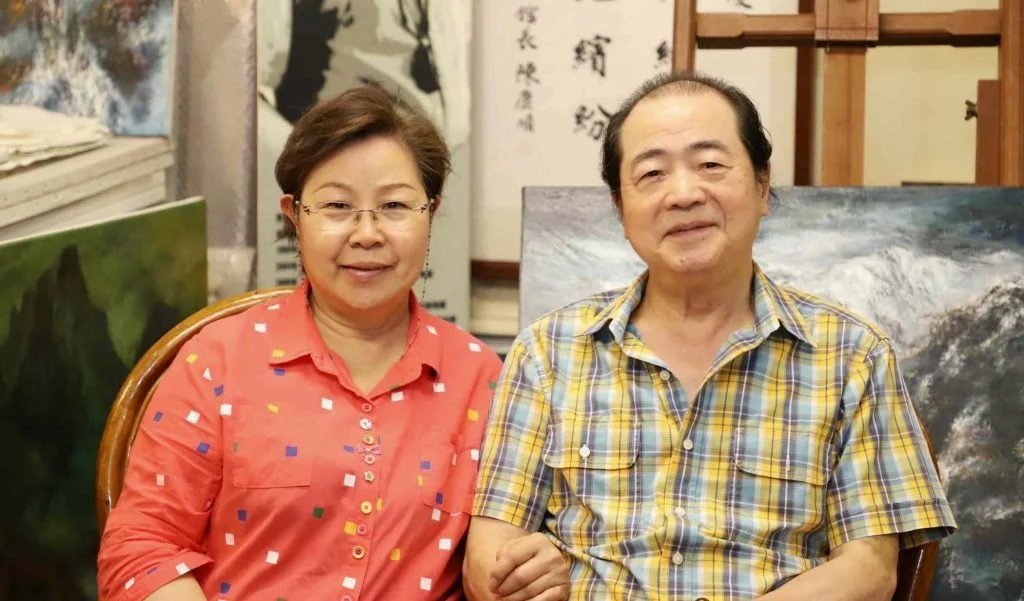
To delve deeper into this topic, our education department recently visited Auntie Tu, a breast cancer patient affiliated with KFSYSCC. On a hot summer day, we met her at an apartment near Nangang Park. Auntie Tu and her husband welcomed us warmly and led us to a cooler space downstairs.
First Diagnosis
Thirty years ago, Auntie Tu experienced a moment that would change her life forever. "I was 43 and went to the hospital to accompany a friend who was battling breast cancer. That’s when it hit me — her symptoms mirrored mine. I had a lump, and though it wasn't painful, I had it biopsied at KFSYSCC. The results were shocking: stage three breast cancer with a 3.9 cm tumor. Dr. Chii-Ming Chen performed my surgery. Just three days later, I was out of the hospital and on to a six-month course of chemotherapy." The news dumbfounded her circle of friends. "People couldn't wrap their heads around it. How could someone they saw perfectly fine last week be undergoing cancer surgery the next? Back then, the cancer stigma was strong, and it floored everyone when they saw me continue to work, even while on chemo."
First Recurrence
"Fast forward ten years, and cancer almost felt like a distant memory. I got so complacent that I even skipped my check-ups in years 17 and 18," Auntie Tu recalls. "But life had a way of snapping me back to reality. In the 19th year after my first diagnosis, I found myself unable to walk due to crippling back pain." A medical examination at Heshin revealed a 6 cm inoperable tumor. "At that moment, I thought my journey was coming to an end at age 62. But here’s the twist—after another round of chemotherapy and radiation, I bounced back to life!"
Second Recurrence
Two years ago, at the age of 73, Auntie Tu received news that took her breath away—again. "During a routine check-up, Dr. Chi-Feng Chung discovered another tumor, this time in my lymph nodes. I was told I would have to take targeted drugs for the rest of my life, going through 21-day cycles followed by a 7-day break." But medication wasn't her only recourse; she also overhauled her diet. "I started consuming high-protein foods like beef, milk, and soy milk. Believe me, I’m tired of it, but without these, my white blood cell count would plummet. Luckily, my health insurance covers the targeted drugs for two years, and Dr. Chung reassured me that we have other options when the time comes."
Dispelling the Fear of the Unknown
With three bouts of cancer treatments spread over three decades, one would think Auntie Tu has every right to be fretful. When asked about it, she chuckled, "Worry about cancer returning? Not at all! Look where worry got me—not very far! I had two relapses despite not worrying. Our emotions don't dictate whether cancer will recur or not, but living with it certainly comes with its own set of fears and anxieties."
Wholeheartedly Welcoming Treatment
"I always encourage fellow patients to approach treatment with an open mind. Don't get hung up on potential side effects or spiral into worst-case scenarios. Your main priority should be staying alive," Auntie Tu asserts. "Cancer isn’t something you can sidestep; you must confront, address, and accept it. For those who have completed treatment, focus on the trifecta: eating well, sleeping soundly, and avoiding stress. My journey has spanned from middle age to spending cherished time with my grandchildren. Each day is a gift."
Through the years, Auntie Tu has leaned heavily on the unwavering support of her loved ones and healthcare professionals, particularly her trust in the KFSYSCC team, to navigate the labyrinthine challenges of living with cancer.
The True Meaning of Partnership in the Cancer Journey
When you hear the term "Living with Cancer," it's more than just a medical prognosis; it's a lifestyle that challenges the patient, their family, and the healthcare team. Auntie Tu zeroes in on the power of a strong support system. "Through all the ups and downs, the team at KFSYSCC has been a rock, always showing deep respect and genuine concern for their patients. But the unwavering support of my family, especially my husband, can't be underestimated."
Her husband isn't just a spouse; he's a caregiver, partner, and confidant, rolled into one. "My husband, who's an artist with a flexible schedule, has been my rock. While I took over the cooking, he managed almost all other household tasks. He even drove me to all my hospital visits." But these journeys weren't just about hospital corridors and waiting rooms. "If my appointments ended early, we’d make a day of it, exploring places like Tamsui or Bali. It turned the hospital trips into refreshing half-day outings."
Auntie Tu and Mr. Chen's ordinary yet extraordinary life journey reveals the true mettle needed to "live with cancer." Their shared moments may seem mundane, but their resilience and grace make them nothing short of inspirational.