
The Impact of 15 Particle Therapy Centers on Patients
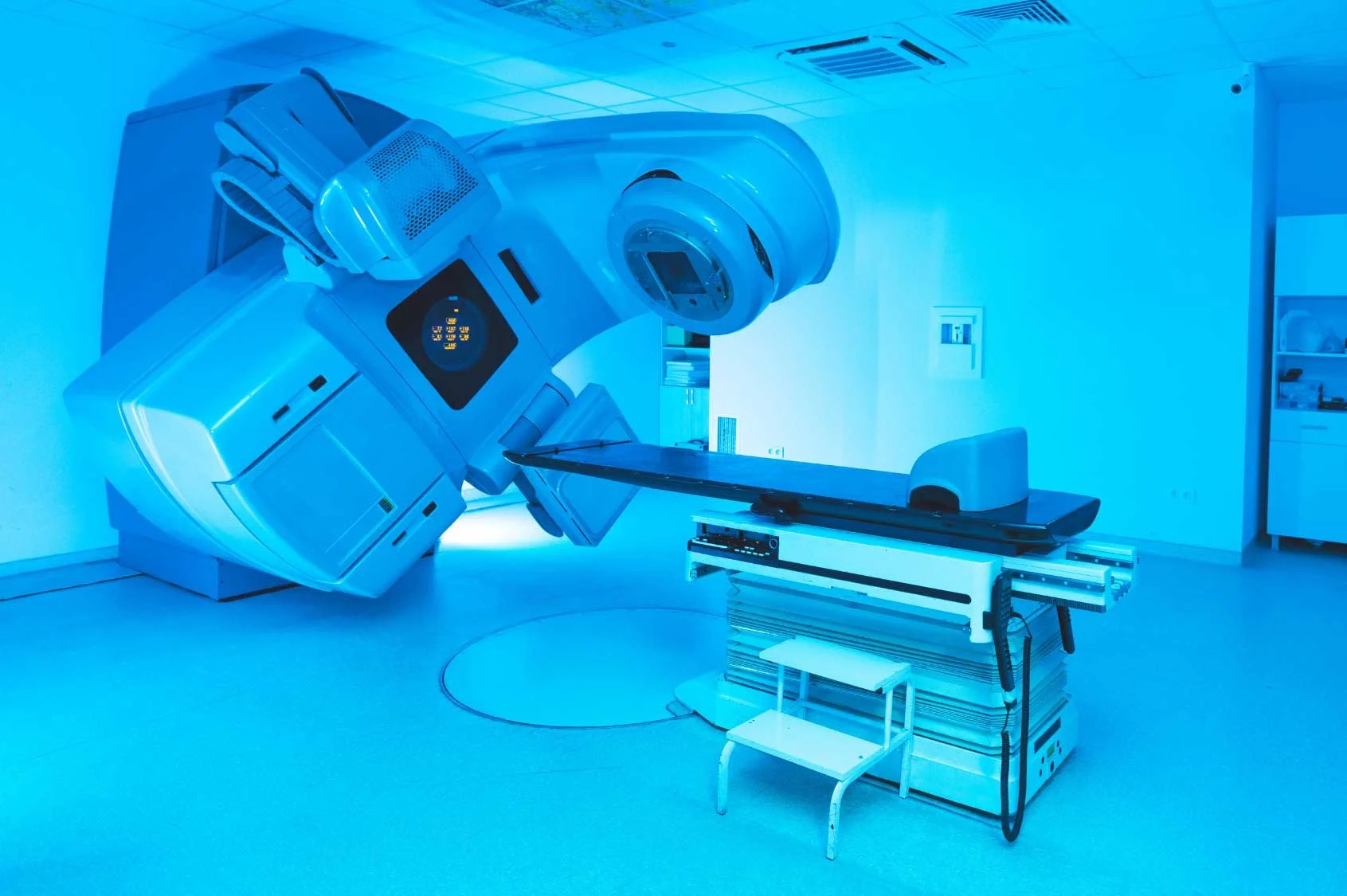
Last week, a reporter, after seeing a report in the United Daily News titled "Taiwan’s Development of Particle Therapy in 15 Hospitals (including proton and heavy-ion therapies), Becoming the World's Most Dense Country for Such Treatment," wished to schedule an interview with me. They asked whether this was another medical equipment phenomenon in Taiwan following the Da Vinci surgical robot, and questioned if Taiwan really needed such an abundance of particle therapy resources. They also inquired about the potential impact on patients.
This is probably the intuitive reaction of anyone with common sense. My own reaction was, "15 centers? Could there be an error in the report? It seems preposterous!"
If the news is indeed true, I would have to start by addressing the root of the issue. Since the inception of the National Health Insurance (NHI), Taiwan's government, regardless of political color, has always prided itself on using minimal funds to provide medical care for nearly 100% of the Taiwanese population.
However, because the NHI reimbursement often falls short of covering costs, medical institutions in Taiwan have started to see a large volume of patients, increase the number of hospital beds, prescribe more medication, and conduct a high number of tests. At the same time, they continuously develop self-paid services to compensate for the deficiencies of the NHI.
27 years after the implementation of the NHI, Taiwan's health insurance expenditure has now exceeded NT$800 billion. Reports indicate that the patient's out-of-pocket expenses are getting closer to the NHI spending, signifying that the growth of patient self-pay is even more substantial.
If you ask me why Taiwan has such a high density of Da Vinci surgical robots, the answer is the profit from seeing more patients, more hospitalizations, more tests, and more prescriptions pales in comparison to a single Da Vinci surgery, which costs hundreds of thousands in self-pay, while particle therapy is even more profitable, amounting to millions. Moreover, these self-paid medical services, even if they violate the indications for use, are not subject to NHI audit and thus will not be subject to reimbursement deductions.
National Health Insurance's Low Cost Leads to Ethical Dilemma in Taiwanese Medicine
It must be said that the excessively low cost of national health insurance is what has brought about this dilemma. For 27 years, the Taiwanese medical field has been mired in an ethical quagmire, forced into survival mode.
Let's delve into the numbers to assess whether Taiwan actually needs 15 particle therapy centers. The UK, a pioneer in evidence-based medicine and earlier adopter of universal health care than Taiwan, has dedicated evidence-based medical research units to calculate medical costs and assess benefits for their health care system, as well as prioritize health services. With a population of 67 million, almost three times that of Taiwan, the UK only established two proton therapy centers to serve children, adolescents with cancer, and certain adult cancers, funded by their health care system.
France, with a population close to that of the UK at 66 million, has three proton therapy centers. Europe as a whole, with a population of 750 million, has only 35 particle therapy centers, mostly for pediatric cancer and adult rare diseases, rather than general cancer.
Should Taiwan proceed with its plan for 15 particle therapy centers, it would mean a density approximately 20 times greater than the UK, 14 times greater than France, and 12 times greater than all of Europe. Isn't that quite peculiar?
The United States, the country at the forefront of particle therapy research and with the richest medical resources, treated its first patient with particle therapy in 1954. Since then, centers like the Harvard Cyclotron Center, supported by national funding, have been treating children's cancer and rare adult diseases.
Not until 1990 did the United States establish its first clinical proton center (Loma Linda), which began treating common cancers, mainly prostate cancer, touting good results and fewer side effects, while vigorously convincing insurance companies to pay.
Equipment vendors took advantage of this momentum by designing various business models to attract more hospitals to purchase proton therapy equipment. By the 2000s, particle therapy centers sprang up around the world like mushrooms after the rain.
However, as the number of proton centers rapidly increased, some cancer specialists and ethicists began to raise concerns. They argued that while theoretically better, in practice, it might not necessarily be so. Without control group clinical trials, it's impossible to assert that new equipment is definitively better. Offering patients this option without confirmed superiority through controlled trials is not only unscientific but also economically inefficient. It misleads patients into believing that more expensive medical care is better, which is also ethically untenable!
At this point, the American Society for Radiation Oncology decided to take corrective action, requiring that all common cancers treated with proton therapy must undergo controlled clinical trials. To date, clinical trials for various common cancers have yet to confirm that proton therapy provides better outcomes or higher survival rates. Hence, most American commercial insurance companies do not cover proton therapy.
On the one hand, there are too many proton centers and not enough patients; on the other, insurance won't pay. As a result, in the past few years, several proton centers in the U.S. have faced financial crises or even shutdowns.
When journalists asked Dr. Zeke Emanuel, a renowned cancer expert and medical policy advisor to President Obama, about his stance on proton therapy, he said, "When you offer a medical service that isn't better but is much more expensive, it's called 'inefficient.' If hospitals investing in such equipment lose money, you need not worry about them!"
It turns out that the U.S. has the highest density of proton centers in the world, with 41 centers for a population of 330 million, all of which are encountering problems. If Taiwan were to establish 15 particle therapy centers, the density would be over five times that of the United States.
My colleague informed me that the physicians in the radiation oncology departments of Taiwanese hospitals that already have proton centers are under immense pressure. After investing billions to establish proton centers, they must find ways to recoup the investment.
This is precisely my greatest concern. As the 'arms race' intensifies, the chance of patients being misled increases, raising the question: who will protect the patients?
Author: Andrew T. Huang, MD (KFSYSCC)