With Each Precise Cut, the Deepest Respect for Life
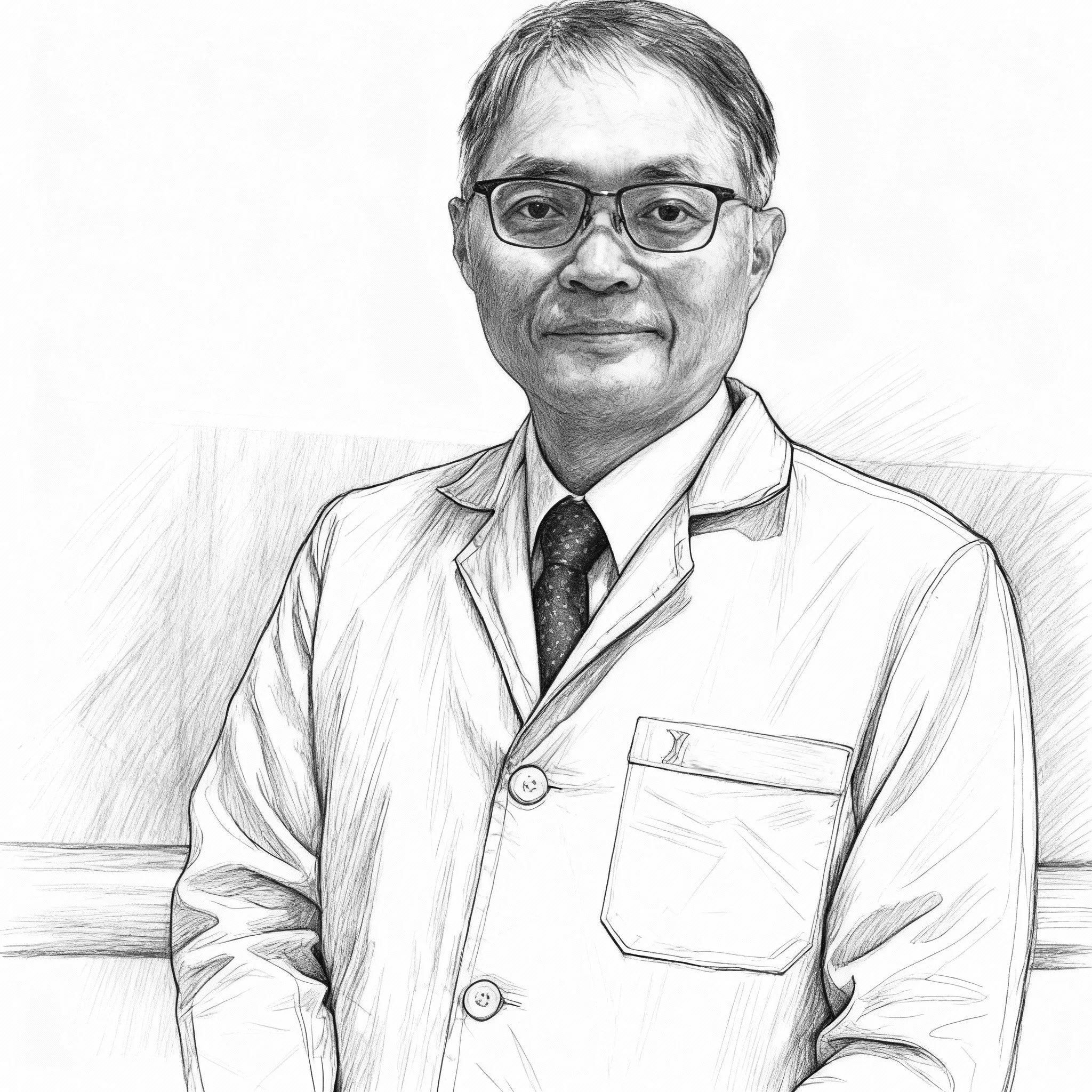
On the operating table, every decision can mean a patient’s second chance at life. In the clinic, every careful reminder carries trust. With more than three decades of focus and integrity, Dr. Ben-Long Yu has shown what it looks like for a surgeon to treat life with profound respect. This interview follows how he balances technical excellence, character, and trust, and why “luck” is often the result of actions repeated over time.
An Interview with Surgeon Dr. Ben-Long Yu
By: “Mrs. MAMAA,” an expat mom and columnist (“Heart-Minded Thinking”)
Why This Interview Happened: Luck as Thin as a Strand of Hair
In early 2025, I was diagnosed, without symptoms, with early-stage breast cancer. Life handed me a midterm exam without warning, and in three months I “evolved” into what my kids called an “Amazon warrior” (as a joke, and a badge of courage).
At my final post-op follow-up visit, my attending physician told me, “You’re very lucky. In general, once a tumor is larger than 0.5 centimeters, chemotherapy may be needed. Your largest tumor was 0.45 centimeters.”
The difference between “might need chemotherapy” and my tumor was 0.05 centimeters. Roughly the width of a single strand of hair.
That tiny difference opened a completely different landscape in my life. In that moment, I thought: if this “luck” is a kind of extra room life has given me, then what do I want to do with it?
“Dr. Yu,” I asked, gathering my courage, “could we work together and turn this luck into strength, and share it with more people?”
Life is unpredictable. No one can guarantee a smooth, trouble-free path. All of us spend our lives learning how to guide ourselves through wave after wave of what feels like fate. The practice is always the same: get back up, make it through, and learn to let go.
I am sincerely grateful that Dr. Yu made time for this conversation in the middle of a packed schedule of surgeries and clinic. In the bright July sun, we met in a top-floor conference room of the Koo Foundation Sun Yat-Sen Cancer Center (KFSYSCC) research building. Large double-pane windows kept out the noise and left only a quiet view of mountains and water in the distance. Over tea, Dr. Yu and I talked about doctor–patient relationships, about decisions, and about how, over 30-plus years, one physician has held ongoing conversations with life, death, the healthcare system, and his own inner compass.
The True Meaning of “Luck” Is the Accumulation of Action
“Your luck is built on a certain amount of ‘doing,’” Dr. Yu said early in the interview, in his characteristically gentle but firm tone. He explained that many medical studies show, using breast cancer as an example, that about 20% of patients have a family history, while the other 80% fall into a category he described as “anyone could be affected, but no one can be certain.”
Life cannot be carried by luck alone. Dr. Yu’s own story is a portrait of how consistent action can turn randomness into something that looks like luck.
He grew up with limited resources. His father died early. His mother could not read. As one of five children, he learned young that luck is something you often have to create. When he was deciding between medical school at National Taiwan University and electrical engineering, a senior mentor influenced his direction with a simple sentence: “Become a doctor. You’ll have more chances to see the world.”
Because he enjoyed working with his hands, he chose surgery. He completed seven years of rigorous training at National Taiwan University College of Medicine. Long hours bent over operating tables contributed to lumbar disc herniation and severe back pain, and he eventually underwent two surgeries himself. That experience led him to ask: “Is there a surgical field where I can help patients without breaking down so quickly myself?”
“I used to operate on liver cancer too, but at the time the five-year survival rate for liver cancer was only around half,” he said candidly. “My personality is more sensitive. I couldn’t handle the constant anxiety of having to say goodbye to patients again and again.” He eventually chose breast surgery largely because breast cancer outcomes are, in general, significantly better. “As a doctor, I want to see more patients recover.”
Knowing his own strengths and limits, and holding onto the hope of seeing patients get well, led him from National Taiwan University Hospital to KFSYSCC, a newer institution built around team-based care and specialty-focused practice. There, he also pursued his long-held dream of training abroad. At age 40, he and his wife, also a physician, moved with their two children to the United States and trained at Harvard Medical School’s renowned Dana-Farber Cancer Institute, focusing on breast cancer surgery research.
Moving from a generalist surgical culture, where one doctor might perform multiple types of operations, to a dedicated breast surgery specialty role, he felt the difference deeply. “When you focus on doing one thing,” he said, “you begin to see the real depth of it, and why it matters to keep going.”
That focus did not only sharpen technical skill. It also brought him a profound cultural lesson.
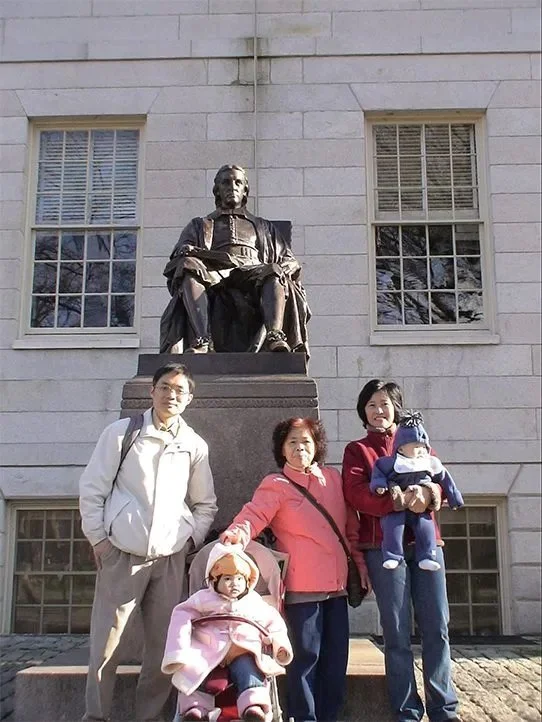
When an Old Eastern Saying Meets Harvard
I asked him what the biggest cultural shock was during his year in the U.S. He paused, then said: “Respect for professionalism, and the commitment to integrity.”
One thing that stood out to him was how carefully colleagues documented the minutes spent with each patient. Twenty minutes meant twenty minutes. Thirty meant thirty. It was tied directly to billing. “At the time I didn’t understand,” he said. “I asked a colleague, ‘What if someone wants to make more money and writes down a longer time on purpose?’”
His colleague stared at him, eyes wide, and asked, “Wouldn’t that be lying? Lying is a very serious thing.”
That answer stayed with him. “Taiwan’s system is very flexible, and that can be a strength,” he said. “But if flexibility goes too far, principles can become blurred.” His words were as precise as a scalpel: “As a doctor, what matters most is being able to practice with a clear conscience, and to give patients the treatment that fits them best.”
He then quoted a saying he often shares with younger physicians: “Virtue without skill, skill can be learned. Skill without virtue, you are limited to skill alone.” If surgical skill is a sharp blade, then medical character is the hand that holds it. A hand without integrity, or without steadiness, can turn that blade into a weapon that harms both the patient and the physician.
In his view, the most valuable thing in the doctor–patient relationship is trust. He said that when patients thank him after surgery, he often replies, “I’m the one who should thank you, for being willing to trust me.”
That insistence on character and trust has become a core principle he has carried throughout his career.
“Thank You for Being Willing to Trust Me”
To have someone decide, in 10 to 20 minutes, to entrust you with something as serious as their life is both an honor and a responsibility. To be worthy of that trust, I will do everything I can to do the job well.
– Dr. Ben-Long Yu, Senior Attending Surgeon, Department of General Surgery, KFSYSCC
A Lifelong “Hand-in-Hand” Promise: Never Lose the Human Warmth
I asked him how, over more than 30 years, he has managed to keep his original sense of purpose while working inside a system that can feel highly uncontrollable.
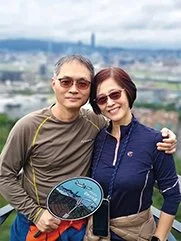
He smiled and said it helps to have a life partner who walks with you, challenges you, and grows with you. “She’s my junior from medical school,” he said. “When I watched her during clinical rotations, she treated patients very well. At first I assumed it was for grades, but over time I realized she genuinely has a compassionate heart.” He also saw some senior doctors become more and more emotionally distant with patients, so the two of them made a promise: “Ten years from now, we’ll look at ourselves and see whether we can still treat patients with the same warmth.”
His eyes softened when he spoke about his wife. “To this day, we feel we haven’t changed,” he said. “And because we support each other, we’ve had the backbone to not bend just for money.”
“What a Privilege to Meet”: Finding Meaning in a Fragile Life
A few days before our interview, the medical community received heartbreaking news. A leading Taiwanese breast cancer surgeon, Dr. Chia-Cheng Chou, Chief of Surgery at Taoyuan Hospital under the Ministry of Health and Welfare, died suddenly in a traffic accident. “We were in the same cohort,” Dr. Yu said quietly. “A few weeks ago we had dinner together. He was sitting right next to me.”
He went on, slowly: “Life is fragile, and short. What are we really pursuing in this lifetime? That we have the ability and the opportunity to step into someone else’s life is not something to take for granted. It’s a kind of blessing, and also a kind of privilege.”
That “privilege” does not belong only to doctors. It belongs to anyone who takes their work seriously and is determined to be worthy of what has been entrusted to them.
In the unavoidable sharp edges of life, we support each other in different ways, so we can feel trust and warmth. That is how we find the strength to mend what is broken, rebuild energy, restore what is fragile, and water hope even in suffering. Whether on the mountaintop or in the valley, we can still hold onto kindness toward ourselves and toward the world.
This series is dedicated to everyone who continues to hold their ground in their own field. May we face life with humility, recognizing both its vulnerability and its strength. May we treasure every meeting that is one out of eight billion, and become that “luck” for ourselves and for others.
More Stories
The author Mrs. MAMAA is a patient at our hospital and also a columnist. Moved by Dr. Yu’s attentive care during treatment, she conducted this interview and originally published it in Crossing (換日線). This article is reprinted from that publication as part of a series. Additional featured topics include: “Taiwan’s fast and affordable national health insurance is admired by many, but does the system need new rules?” and “Preventive medicine advice for working-age adults: life projects also need risk management.”