Reflecting on Thirty Years of Medicine—From Taipei to Taitung
Foreword
Recently, my college classmates and I celebrated our thirtieth graduation anniversary with a grand reunion. In addition to a dinner in Taipei, knowing that I work in Taitung, they chartered the Mingri Tourist Train for a trip from Hualien to Taitung. As we reunited after three decades, we found ourselves with endless topics to discuss. We reminisced about our student days and reflected on the many moments from thirty years of practicing medicine.
In these thirty years, aside from a two-year stint as a military doctor and six years of residency training, I spent thirteen years practicing at a medical center in the north, half a year training at KFSYSCC, and the last nine years devoted to cancer care in rural areas at the Taitung Christian Hospital. Looking back, what I am most grateful for is the presence of the Lord, the help of friends and colleagues, and the support of family and friends.
Self-reflection on Inner Pride
As a medical student, I was naive and overconfident, believing that once I had achieved academic success, I would be able to heal the world, help patients, gain reputation and a substantial income, and thus lead a smooth and wonderful life. However, in my sixth year, a patient's collapse shattered these illusions. I thought I could save this patient with my emergency skills, but I was powerless. My confidence and aspirations about the medical profession were utterly destroyed overnight.
From this incident, I reflected on the sin of my inner pride. I believe this was a lesson God wanted me to learn before becoming a doctor. He reminded me that life is fragile. No matter how advanced medical science becomes, it has its limits; only God is the ultimate healer. In the face of life, often you are powerless and must entrust things to God. What a doctor can and should do is to follow the example of Jesus to "love thy neighbor as thyself", offering patients conscientious advice based on what one knows and allowing them to decide whether they want to try it. The final outcome of the treatment is left to God.
The Years of a Resigned Chief Physician
My six-year residency training took place at National Taiwan University Hospital, with the first three years in Internal Medicine, followed by another three years in the Oncology and Hematology Department. The work was incredibly challenging and the learning process fraught with setbacks. However, the most distressing task I encountered was managing patient bed assignments. Traditionally, chief physicians at NTUH were in charge of the wards, deciding admissions and discharges.
But with more monks than porridge, there were never enough beds to go around. During my time as a chief physician in Oncology, I dealt with a thick stack of waiting lists every day. Attending physicians needed beds, as did the emergency department and other departments, and even legislative assistants would request them, leading to an endless stream of pleas and influential calls. I remember one time, after a mass discharge that freed up many beds, I thought to seize the opportunity to admit patients who had been waiting for nearly a month. To my dismay, when I called their homes, I found out some had already passed away. That moment was an extreme embarrassment.
The Facade of a Medical Center
Upon completing my residency, knowing I wasn’t cut out for research, my mentor helped me secure a position as an attending physician at a private medical center in the north. Compared to NTUH, the pressure of teaching and research was less, allowing more focus on patient care — it was a decent job opportunity. However, after a decade of service, certain issues became increasingly evident, prompting my decision to leave Taipei for Taitung.
First, the performance-oriented direction of management. Despite the hospital being a foundation-run hospital that claims to be "patient-centered," at its core, it cannot escape a performance-oriented management model. After 4-5 years of serving as an attending physician, the hospital decreed that doctors would switch to a commission-based system without a base salary. The hospital would only consider the service volume of each attending physician before adopting a profit-sharing method of payment. Initially, it seemed that only a few doctors were affected, but over time, the negative consequences became more and more apparent. For instance, young attending physicians without a patient base even earned less than resident doctors, having to work multiple jobs just to scrape by. Some physicians, in pursuit of better performance metrics, might encourage patients to undergo unnecessary examinations or treatments. Doctors, driven by performance needs, were also afraid to further their education or take vacations, which was very stressful. The most frustrating aspect was that departments would choose patients based on performance scores; patients with high scores were sought after, while those with low scores were passed around like a hot potato. Our department often ended up taking in many end-stage cancer patients that other departments didn’t want, which was relatively more taxing, but this did not reflect in the performance-based earnings.
Second, there is the requirement for uniform research output. To maintain the facade of a medical center, the hospital demanded that every attending physician publish new research papers every few years, with penalties in the form of salary deductions for those who fail to do so. When I was a resident, I wrote a paper under the guidance of a teacher, but I was quite aware that the paper was not of much value and that it would not be read again in a few years. After becoming an attending physician, I had no motivation to write papers just for the sake of writing them. I would rather pay a fine than write, yet I was often singled out and pressured by the hospital administration.
Third, the unscrupulous drive to pass evaluations. Medical centers need to undergo evaluations every four years, and to pass these evaluations, this particular hospital requires each attending physician to be responsible for certain clauses. Some clauses, which are not usually given much attention, become urgent at the time of evaluation, leading to last-minute scrambles. While I wouldn’t say that it amounts to fabrication, it’s not far off. For instance, if the evaluation criteria state that medical records must include edits from the attending physician, the hospital will make a big deal of pulling all the records and requiring the physicians to make and show 'edits' within a deadline. This means that after a whole day of busy medical work, we have to work overtime at night, burning the midnight oil to complete these meaningless tasks.
Finally, the last straw that led me to decide to resign was the betrayal by the hospital's higher-ups after crossing the bridge. Although there were numerous unreasonable aspects mentioned earlier, with the support and encouragement from patients and their families, as well as the camaraderie shared in hardship with colleagues, these were still tolerable. Yet, what kindled the thought of 'better to return home' was the ungrateful attitude of the hospital's higher-ups. Roughly a decade ago, shortly after the hospital passed the medical center evaluation, the superintendent began to summon department heads for discussions in rotation, focusing on how to enhance performance.
Our Hematology and Oncology department, despite having many patients, was still deemed unprofitable by the hospital authority, and the department head was asked to review and propose an improvement plan. Although I wasn’t the department head, I was a senior attending physician and felt that despite our significant contributions to the hospital, we did not win the respect we deserved. Continuing this job felt increasingly meaningless, so I considered resigning from my current position and moving to a church hospital, at least feeling that I was working for the Lord.
I remember the first time I discussed the idea of switching to a church hospital service with Pastor Lu Junyi, he made it clear to me that working in a church hospital is not the same as working for the Lord. Many church hospitals, in reality, are only a front, selling dog meat under the guise of lamb, still operating with profit as the goal. He then mentioned the Koo Foundation Sun Yat-Sen Cancer Center's plan to collaborate with medical institutions in Taitung to provide nearby care for cancer patients there, encouraging me to participate in this project. This invitation had a profound impact on me, throwing me into a moral quandary.
Growing up in Taipei, Taitung was a foreign place to me. Although I was aware of the higher cancer mortality rates there, the medical institutions in Taitung indeed had a rather weak foundation in cancer treatment, and I didn't believe I could make any significant change. I sought advice from many senior colleagues and friends, and most of them advised me not to be naive or act on impulse. They suggested that I consider my family and my children's education among other things. For about half a year, I was in a state of indecision.
Yet God is faithful, and through prayer, I felt an increasingly strong conviction. He inspired me deeply with the scripture: "We love because He first loved us." He even revealed to me the image of being crucified on the cross, making me acutely aware of God's love for me, His willingness to lay down His life for me. If I was to emulate Him, I should also take up my cross and follow Him, even to Taitung. So, I wrote to Pastor Lu and said that I was willing to go to Taitung, or even to an offshore island, as long as it was God's will.
Practicing Medicine in Taitung for Nine Years
A decade ago, under the guidance of Reverend Lu who wove connections like threads through a needle, Koo Foundation Sun Yat-Sen Cancer Center sent two nurses, Ya-Hsin Tseng and Pei-Ling Hsieh, to Taitung. They established a cancer consultation office at the Taitung Christian Hospital to assist in the referral and local care of cancer patients. I resigned from my position at the medical center, trained at Koo Foundation Sun Yat-Sen Cancer Center, and was encouraged and supported by Director Andrew T. Huang and many mentors and colleagues. Six months later, I followed these pioneering nurses to Taitung to set up a cancer care team at Taitung Christian Hospital and began the related care work.
Every beginning is challenging; initially, we didn't have many patients, so we started with those who lacked care the most—the terminally ill. We also began to venture out of the hospital, providing home medical care directly to patients' homes. We went as far as Orchid Island, establishing a close collaborative relationship with the local Yabu Shukang home nursing office. Gradually, Dr. Skye Hung-Chun Chen from Koo Foundation Sun Yat-Sen Cancer Center also came to Taitung and, in collaboration with Taitung Christian Hospital, established a cancer center and set up a radiotherapy team. The addition of several other doctors and nurses who felt a calling to hospice care also strengthened our palliative care team.
At the same time, many physicians from medical centers were loaned to us and volunteered to come to Taitung. Everyone worked together, pooled ideas, and coordinated the best care strategies during team meetings to provide decision-making references for patients and their families. Under this 'KFSYSCC-style' of care, there was no competition for patients or passing the buck; everyone played to their strengths, offering the greatest benefit to the patients.
This spirit of collaboration has even spread beyond our hospital, enabling us to establish a relationship of mutual trust and support with friendly institutions in Taitung and grassroots medical units. Together, we complement each other's capabilities and enjoy fruitful cooperation. Naturally, we encounter challenging cases that require referral to hospitals in other counties and cities. We strive to establish referral channels with Hesin Hospital and other major hospitals, offering financial assistance for referral transportation to streamline the process.
Our efforts have recently begun to bear fruit. In the past four to five years, Taitung has seen a notable decrease in the standardized mortality rate for cancer, steadily closing the gap with other counties. Previously, 70% of Taitung's cancer patients would choose to seek treatment outside the county, leaving only the most vulnerable and impoverished patients to receive treatment in Taitung. Now, this trend has reversed; most patients are willing to place their trust in Taitung's medical facilities and choose to receive treatment nearby.
In the past three years, the COVID-19 pandemic has ravaged the globe, and many hospitals have had to reduce beds and outpatient services to prioritize infection prevention, significantly diminishing overall care capacity. Interestingly, in Taitung, despite also reducing services as a pandemic precaution, the number of cancer patients has not decreased but instead has grown exponentially. One reason is that many patients who used to receive treatment in other counties became concerned about infection risks during the pandemic peaks and preferred to switch to local treatment. Some were proactively referred to us by their original medical teams in other counties.
I have been deeply moved by this and shared my thoughts in a hospital-wide worship service, taking 'God is our refuge in times of trouble' as my theme. It appears that God led us to Taitung ten years ago to prepare for this century's pandemic. Had we not come to Taitung and established the Cancer Center at Dongji, strengthening cancer care capabilities, I shudder to think how many of Taitung's cancer patients would be lost and directionless today.
Walking with the Lord in Medical Practice
Lastly, I would like to share some unique aspects of practicing medicine in Taitung. One is the strong and simple local customs. In Taipei, where I previously worked, patients often gave gifts like alcohol and gift boxes, sometimes even accompanied by red envelopes. We had to be wary that these were not just expressions of gratitude but attempts to receive special treatment. In Taitung, gifts from patients are usually fruits and vegetables grown in their own gardens, offered purely as a simple thank-you, bringing what they have to share with the hospital team.
Moreover, practicing medicine in Taitung can be tough at times, but stepping out of the hospital, one is surrounded by breathtaking scenery, diverse cultural heritages, and rich natural ecology - all of which are God's prescriptions for a miraculous healing. Just walking around and looking can quickly recharge you, giving you more energy to move forward. After thirty years in medicine, I personally feel that the nine years in Taitung have been the most exciting, enriching, and meaningful.
For this, I thank God's calling, my family's support, and the encouragement of many friends and relatives. I hope that more medical professionals can view practicing in remote areas not as a daunting path but one worth embracing at the grassroots level. I believe God will bless our work and fill it with meaning.
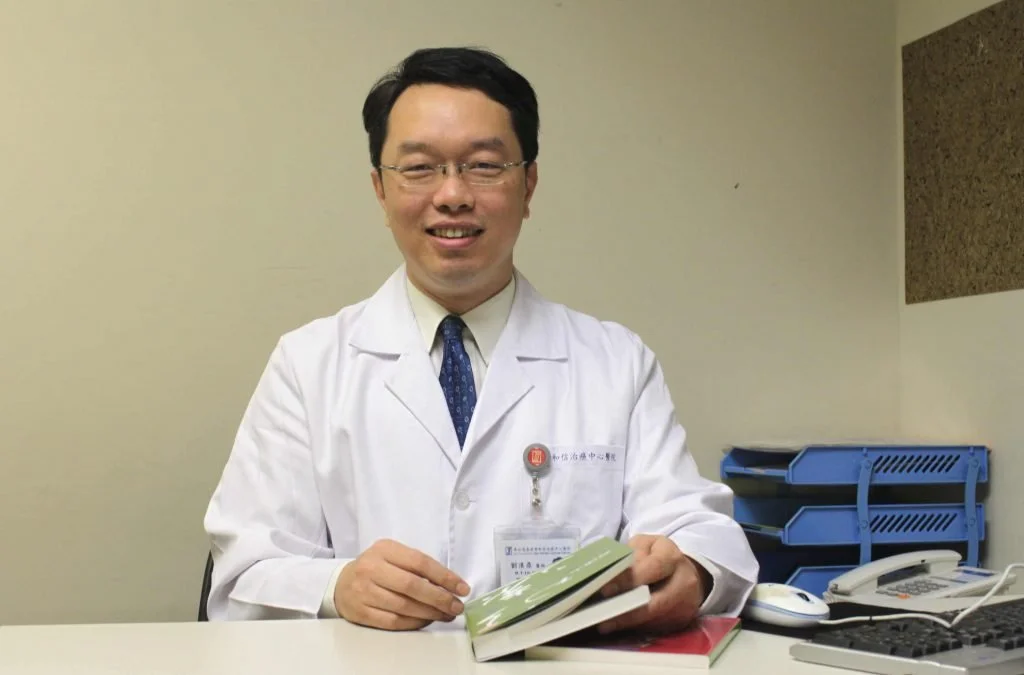
Author: Dr. Han-Ding Liu (Hematology Oncology)