
Neuroendocrine Tumors and PRRT Treatment
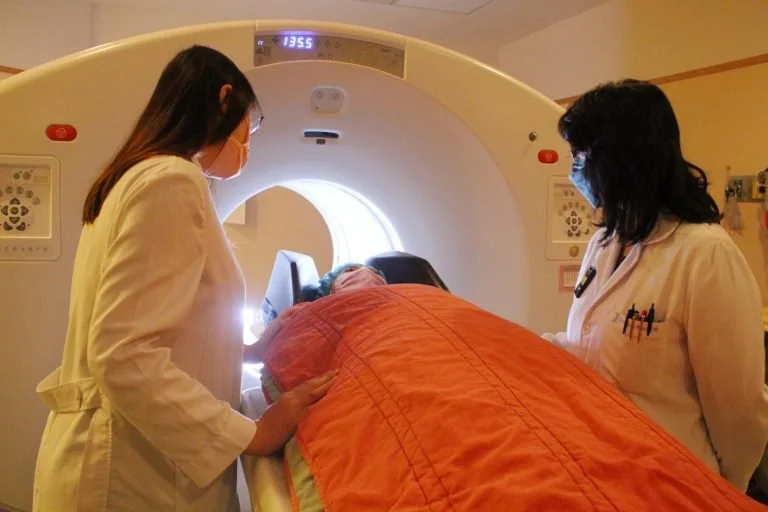
Neuroendocrine tumors (NETs) are a type of cancer arising from neuroendocrine cells, which have both hormone-secreting and message-transmitting functions. When these cells become cancerous, they can cause various symptoms and disrupt bodily functions. NETs can occur in multiple organs, most commonly the stomach, intestines, pancreas, and lungs. Due to the diverse origins, the symptoms can be easily mistaken for other diseases. On average, it takes 5 to 6 years for a patient to receive a definitive diagnosis.
Ms. Shen's Story
Five years ago, Ms. Shen experienced gastrointestinal discomfort, abnormal stool color, and weight loss. Later, she suffered from body pain, severe stomach aches, and nighttime vomiting. Despite taking gastric medication for a year, her condition did not improve. A self-funded blood test revealed a high Chromogranin A (CgA) level, leading to a diagnosis of neuroendocrine tumor. Over the next three years, she underwent multiple surgeries and chemotherapy, and even tried immunotherapy, but none were effective.
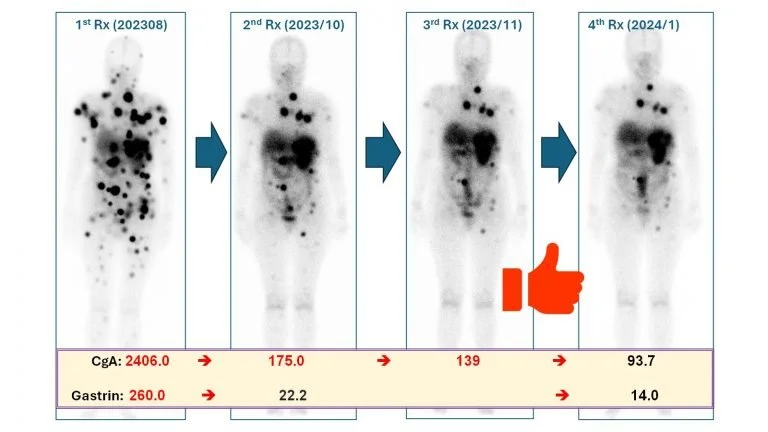
Ms. Shen's Treatment Outcome
Mr. Chen's Journey
Mr. Chen's diagnosis took about four years. Seven years ago, a health check revealed a shadow near his pancreas, but further tests showed no signs of pancreatic cancer. However, he continued to suffer from hot flashes, night sweats, and poor sleep. Three years later, he developed shoulder and back pain and tea-colored urine. Further examinations found multiple tumors in his liver, with the largest being 8-9 cm. Initially suspected to be liver cancer, a second liver biopsy confirmed it was a neuroendocrine tumor with liver metastasis.
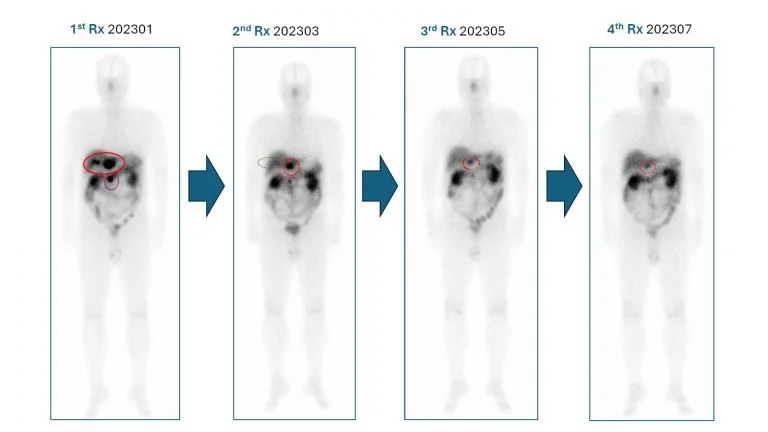
Mr. Chen's Treatment Outcome
Success with PRRT Treatment
Fortunately, after receiving PRRT (peptide receptor radionuclide therapy), both patients saw significant improvements. Dr. Yu-Yi Huang from the Nuclear Medicine Department explained, "PRRT uses the overexpression of somatostatin receptors on tumor cells. By injecting a radiolabeled somatostatin receptor ligand, the radioactive drug binds to the tumor and exerts its cytotoxic effect. This systemic treatment is typically used for tumors that are difficult to surgically remove or have metastasized to other organs."
Approved in Taiwan in January 2023, PRRT has shown promising results. During the approval wait, the medical team closely monitored Mr. Chen, performing multiple liver embolizations and surgeries to control tumor growth. Mr. Chen became the first patient at Koo Foundation Sun Yat-Sen Cancer Center to receive PRRT. After eight months of treatment, he achieved complete remission. Similarly, after four PRRT sessions, Ms. Shen's CgA levels dropped from over 2000 to 93, returning to normal. She no longer experiences her previous symptoms and has resumed a normal life.