
From Gastrointestinal Discomfort to Neuroendocrine Tumor

About five years ago, Ms. Shen experienced gastrointestinal discomfort, abnormal stool color, and slight weight loss. She visited a major hospital for examinations, but several gastroscopy results showed no abnormalities. The doctor prescribed gastric medication, but after a year of taking it, her symptoms remained unchanged. She decided to switch hospitals and opt for self-funded examinations, which revealed that her Chromogranin A (CgA) level, a marker for neuroendocrine tumors, was 500 ng/mL, far above the normal range of 101.9 ng/mL. This confirmed she had a rare cancer—neuroendocrine tumor—at stage III. The doctor immediately performed surgery and administered medication, but a year later, a 10 cm tumor was found in her duodenum. The doctor expressed doubts about continuing treatment.
Ms. Shen changed hospitals again, and a hematology-oncology doctor attempted chemotherapy to shrink the tumor. After two rounds, the chemotherapy proved ineffective, so she transferred again to a surgeon who performed a major operation. The tumor was near her liver and kidneys, necessitating the removal of one kidney and part of her liver.
Continual Transfers and Worsening Condition
After more than two years of continuous transfers, examinations, and different treatments, Ms. Shen's CgA levels remained high, mostly between 1600-1700 ng/mL, peaking at 2300 ng/mL. An oncologist admitted there was no effective drug treatment other than surgery. Desperate, Ms. Shen and her husband tried immunotherapy without success. Three years ago, visible lumps appeared on her limbs, accompanied by persistent pain, and her CgA levels remained high, leaving her feeling hopeless.
PRRT (Peptide Receptor Radionuclide Therapy)
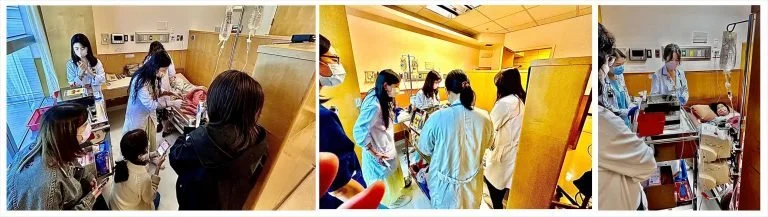
One day, Ms. Shen read a report by Dr. Yu-Yi Huang from the Nuclear Medicine Department in a journal about PRRT (Peptide Receptor Radionuclide Therapy). She saw it as her last hope and traveled from Pingtung to see Dr. Huang. Ms. Shen recalled, "I was in so much pain on the high-speed train to Koo Foundation Sun Yat-Sen Cancer Center that I couldn't sit still. Amazingly, after the treatment, I felt no pain on my way back to Kaohsiung. My long-standing stomach pain and nighttime vomiting improved significantly, and I no longer need gastric medication."
From her first PRRT treatment in August 2023 to the fourth in January 2024, Ms. Shen's CgA level dropped from 2406 ng/mL to 93.7 ng/mL, returning to the normal range.
Neuroendocrine Tumors: Long Diagnosis Time Due to Nonspecific Symptoms
Studies show that due to nonspecific early symptoms, it takes an average of 5 to 7 years to diagnose neuroendocrine tumors. Fortunately, after a long and arduous search for treatment, Ms. Shen was finally diagnosed and received effective treatment. She expressed her gratitude, "Thanks to Dr. Yu-Yi Huang from the Nuclear Medicine Department, Dr. Hsiao-Hsiang Cheng from the Hematology and Oncology Department, and the entire medical team for arranging my treatments swiftly. After each session, I felt increasingly better. For the past four years, I have maintained a normal life and actively sought treatment opportunities. I am grateful to my husband for his constant support, even when doctors had no solutions, we never gave up hope."
Encouraging Fellow Patients to Believe in Themselves
Ms. Shen hopes to encourage other cancer patients with her experience: "Believe in yourself and rely on yourself. Even if illness or treatment makes us weak, find things you enjoy. I love going out and cooking, so I take daily walks and cook my meals. Don't treat yourself as a patient; live happily in the moment and let the rest be taken care of by fate."