A Lifetime of Living a Physician’s First Calling, an Interview with Dr. Chii-Ming Chen
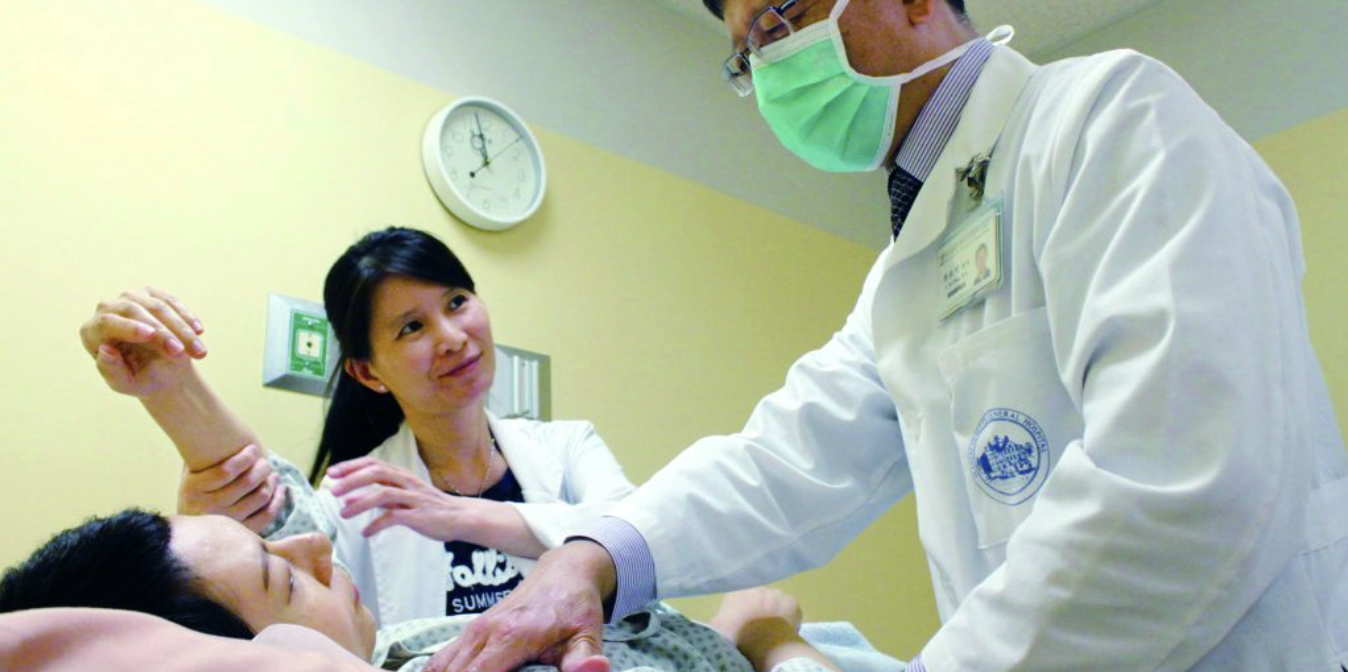
Choosing the right workplace in medicine is as consequential as choosing a life partner. For a surgeon, the sense of belonging and the chance to do meaningful work are not only career choices but proofs of personal values. After thirty-five years at Koo Foundation Sun Yat-Sen Cancer Center, I found my place here.
Surgical Training at Taipei Veterans General Hospital
After graduating from Kaohsiung Medical College, I entered residency at Taipei Veterans General Hospital in 1976 for five years of rigorous training. I took call eighteen days a month. Days were filled with scheduled inpatient operations, nights with an unending flow of emergencies. Even on days without call, leaving at five in the afternoon was rare because evening rounds with the chief began at seven. No one went home until every task was complete, which often meant after ten at night. By six the next morning I was back on the ward to change dressings, inspect wounds, and write charts. Vice Superintendent Dr. Fang-Gu Peng constantly reminded us that medical records must be detailed and airtight so they can stand up in court if disputes arise. The discipline and intensity would challenge most people today.
Training was comprehensive by design. During the first four years we rotated through general surgery, thoracic surgery, urology, neurosurgery, hand surgery, orthopedics, plastic surgery, colorectal surgery, and cardiac surgery. Each year included at least one month in the ICU and one in the emergency department, plus external rotations in obstetrics and gynecology and pathology. The fifth year was the chief-resident year, with responsibility for leading services. Administration was part of the curriculum, including how to coordinate with nursing and other departments. Under Department Chair Dr. Kuang-Shun Lu and the division chiefs, the program produced surgeons who cared for patients from head to toe, took responsibility, and upheld discipline.
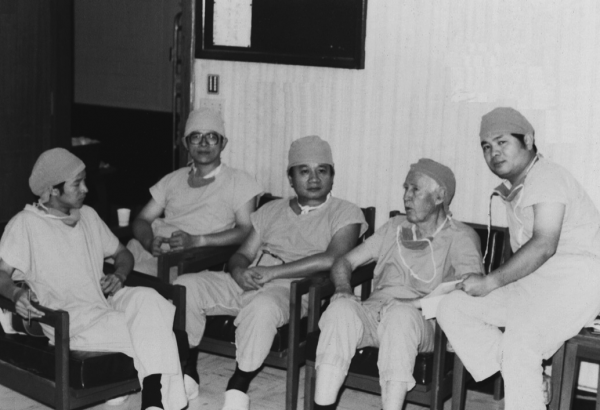
More than forty years ago Professor Philip Sandblom served as a visiting professor at Veterans General and posed for an operating room photograph with our general-surgery team. From left to right: Superintendent Yong-Yao Lei, Dr. Chii-Ming Chen, Superintendent Fang-Gu Peng, Professor Sandblom, and Superintendent Chien-Hsien Lee. (Photo source: Taipei Veterans General Hospital Half a Century: An Oral History Review.)
KFSYSCC, a Place with Great Promise
I became an attending general surgeon in 1980 and went to the Department of Surgery and the Cancer Center at Yale University in 1984 for further training. Even before leaving Taiwan I had a strong interest in breast disease and practical experience. Vice Superintendent Peng urged me to establish a dedicated breast clinic upon my return, which became Taiwan’s first specialty breast clinic.
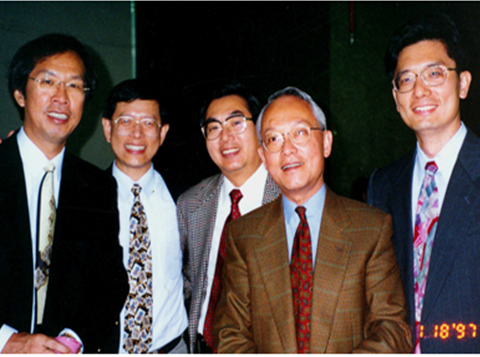
Founding-era physicians, from left to right: Dr. Fang-Yen Huang, Dr. Chi-Ming Chen, Dr. Shu-Yen Lu, Chairman Andrew T. Huang, and Dr. Yen-Kun Chiu.
From the start, Dr. Andrew T. Huang invited me to join the new hospital. I respected him deeply and believed that under former Chairman Chen-Fu Koo and Dr. Huang the institution would thrive. After discussing it with my family, I transferred from Veterans General to the hospital then known as Sun Yat-sen Cancer Center, opening a new chapter in my career.
The Breast Cancer Center Team
KFSYSCC built complete treatment teams from day one. The early breast team centered on me, radiation oncologist Dr. Jer-Min Jian, and a cohort of young physicians in training. Dr. Fang-Yen Huang, chair of Anesthesiology at National Taiwan University Hospital, personally brought Dr. Wen-Ling Peng and Head Nurse Wei-Jun Chen to support us. Dr. Yi-Hung Chou, chair of Diagnostic Radiology at Taipei Veterans General, often came to assist with mammography, ultrasound, and biopsy, giving us a strong imaging foundation.
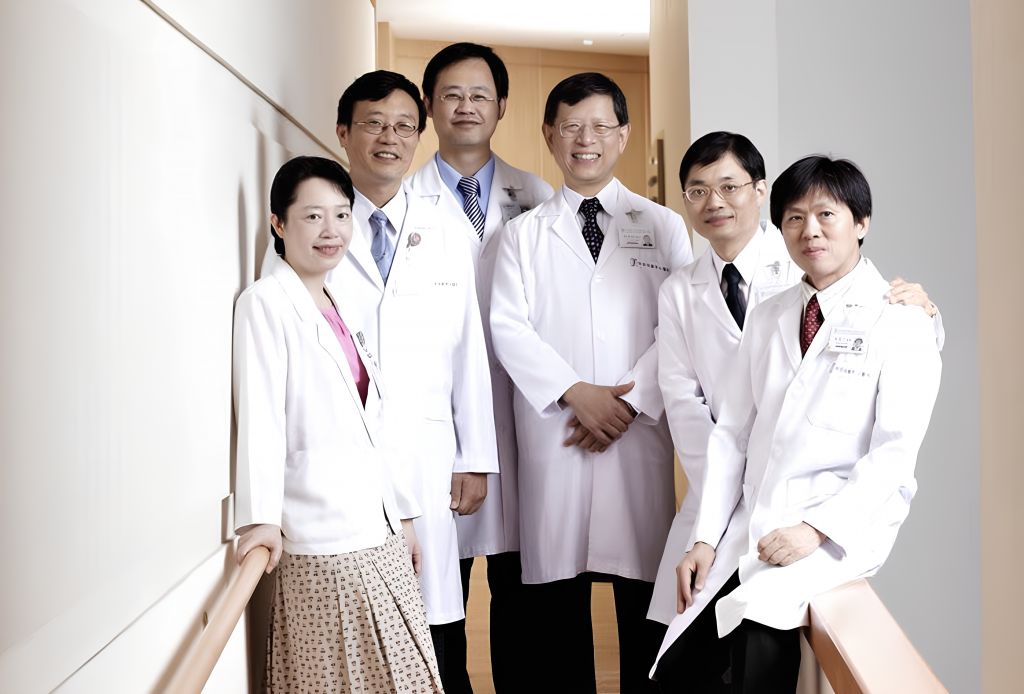
Our multidisciplinary breast cancer team brings together outstanding specialists from across the hospital. From left to right: Case Manager Yao-Ling Bi; Dr. Mei-Hua Tsao, Director of the Department of Pathology and Laboratory Medicine; Dr. Chi-Feng Chung, Medical Oncology; Dr. Chii-Ming Chen and Dr. Ben-Long Yu, General Surgery; and Dr. Kuan-Jen Lin, Diagnostic Radiology. (Photographed in 2010.)
As the team grew, general surgery expanded to include Dr. Zong-Yan Cheng, Dr. Ben-Long Yu, Dr. Zi-Rong Tsai, Dr. Chih-Chun Lee, Dr. Po-Ying Lee, and Dr. Ting-Yu Chang. Plastic surgeons Dr. Cheng-Feng Chen and Dr. Hsiu-Feng Lin support breast reconstruction. Radiation oncology partners include Dr. Jer-Min Jian, Dr. Skye Hung-Chun Chen, Dr. Yu-Chen Tsai, Dr. Ming-Chun Liu, and Dr. Chia-Hsing Wu. Medical oncology includes Dr. Nai-Ming Chu, Dr. Chi-Feng Chung, Dr. Chu-Yun Chen, Dr. Peng-Yu Chen, and Dr. Hsiao-Hsiang Cheng. Pathology is led by Dr. Mei-Hua Tsao with Dr. Ming-Yuan Lee, Dr. Li-Shun Shih, Dr. Yi-Hsin Liu, Dr. Ai-Ying Chuang, and Dr. Ko-Hung Shen. Diagnostic radiology support comes from Dr. Kuan-Jen Lin, Dr. Wan-Chen Tsai, and Dr. Wan-Chun Chao. Nuclear medicine includes Dr. Po-Tao Huang. Psychiatry provides psychosocial care through Dr. Po-Hsien Lin. In gynecology, Dr. Chi-Feng Hung and Dr. Tsung-Te Wang help manage endometrial issues that can arise with tamoxifen. With contributions from so many disciplines, our breast program has grown stronger and now achieves outstanding results.
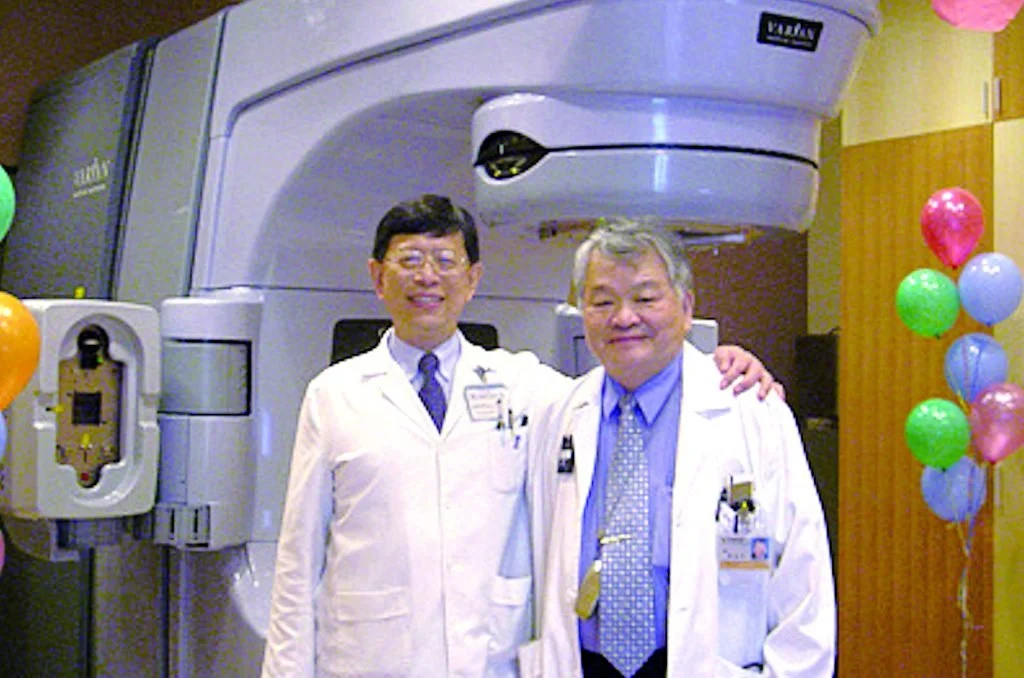
Dr. Jer-Min Jian has been my partner for three decades. That long collaboration produced deep rapport and a trusted care culture.
Training Partnerships and Resident Rotations
In the early years KFSYSCC collaborated with Taipei Veterans General Hospital and National Taiwan University Hospital to rotate their surgical residents to our center. Dr. Hsiu-Feng Lin, Dr. Ben-Long Yu, and Dr. Cheng-En Yang came from NTU, while Dr. Zong-Yan Cheng and Dr. Zi-Rong Tsai joined after completing chief-resident training at Veterans General. Our own residents also rotated to Veterans General for nine months, then returned to KFSYSCC for three months focused on subspecialties they saw less of there, such as urology, neurosurgery, orthopedics, and gynecology. Dr. Chien-Chih Chen is a standout product of this system and is now a mainstay of our colorectal service.
What Makes KFSYSCC Distinct
Unlike many hospitals, our physicians are not paid by volume. The model emphasizes teamwork so that each patient receives the most appropriate care. In breast surgery, for example, the Department of Anesthesiology began using ultrasound-guided paravertebral nerve blocks on March 29, 2011. At that time KFSYSCC was the only center in Taiwan using this technique. Patients breathe with an oxygen mask rather than undergo intubation, recover quickly, often need little or no postoperative analgesia, and can usually go home the next day. Because we hold fast to a patient-centered ethos, our outcomes exceed national averages. Across stages 0 through IV, the five-year survival rate is 92 percent and the ten-year rate is 86 percent.
Breast Cancer Academic Research Foundation
Before KFSYSCC opened, I had already run the breast clinic at Veterans General for years, gaining fluency in diagnosis and treatment. In 1989, at a gathering of friends, Mr. Yi-Rong Hsu offered to donate 500,000 New Taiwan dollars to help patients in need. His brother, Mr. Yi-Hung Hsu, immediately added one million. Moved by their generosity, we agreed on the spot to found a dedicated breast-cancer foundation. With leadership from Mr. Ming-De Yang, then vice chairman of Far Eastern Textile, supporters including Mr. Kai-Tai Yen, Mr. Jen-Cheng Wang, Mr. Jen-Da Wang, Mr. Jen-Chih Wang, Mr. Tsung-Jen Huang, Mr. Chuan Lee, Mr. Chi-Hsien Huang, Ms. Mary Lee, Ms. Lin-Li-Hua Hsu, and Ms. Ling-Hua Liao joined in with further donations. The foundation received formal approval from the Department of Health in June 1990. Many benefactors and former patients have continued to give, keeping the foundation strong.
For years the foundation has partnered with newspapers, magazines, schools, Rotary and other civic groups to deliver public talks and built a website to share practical information. Teams traveled to rural areas such as Hualien and to religious communities to teach prevention and early detection. In 2017 the foundation published A Single Book to Understand Breast Cancer, written by more than fifty experts across twelve specialties. The book quickly won praise, became a bestseller with rapid reprints, and in 2022 received the Seventh “Good Book Award” from the Taipei City Medical Association.
The Most Beautiful Smile
A smile softens distance and brings people closer. In clinic, some patients ask for a hug after their visit. I am always glad to oblige, and they leave with warmth and a smile. Colleagues tell me, “Dr. Chen, you greet old friends with genuine delight.” Another said, “Your smile is like winter sunlight.” I prefer sincerity over formality, and after decades many patients feel like family. A group once combined their thank-you notes into a jigsaw puzzle, a gift that still moves me.
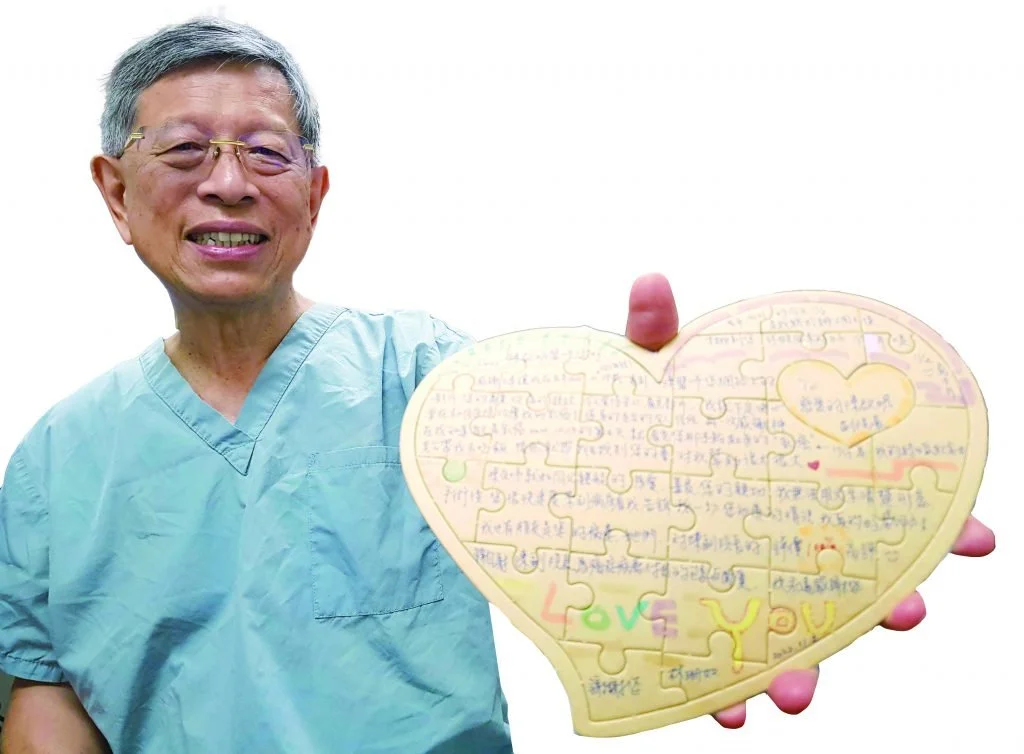
Dr. Chii-Ming Chen has built deep bonds with his patients, and many have stayed under his care for decades. Shown here is a group thank-you card they co-wrote and turned into a jigsaw puzzle to express their gratitude for his years of devoted care.
Plans for the Future
Although I have served at KFSYSCC for thirty-five years, I have no fixed retirement plan. As long as I can contribute, I will continue to care for patients. I owe deep gratitude to my wife, a dentist, who supported me through the demanding five years of residency at Veterans General while managing her own work and our home. When we have time off, we travel with friends. This year we visited Alaska, Hokkaido, the Czech Republic, Austria, France, and Italy, creating wonderful memories.
I am confident about the future. KFSYSCC is rich in talented young physicians and will continue to grow while keeping patients at the center. Let us look ahead to the hospital’s bright prospects and offer our highest respect to every health care professional who makes that vision real.