
Is Proton Therapy Really Better?
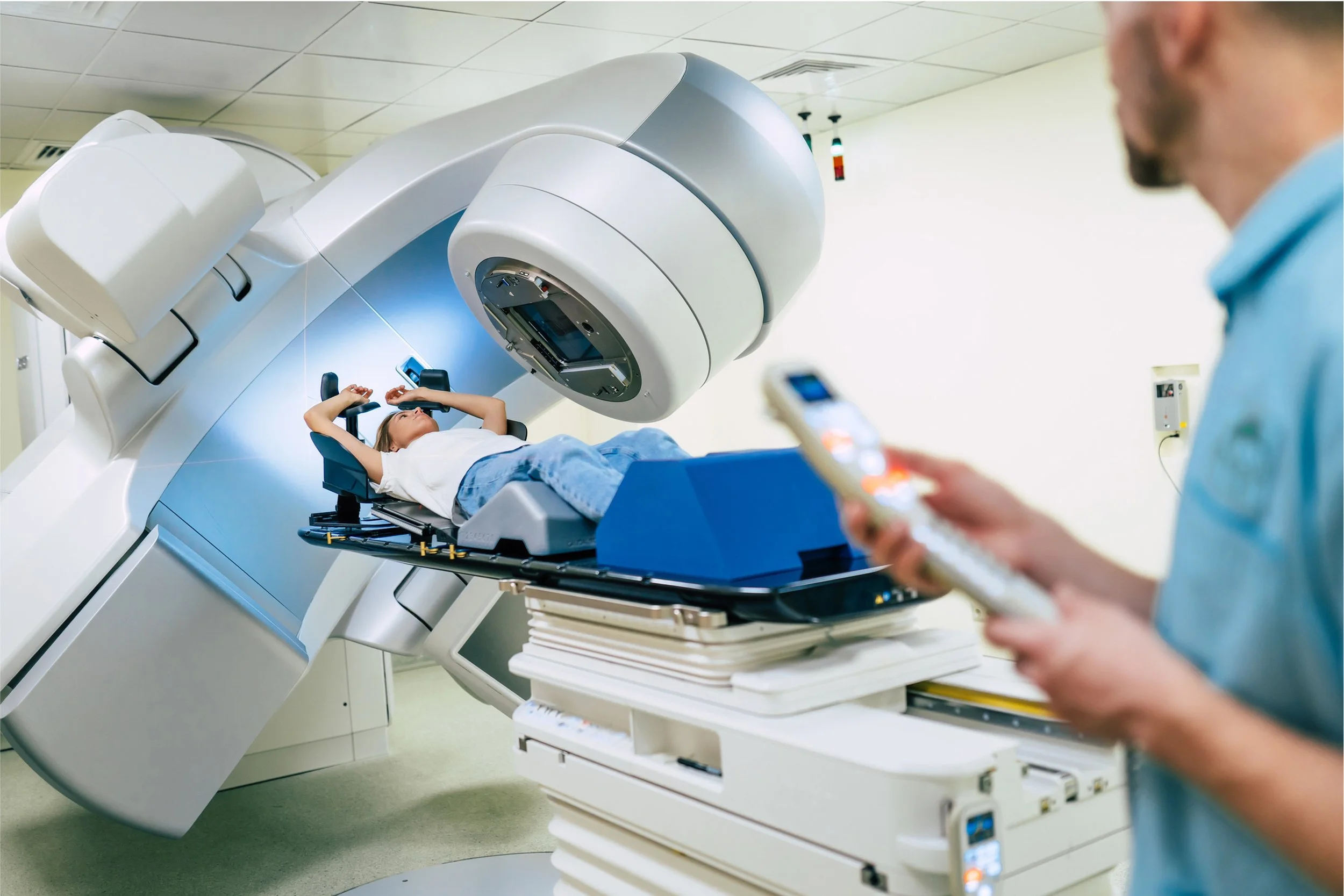
Proton therapy is often described as a more advanced form of radiation therapy than modern photon radiation such as intensity-modulated radiotherapy (IMRT). The real question, though, is whether that theoretical advantage consistently leads to better outcomes for patients, especially in quality of life and side effects, while still achieving excellent cancer control. Below is a clear, detail-rich summary of three major randomized clinical trials in head and neck cancer, breast cancer, and prostate cancer, and what their results suggest so far.
Head and Neck Cancer: TORPEdO Trial (ASTRO 2025)
At the American Society for Radiation Oncology (ASTRO) annual meeting in San Francisco on September 29, 2025, a UK research team presented the TORPEdO trial (Toxicity Reduction using Proton Beam Therapy for Oropharyngeal Squamous Cell Cancer, OPSCC). This national clinical trial, funded by Cancer Research UK and the Taylor Family Foundation, found that for patients with locally advanced oropharyngeal squamous cell cancer, proton beam therapy (PBT) was not better than IMRT in long-term quality of life and side-effect control. OPSCC is a head and neck cancer affecting the middle part of the throat and is strongly associated with HPV infection. Standard treatment often combines IMRT with chemotherapy. Cure rates can be high, but side effects can be significant, including swallowing problems severe enough to require feeding tube support.
The TORPEdO study was led by the Institute of Cancer Research in London, with Dr. David Thomson of The Christie NHS Foundation Trust as the principal investigator. Between 2020 and 2023, the team enrolled 205 patients with locally advanced OPSCC and randomized them in a 2:1 ratio to receive either intensity-modulated proton therapy (136 patients) or IMRT (69 patients). Both groups also received cisplatin chemotherapy. The median age was 57.1, 79.5% of participants were male, and 67.8% had a smoking history of under 10 pack-years. One year after treatment, feeding tube dependence was very low in both groups (1.7% in each). Severe weight loss was reported more often in the proton group (18.2%) than in the IMRT group (5.7%), but under the trial’s pre-specified combined evaluation approach, the overall difference between groups was not statistically significant.
In patient-reported outcomes, proton therapy showed fewer side effects around week six, but by one year there was no difference between groups in overall function related to saliva, taste, chewing, swallowing, speech, or appearance, and swallowing-specific measures were also the same. Cancer control was excellent in both arms as well. After a median follow-up of 28.3 months, the two-year local recurrence-free rate was 94.3% in the proton group and 96.8% in the IMRT group, while overall survival was 94.6% and 95.3%, respectively. Dr. Thomson noted that long-term patient-reported side effects and quality of life were not different, and IMRT performed even better than expected.
To understand why proton therapy was expected to help, it helps to compare the basic physics in plain terms. IMRT is an advanced photon technique that can shape radiation beams to target a tumor precisely, but photons still deposit dose along their path, which can expose nearby healthy tissue. Proton therapy uses a physical feature called the Bragg Peak, which allows most of the energy to be deposited at a specific depth, with minimal dose beyond the target. In theory, that means less radiation to healthy tissues and fewer side effects. Head and neck cancers are often discussed as a strong use case for protons because critical structures for chewing, swallowing, speaking, and hearing sit close to the treatment area. Even so, TORPEdO suggests that the dosimetric advantage did not translate into measurable long-term improvements in quality of life or function at one year.
Breast Cancer: RadComp Trial (ASTRO 2025)
A similar pattern was reported in breast cancer. Also at ASTRO 2025, researchers presented the Phase III RadComp trial, described as the first randomized trial to directly compare photon versus proton radiation therapy in breast cancer and the largest head-to-head comparison of proton versus photon radiation therapy in cancer to date. The trial was designed to address a long-running debate in radiation oncology: whether proton therapy meaningfully reduces side effects while keeping cancer control outcomes as strong as modern photon therapy.
Across 32 centers in the United States, the study enrolled 1,239 patients with non-metastatic breast cancer and randomized them to proton therapy (624 patients) or photon therapy (615 patients). The median age was 50, most had undergone mastectomy (69.6%), most had few cardiovascular risk factors (80.6%), and 61.8% had left-sided or bilateral disease. All participants received internal mammary node irradiation. Patients completed validated quality-of-life questionnaires before treatment, at the end of treatment, and at one and six months after treatment, reporting on physical, social, emotional, and functional health, as well as side effects and satisfaction.
The results showed that patients in both groups reported similarly high quality of life and treatment satisfaction across nearly all measures, including cosmetic outcomes. The RadComp team plans to continue evaluating long-term cancer control and cardiac outcomes to determine whether proton therapy can lower cardiac event risk while maintaining equivalent cure rates, but the early patient-reported quality-of-life results were essentially the same for both groups.
Prostate Cancer: PARTIQoL Trial (ASTRO 2024)
Prostate cancer research has shown the same theme. At ASTRO 2024, the PARTIQoL trial (a Phase III randomized trial) compared proton therapy with IMRT for patients with low-risk or intermediate-risk localized prostate cancer, focusing on patient quality of life. Between June 2012 and November 2021, researchers enrolled 450 patients across 29 recruiting centers and randomized them to proton therapy (226) or IMRT (224). No hormone therapy was used. Patients were stratified by institution, age, rectal spacer use, and fractionation schedule (79.2 Gy in 44 fractions versus 70 Gy in 28 fractions). Median follow-up was 60.3 months.
The primary endpoint was bowel function at 24 months, measured using the EPIC questionnaire. The study found no significant difference between proton therapy and IMRT in bowel function at 24 months, and there were no differences at earlier or later time points either. Urinary, sexual, and hormonal quality-of-life measures also showed no differences, and there was no difference in progression-related outcomes at 60 months. Harvard Medical School radiation oncologist Dr. Jason Efstathiou summarized that both IMRT and proton therapy provided excellent quality-of-life results and effective tumor control, with no measurable differences between the approaches.
Why Proton Therapy’s Physics Advantage Doesn’t Always Show Up Clinically
To understand why proton therapy was expected to help, it helps to compare the basic physics in plain terms. IMRT is an advanced photon technique that can shape radiation beams to target a tumor precisely, but photons still deposit dose along their path, which can expose nearby healthy tissue. Proton therapy uses a physical feature called the Bragg Peak, which allows most of the energy to be deposited at a specific depth, with minimal dose beyond the target. In theory, that means less radiation to healthy tissues and fewer side effects.
However, even when proton therapy reduces radiation dose to certain normal tissues on a treatment plan, that advantage may not translate into measurable long-term differences in how patients feel or function, especially when modern IMRT is delivered at a high level. The TORPEdO findings in head and neck cancer are a good example: head and neck cases are often considered one of the strongest theoretical use cases for protons, yet long-term quality-of-life measures still looked the same at one year.
What This Means for Patients and Health Systems
Putting these studies together, the takeaway is that for many common cancers treated with modern techniques, the most consistently proven factor is not whether the machine uses protons or photons, but whether the patient receives high-quality radiation therapy. Dr. Yu-Chen Tsai (蔡玉真主任), Director of the Department of Radiation Oncology at KFSYSCC, notes that there is currently no clinical evidence proving proton therapy is superior to photon therapy in improving survival or local tumor control. The core difference is that proton therapy can reduce radiation exposure to some healthy tissues because of the Bragg Peak, which may lower the likelihood of certain side effects such as fatigue or lymphocyte injury. However, because the tumor dose delivered is essentially the same, cancer control outcomes are often similar. Existing clinical trials suggest that even when small short-term differences appear, long-term follow-up often shows no significant difference in overall quality of life.
Clinically, Dr. Tsai adds that proton therapy can be particularly appropriate in specific situations where minimizing dose to healthy tissue is critical, such as certain pediatric brain tumors, ocular (uveal) melanoma, or cases requiring craniospinal irradiation (treating the whole brain and spine). On the other hand, tumors that change size rapidly or require frequent, immediate plan adjustments may be less suitable for proton therapy. From a health system perspective, she emphasizes that limited resources should prioritize ensuring broad access to high-quality IMRT, rather than investing heavily in expensive, lower-access proton facilities when the current evidence has not shown clear superiority for most patients. As Dr. Thomson concluded in the TORPEdO context, high-quality IMRT is a very strong option, and growing evidence suggests that “most expensive” does not automatically mean “best” for most patients.
Sources
ASTRO. (2025, September 29). IMRT matches proton therapy in patient-reported outcomes for oropharyngeal cancer. American Society for Radiation Oncology. https://www.astro.org/news-and-publications/news-and-media-center/news-releases/2025/imrt-matches-proton-therapy-in-patient-reported-outcomes-for
ASTRO. (2025, October 10). First randomized study comparing proton and photon radiation therapy for breast cancer finds both provide similar outcomes. American Society for Radiation Oncology. https://www.astro.org/news-and-publications/news-and-media-center/news-releases/2025/first-randomized-study-comparing-proton-and-photon-radiation-therapy-for-breast-cancer-finds-both-pr
UroToday. (2024, October). ASTRO 2024: Advanced radiation technologies – Investigating quality of life (PARTIQoL) Phase III randomized clinical trial of proton therapy vs IMRT for localized prostate cancer. https://www.urotoday.com/conference-highlights/astro-2024/astro-2024-prostate-cancer/155311-astro-2024-prostate-advanced-radiation-technologies-investigating-quality-of-life-partiqol-phase-iii-randomized-clinical-trial-of-proton-therapy-vs-imrt-for-localized-prostate-cancer.html