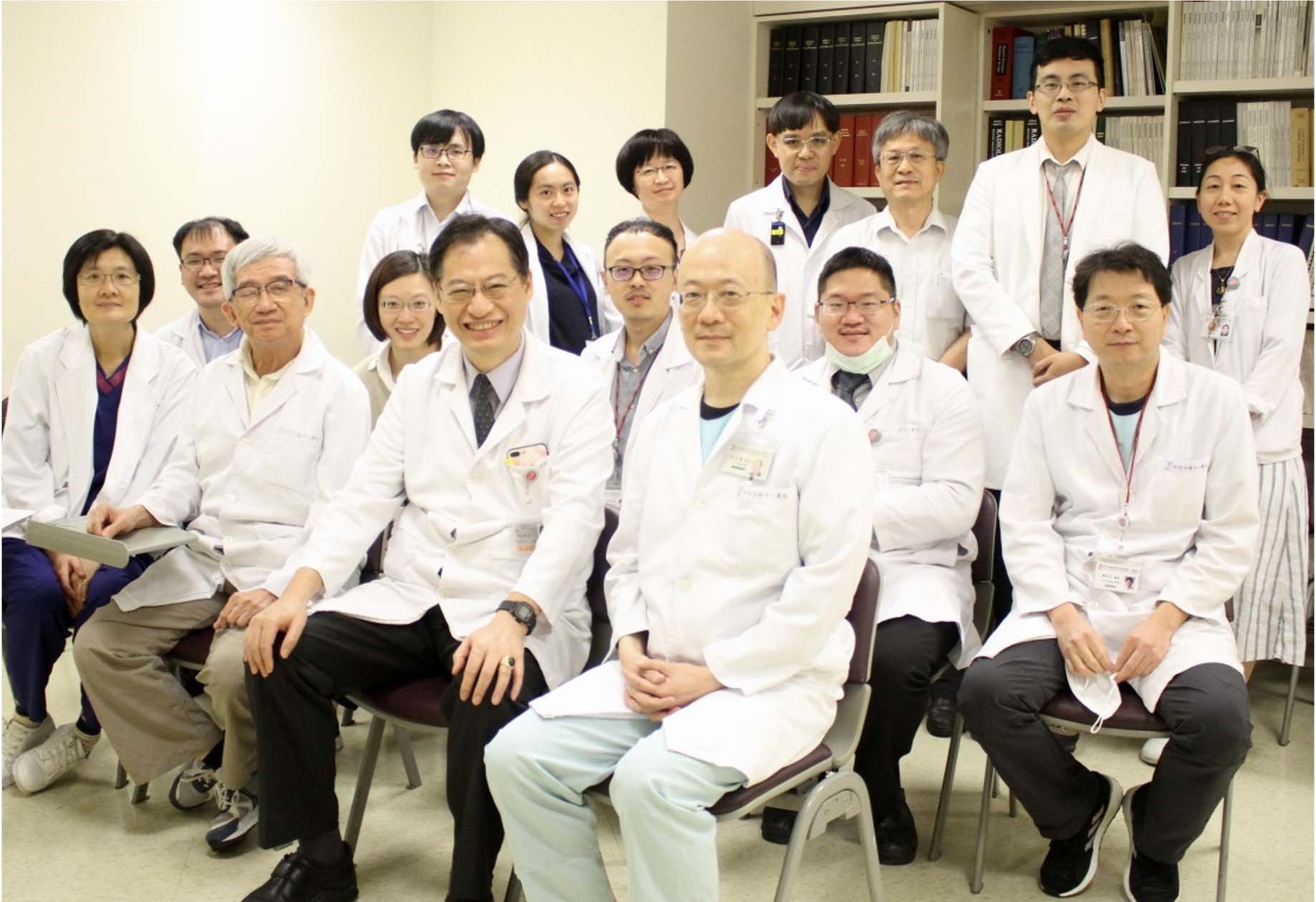

Author: Liver and Upper GI Cancer Multidisciplinary Team, Dr. Tse-Ming Kuo
Dr. Tse-Ming Kuo currently serves as a Senior Attending Physician at the Department of Gastroenterology and Hepatology at KFSYSCC and convenes the Multidisciplinary Treatment Team for Liver and Upper Gastrointestinal Tract Cancers. With his core expertise in general internal medicine, Dr. Kuo specializes in the diagnosis and treatment of hepatic and upper gastrointestinal tumors and diseases, endoscopy, colonoscopy, and upper abdominal ultrasound examination. After graduating from Kaohsiung Medical University, he commenced his medical career as a resident at Taipei Renai Hospital in 1994, progressed to an attending physician in the Department of Gastroenterology at the same hospital in 1999, and has been associated with KFSYSCC since 2001, as part of their Liver and Upper Gastrointestinal Tract Cancer Multidisciplinary Treatment Team.
The Team that Always Manages to Create Miracles
During traditional festivals, the desks of the doctors and nurses find their desks graced with handmade oily rice,. A heartfelt token of appreciation from Mr. Zeng's mother to the liver cancer team.
In early 2009, a 52-year-old Mr. Zeng came to KFSYSCC accompanied by his family, with shock and unease. He had just discovered a 13 cm large liver cancer at another hospital. Complicating his case further, Mr. Zeng had chronic Hepatitis B that had evolved into cirrhosis, and esophageal varices caused by cirrhosis. He was in imminent danger of a rupture from his large hepatic tumor and a potential bleeding episode from the esophageal varices. His prognosis without treatment was distressingly bleak, with a life expectancy of only about three months.
"What should we do?" The patient and his family's anxiety was evident on their faces. "The surgeon says that the liver function is not good and the liver tumor is too large to operate."
For the liver cancer team at KFSYSCC, the cases brought up for team discussion almost every week are all challenging, and Mr. Zeng's case was no exception. We always have to break through one limit after another. Although he couldn't undergo surgery, after the liver cancer team formulated a treatment plan, Mr. Zeng underwent underwent three sessions of transarterial chemoembolization (TACE) and initiated antiviral therapy for Hepatitis B. This approach halted the growth of his liver cancer and gradually improved his cirrhosis and liver function.
"Doctor, can my son undergo surgery?" "A year ago, he couldn't have surgery. Can you please reassess it now?" One day at the clinic, Mr. Zeng's mother personally came to KFSYSCC and pleaded with the doctor requesting a reassessment for possible surgical intervention.. "I'm afraid he still can't have surgery. Although Mr. Zeng's condition has improved, there is still a risk in performing surgery now."
The elderly mother went back disappointed. However, Mr. Zeng was very resilient and strong. In the following year and a half, he underwent four more four additional TACE sessions with encouraging outcomes. Despite the tumor size remaining at 10 cm, the arterial blood supply to the liver cancer was almost obliterated by the embolization chemotherapies. Mr. Zeng lived a good life.
On December 29, 2011, however, the cancer exhibited signs of resurgence. As usual, Mr. Zeng underwent another hepatic artery embolization chemotherapy. But this time, under abdominal angiography, the experienced Vice President Victor Zhuang could not find the blood vessels supplying the liver cancer for him to inject anticancer drugs into the liver cancer tissue. "Are there really no living liver cancer cells left?" "The liver cancer index alpha-fetoprotein is still rising." The internist had doubts, because cunning cancer cells usually don't give up so easily. Therefore, Mr. Zeng spent tens of thousands of dollars to undergo a full-body positron emission tomography (PET) scan, but he still couldn't clearly identify where the viable liver cancer cells were. By March 2012, Mr. Zeng underwent an abdominal CT scan, and the tumor index alpha-fetoprotein had reached 1331ng/ml. However, the CT scan could not identify where the cancer cells had gone. Had they already metastasized to other organs? Or were they still in the liver, just escaping the tight surveillance of modern medical equipment? "What should we do?" Even the internist who had been caring for Mr. Zeng for three years was distressed, so he raised this tricky situation to the multidisciplinary liver cancer treatment team for discussion, to see if other colleagues had better suggestions.
During the team meeting, Professor Gao, who usually conducts molecular research on liver cancer, said, "There's a high probability that the liver cancer cells are still in the liver; they just can't be detected." "However, it seems to be a solitary liver tumor, we should ask the surgeon to evaluate if it can be operated on!" — This suggestion opened a new window of opportunity for Mr. Zeng. His liver function had greatly improved, and after a pre-operative assessment by Director Cheng, Mr. Zeng successfully underwent surgery to remove a 10cm liver cancer in June 2012 without any post-operative complications. Indeed, the pathological report from the surgery showed that 20% of the liver cancer cells were still alive, which is why they were not detected before the surgery. The cancer hadn't metastasized; it was still in the liver, but with fewer blood vessels, it was missed by the medical examinations.
As of 2020, Mr. Zeng's liver cancer has not recurred, and he is leading a healthy life. Thanks to the team led by Deputy Dean Zhuang, who excelled in transarterial chemoembolization, they managed to control the 13cm liver cancer. Additionally, with the aid of the hepatobiliary internal medicine team, they restrained the growth and ravages of Hepatitis B with antiviral drugs, greatly improving liver function. Finally, under the skillful hands of Director Cheng, the liver cancer was removed. From a prognosis of not living past three months to full control of the disease, this is indeed a team that can create miracles!
Liver cancer is a common cancer in Taiwan, usually caused by Hepatitis B, Hepatitis C, and alcoholic hepatitis. Although recent antiviral drugs can control Hepatitis B and C, and comprehensive newborn Hepatitis B vaccination has controlled the number of people contracting hepatitis, the high risk of liver cancer due to hepatitis is still a concern for the population.
While liver cancer is daunting, if detected early and treated appropriately, it can be cured, and lifespan and survival rates can be extended. In short, treatments for liver cancer include surgery, liver transplantation, radiofrequency ablation, alcohol injection, TACE, targeted therapy, immunotherapy, and in some cases, radiotherapy and chemotherapy can be administered.
1. Surgical Treatment
Surgery is the most effective method to eradicate liver cancer, but the feasibility of surgery depends on many factors. Good liver function is an important factor; if the liver function is poor, even if the tumor is successfully removed, the patient cannot recover smoothly. Additionally, if the patient has other diseases that increase the risk of surgery and anesthesia, surgery is not advisable. For example, if a patient suffers from severe coronary artery disease or chronic obstructive pulmonary disease that significantly affects heart and lung function, surgery is not suitable. The location and size of the tumor also affect the difficulty of the operation. Tumors located on the edge and surface of the liver are generally easier to remove than those located in the center and deep within the liver. Whether the tumor is too close to blood vessels, affecting tumor separation, is also an important consideration. Surgical methods range from traditional open surgery to 2D and 3D laparoscopic surgery, and robot-assisted da Vinci surgery. Surgeons will choose the most appropriate procedure based on the patient's actual condition. For a more accurate preoperative assessment, advanced abdominal CT scanning and 3D imaging reconstruction software are used, allowing surgeons to plan the scope and size of the resection before surgery, and to predict the course of blood and bile ducts during the operation. Furthermore, for intraoperative tumor recognition, in addition to using the naked eye and laparoscopic close-up camera lens, a drug to track small liver tumors can be injected into the patient before the operation. Then, infrared irradiation is used to produce a fluorescent effect during the operation, helping identify small liver cancers on the surface that are not easily detectable, and enabling their successful removal.
2. Hepatic Arterial Embolization and Chemotherapy
Surgical intervention for liver cancer is a highly effective strategy for eradication, but its application is limited due to the low proportion of patients suitable for surgery at diagnosis. A prevalent alternative is Hepatic Arterial Embolization and Chemotherapy, which leverages fluoroscopy X-rays to insert a catheter from the right femoral artery into the hepatic artery. Given that liver cancer primarily draws its blood supply from the hepatic artery, chemotherapy drugs delivered through this artery target cancer cells effectively, reducing the collateral damage to healthy cells typically associated with systemic chemotherapy. Additionally, injecting microspheres and specific oil droplets into the hepatic artery obstructs its blood flow temporarily, thereby starving the cancer cells and leading to cell death. This approach essentially combines embolization (starvation) and chemotherapy (poisoning) to target the liver cancer cells.
Despite its logical appeal, the effectiveness of Hepatic Arterial Embolization can be limited under certain circumstances. For example, arterial blood flow to the liver cancer may not be suitable in volume for achieving the desired treatment outcome, a situation commonly found in liver cancers smaller than 2 cm. Additionally, liver cancers located peripherally or extending beyond the liver may draw blood supply from arteries beyond the hepatic artery, complicating the treatment. For example, left lobe cancers might be fed by smaller arteries serving the stomach, and non-discriminate embolization and chemotherapy could cause stomach ulcers and bleeding.
The procedure may involve complications such as pain, fever, and liver dysfunction, often requiring hospitalization for several days post-treatment. However, most patients can be discharged within a week. A small percentage may develop a liver abscess due to bacterial invasion of necrotic liver cancer cells, necessitating drainage and antibiotic therapy.
Hepatic Arterial Embolization and Chemotherapy offer significant relief for patients unsuitable for surgery, electrocautery, or transplantation. While it may not offer a complete cure in one session, the procedure, repeated every 3 to 6 months, can enhance survival rates and maintain quality of life, making it a key strategy for the internal medicine treatment of liver cancer.
3. Radiofrequency Ablation (RFA)
Radiofrequency Ablation uses radio waves to generate heat for ablating liver cancer cells. An electrode, designed specifically for this purpose, is inserted into the liver tissue and radiofrequency waves are passed through it to generate heat, typically maintained around 70°C. This procedure can effectively eliminate liver cancer without the need for removing liver tissue, providing an effective and alternative aggressive treatment for patients not suitable for surgery. It is primarily used for single liver tumors not exceeding 3 cm.
Accurate insertion of the electrode into the tumor is crucial for the success of this technique, necessitating real-time computer tomography or abdominal ultrasound guidance. Although the actual ablation process takes about 20 minutes, the localization of the tumor and post-procedure observation require considerable time, extending the total duration of the treatment.
In cases where the tumor location makes image-guided puncture difficult, the procedure can be conducted with laparoscopic assistance. The laparoscope provides real-time imaging and ultrasound guidance for needle insertion while allowing for movement of surrounding organs to prevent thermal injury.
4. Systemic Drug Therapy
Systemic Drug Therapy encompasses targeted therapy, immunotherapy, and chemotherapy. Thanks to the progress in molecular biomedicine, novel drugs and treatment combinations are continually emerging and expanding the scope of treatment.
Currently, these treatments are primarily recommended for patients with severe, complex liver cancer, but who maintain good liver function. When used appropriately, they can extend survival rates while preserving quality of life. First-line drugs include Sorafenib, Levatinib, and the combination of Atezolizumab and Bevacizumab. Second-line drugs include Regorafenib, Cabozantinib, Ramucirumab, Pembrolizumab, and the combination of Nivolumab and Ipilimumab, among others.
Gastric Cancer
Once a common cancer, the incidence of gastric cancer in Taiwan has declined significantly due to improvements in public health and successful eradication therapies for Helicobacter pylori.
The primary treatment for gastric cancer remains surgical intervention. In cases of metastasis where surgery is not feasible, systemic chemotherapy is employed.
Early-stage gastric cancer can often be cured with surgical removal. Recently, some early-stage patients can undergo gastric mucosal resection, or endoscopic removal, preserving a larger portion of the stomach, enhancing quality of life, and yielding survival rates on par with surgical treatment.
Our institution boasts impressive outcomes in treating gastric cancer, with five-year survival rates for stage I patients at 95.9%, far surpassing the national average of 73.4%. For stage II patients, the five-year survival rate is 73.5%, significantly above the national average of 54.2%. Even for stage III patients, our five-year survival rate of 35.9% exceeds the national average of 25.3%.