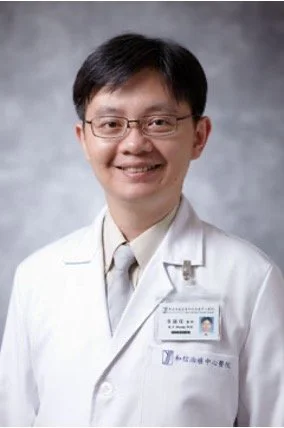
Author: Colorectal Cancer Multidisciplinary Team, Dr. Kuo-Cheng Huang
Dr. Kuo-Cheng Huang is a Senior Attending Physician at KFSYSCC, specializing in Oncology and Internal Medicine, with a sub-specialization in colorectal and urological malignancies. An alumnus of National Yang Ming University, Dr. Huang embarked on his medical journey as a resident physician in the Department of Internal Medicine at KFSYSCC in 2003, progressing to his current position in Hematology and Oncology since 2009. Additionally, he is a valued contributor to the hospital's integrated, multidisciplinary teams specializing in colorectal and urological cancers.
I’m Not Afraid, I’m Confident
A Patient's Narrative: Mr. Lin's Cancer Journey
Awakening from the anesthesia, I heard the reassuring words of a familiar voice, "Mr. Lin, you're awake! The surgery was successful, please rest easily." Half-opened eyes surveyed the dimly lit room, catching sight of familiar faces. A cool draft whistled gently through my nostrils. Exhaustion swept over me as my eyes struggled to adjust to the light before succumbing to fatigue, yet my mind teemed with vivid recollections.
Images from the CT scan depicting tumors in my liver and lungs flashed across the computer screen. My wife's anxious expression, the moisture of our clasped hands, the surgeon's meticulous explanation, his confidence radiating through his steady gaze and comforting smile. In the preoperative area, I chatted with the nurses I'd come to know...
The steady rhythm of the monitor was a reminder that the surgery was over, and Iwas now in recovery. There was no fear, just a sense of reassurance.
As a patient with colorectal cancer that had metastasized to the liver and lungs, I have been undergoing treatment at KFSYSCC for the primary and liver metastases for seven years. After numerous sessions of targeted therapy and chemotherapy, five liver surgeries, and two lung surgeries, recent examinations showed no sign of recurrent tumors. Though the journey has been daunting, I owe my resilience to the unfailing dedication of my medical team.
The surgical oncologists, professional and confident, have been instrumental in this journey. Their detailed preoperative plans, surgical skills, and postoperative care are attributes that have shepherded me through each medical hurdle. Oncologists patiently elucidate my condition and the associated treatment plans. With each treatment, strategies to mitigate side effects are carefully considered and applied. At every juncture, guidance is provided on the path ahead. During my hospitalization, the compassionate care provided by nurses and specialist nurses was indispensable in my recovery from surgery and enduring each round of chemotherapy. Even during periods of mental anguish, their patient ears and comforting words were a source of strength. The professionalism and care exhibited by all healthcare providers, from nurses to technicians, phlebotomists to administrative staff, have been pillars of support, offering reassurance during every clinic visit.
During a recent birthday celebration, my friends, amazed by my journey and resilience in battling such a severe illness, made a pledge to celebrate every birthday with me henceforth, ensuring I'd never face this alone.
Indeed, this journey with cancer has been filled with fear, vulnerability, and periods of desolation. However, through the steadfast support of the KFSYSCC team, I've learned to confront these uncertainties, to be brave, resilient, and to maintain a positive outlook. I now cherish every day, cognizant that on this path, I am not alone, nor afraid; I feel assured.
Advancements in Colorectal Cancer Treatment and the Importance of Team-based Healthcare
The past two decades have witnessed remarkable advancements in the treatment of colorectal cancer. Concurrently, patient survival rates have improved, treatment-related side effects have decreased, and patients' quality of life has significantly improved. A crucial element to these accomplishments lies in the coordinated efforts of multidisciplinary teams throughout the treatment process.
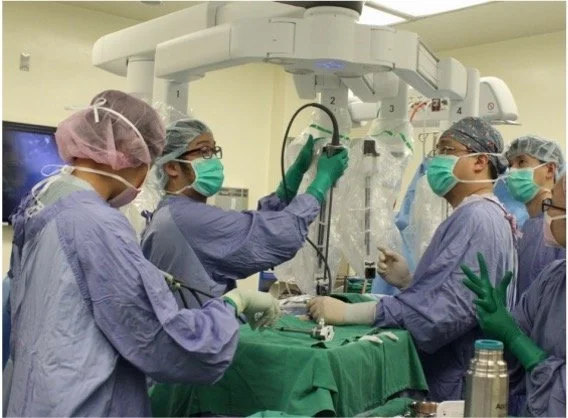
In keeping with these advancements, KFSYSCC continues to evolve, transitioning from traditional open surgeries to laparoscopic surgeries, and more recently to robotic-assisted surgeries. The hospital is at the forefront in embracing these new technologies, offering state-of-the-art treatment options to patients. The advent of minimally invasive surgical techniques has been a boon, ensuring effective tumor resection while minimizing patient discomfort, facilitating quicker recovery, and permitting early initiation of subsequent treatments. For suitable patients, minimally invasive surgery can be utilized to resect colorectal, liver, and peritoneal tumors concurrently, reducing the need for multiple surgeries and the associated risk of complications.
Our hospital has been making strides in global advancements concerning transanal total mesorectal excision (TaTME) surgeries in recent years. This innovative technique effectively circumvents issues associated with conventional low rectal cancer operations while offering a significant increase in the likelihood of anus preservation for patients.
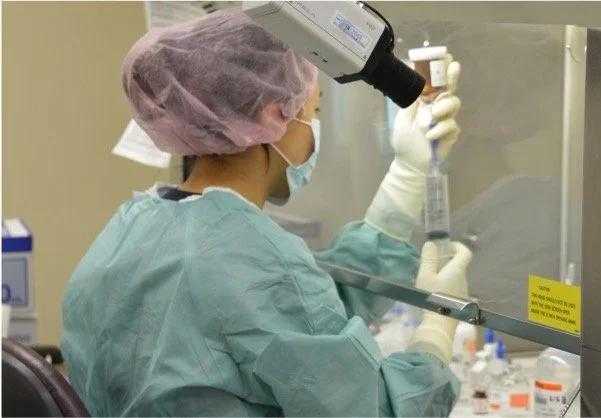
The market is teeming with chemotherapy, targeted therapy, and immunotherapy drugs. However, the judicious selection and application of these options are vital to treatment success. We utilize personalized tumor genetic testing to understand tumor characteristics at the initial diagnosis stage, helping us to choose the most effective drug and design patient-specific treatment plans. Taking into account the patient's overall health, physical capabilities, and tolerability, we adjust the appropriate therapeutic dosage to optimize treatment outcomes, minimizing side effects and maintaining patients' quality of life. Patients have the option to undergo chemotherapy in hospital or use a home-based chemotherapy infusion device, based on their individual needs. By maintaining a patient-centered ethos, we develop our treatment protocols to reflect the ethos of personalized medicine in this new era.
In rectal cancer treatment, radiotherapy serves as an integral component. Administering neoadjuvant radiotherapy and chemotherapy can considerably lower the risk of local recurrence, increase tumor shrinkage, and enhance the possibility of preserving the anal sphincter, thereby eliminating the necessity for a colostomy. Traditional five-week treatment regimes can place substantial strain on patients and their families. As a response, our hospital, in line with international medical trends, adopted a five-day radiotherapy regimen several years ago. This approach, apart from being equally effective and with similar side effects as the traditional five-week course, notably reduces treatment duration and lessens the physical and emotional burden of frequent hospital visits, providing significant relief for distant patients. For patients showing inadequate responses to chemotherapy, concurrent radiotherapy can effectively alleviate discomfort and restore quality of life.
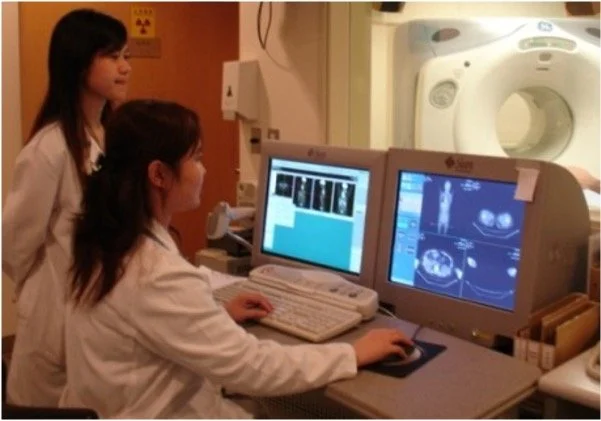
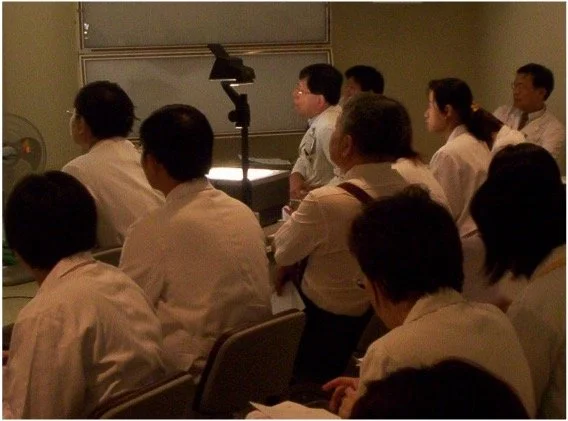
Effective colorectal cancer treatment demands more than the singular efforts of doctors; it requires a collaborative approach to prevent any treatment oversights or incompleteness. We were pioneers in implementing a multidisciplinary team model, with weekly meetings facilitating real-time discussions between various specialists, enabling the formulation of the most suitable treatment plan for each patient. Radiologists and pathologists provide input and offer accurate disease diagnosis and assessment. During the treatment, surgical, medical, and radiation oncologists collaborate to determine the best timing and strategy for intervention. Our emergency and inpatient medical and nursing teams assist patients in managing treatment-induced side effects or complications.
In addition, we've introduced a unique case management care model. From the initial diagnosis, every patient is assigned a dedicated case manager to bridge communication gaps between patients and medical teams and ensure seamless coordination among different departments. If patients or their families have any concerns, the case manager is there to provide answers with patience. We are proud to have a team of nurses who embody the "patient-centered" ethos, working tirelessly to ensure every medical procedure is conducted correctly and resolving any patient concerns with compassion.
Our colorectal cancer team has built up a wealth of experience over thirty years. We are confident in providing optimal medical care and support throughout your journey to recovery from colorectal cancer. At every stage, there is someone accompanying you, guiding you towards the next step.
It's natural to be afraid; we will accompany you every step of the way.
Battling cancer is a marathon, not a sprint. This journey is laden with unpredictable challenges and adversaries. The inherent uncertainty of disease and treatment can provoke fear, anxiety, depression, and emotional unrest. We empathize with the feelings of helplessness, disappointment, and exhaustion you may experience.
We want you to know that it's acceptable not to be fearless, it's okay to be scared; we are here to support you. Fear may cloud your vision, and stress may weary your heart, but you possess the strength to face and overcome these challenges.
We believe in you and will stand by you throughout this journey.