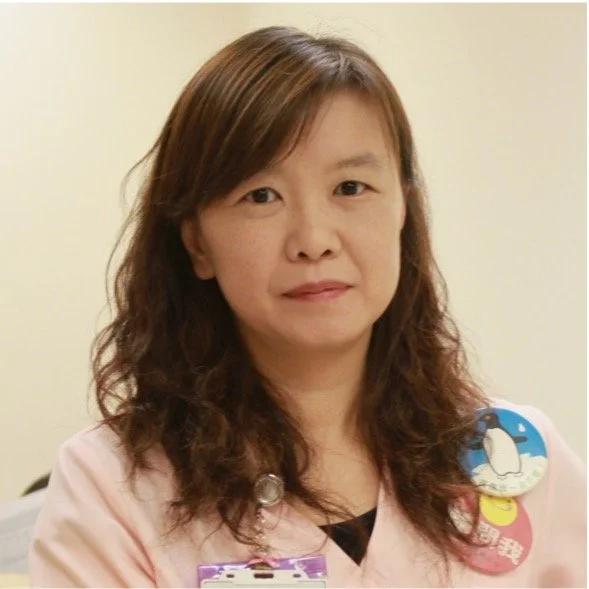
Author: Director of Patient Services, Julia Tseng
Director Tseng currently holds the position of Director of the Patient Service Center and the Public Affairs Department at KFSYSCC. Her expertise lies in hospital management and medical law. She obtained her Bachelor's degree in Pharmacy from Kaohsiung Medical University. She also holds a Master's degree in Public Administration (MPA) from the University of Hartford in the USA and a Bachelor's degree in Law from Fu Jen Catholic University after completing her initial bachelor's degree. She started her service in this hospital in 1998 and has been the Director of the Patient Service Center since 2004.
Cancer Patients are Our Life Teachers
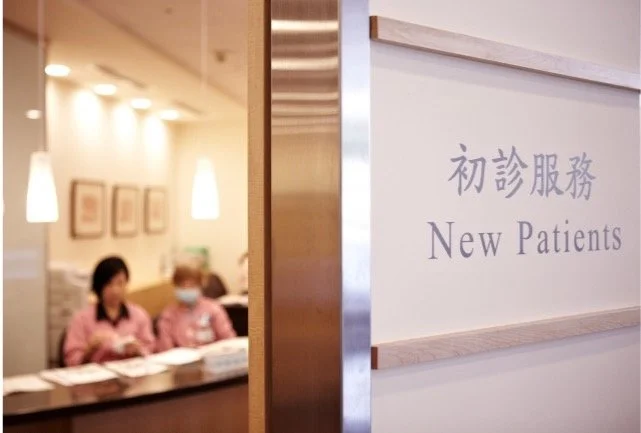
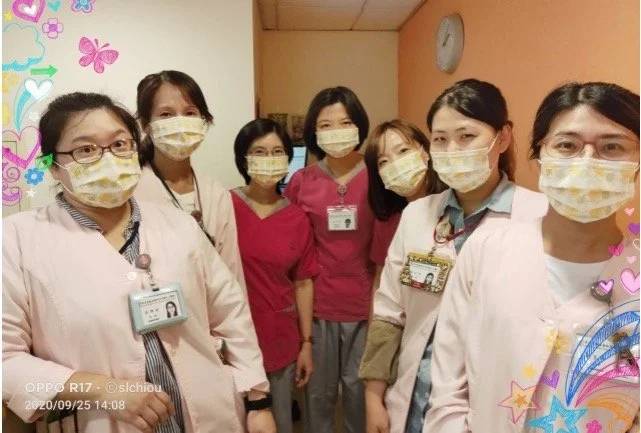
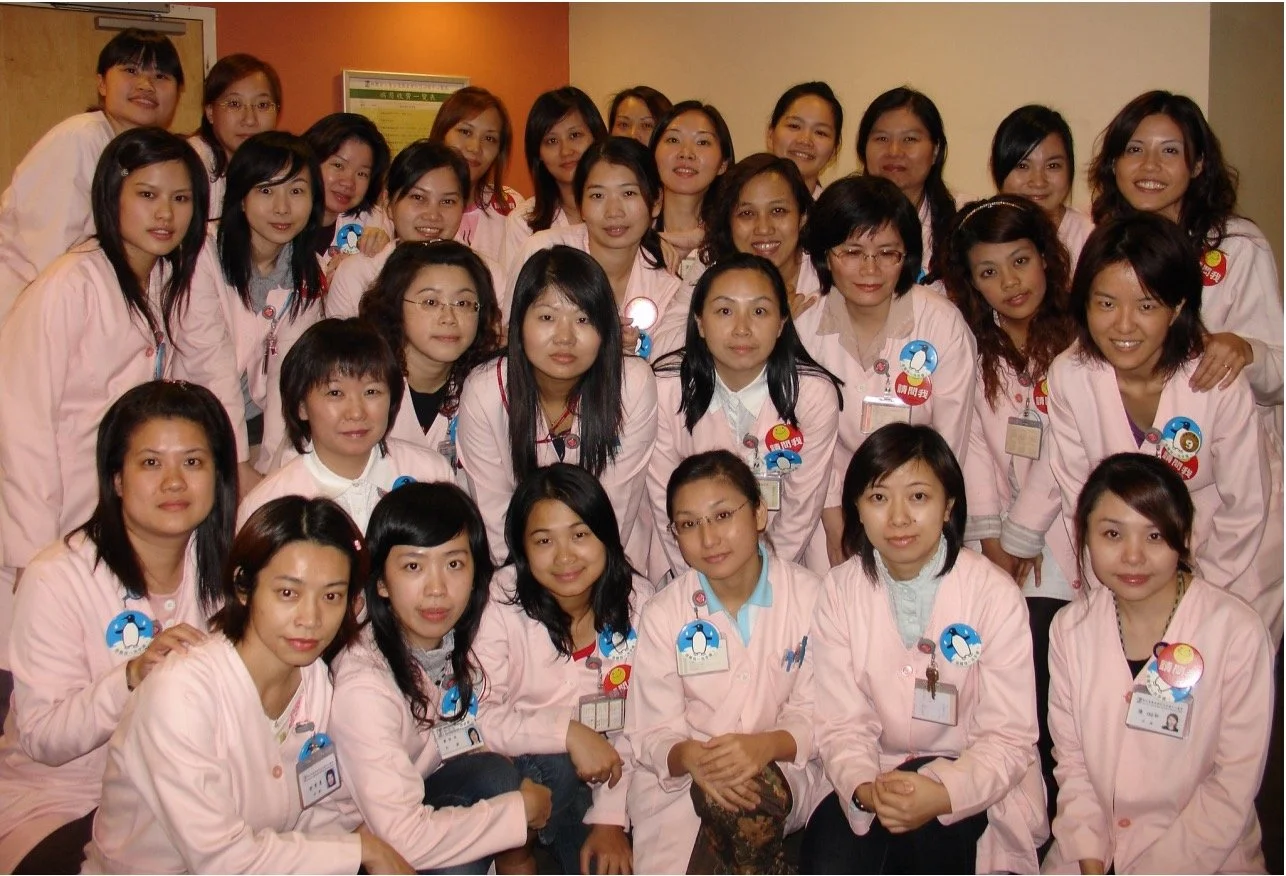
The "Patient Service Center" was established in 2004 and has been in operation for over 16 years. Originally a division under the Financial Department's counter service team, it became a separate entity. When it was established, its name, "Patient Service Center," stirred a minor controversy. Historically, department names were prefixed with terms equivalent to "section" or "department". Some colleagues felt that having a "center" within the "Cancer Center" sounded overly "prestigious". However, Director Huang eventually chose the name "Patient Service Center" because its main function is to serve patients. The name makes it clear and obvious where patients should go when they need services. From its inception with 38 staff members to its current team of 62, the center's growth serves as solid evidence of the hospital's commitment to providing top-tier care for its patients without considering costs.
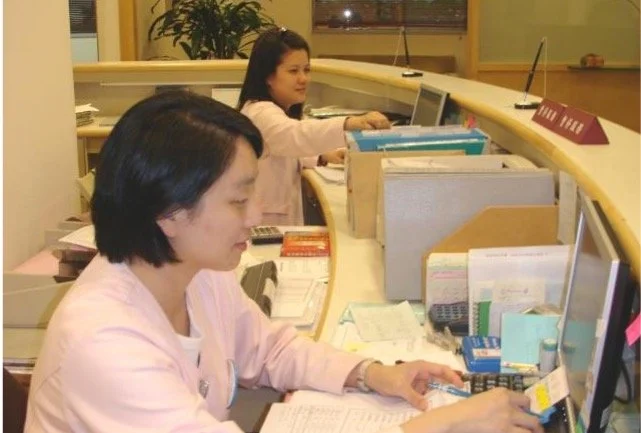
Continuing the original spirit set by Director Christina Lin of the Finance Department in establishing the counter service team, the center adopted a decentralized service approach rather than a centralized one. This means wherever patients require services, a counter of the Patient Service Center is available, ensuring that patients receive assistance whenever needed. Over the past sixteen years, there have been significant evolutions in the counter service of the Patient Service Center. Initially, patients stood while receiving services, but this changed in subsequent versions. By the third generation of outpatient services, the counters were designed to be open-concept, integrated into patient waiting areas, a reflection of our patient-centric approach.
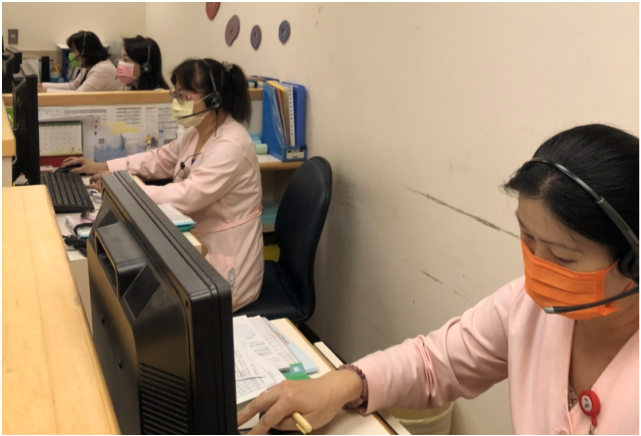
The range of services offered by the Patient Service Center includes answering calls, registration, outpatient, billing, scheduling of non-invasive diagnostic tests, admission and discharge procedures, medical bill consultation, medical certification, medical record duplication, screening registration, complaints, and more. These cover almost all non-medical services a patient might need during their treatment. The center also acts as a platform for patients to directly contribute to improving service processes or advocate for resource allocation. This includes features like an online appointment platform, live progress displays, online hospital bill estimators, fee structures, bed allocations, automatic outpatient check-ins, and outpatient registration slots.
Furthermore, through the service complaints channel provided by the Patient Service Center, patients have the opportunity to directly influence hospital operational management. For instance, a light indicator at the blood draw counter was installed following patient feedback. When patients or their family members highlighted issues, swift actions were taken to address them. Whether it was the installation of well-designed shelves in isolation wards or the management of lost items during hospital stays, patients' suggestions from service complaints led to numerous improvements like credit card services, free WiFi, live progress displays, and patient clothing designs.
Patients of the Koo Foundation Sun Yat-Sen Cancer Center, often undergoing cancer treatments, frequently move in and out of the hospital as if it's an extension of their own home, building strong bonds with the staff. The Patient Service Center's team often knows many patients inside out and has shared countless heartwarming and memorable stories. One patient, having undergone five different cancer treatments during his time at KFSYSCC, always maintained a positive attitude. He often said he wasn't afraid of his diagnoses due to the excellent care he received and the unwavering support from his loving wife. He has a beautiful wife who takes care of him better than anyone else in the world. Even though he has been battling cancer for 20 years, it was never hard on him. Instead, it was his wife who bore the weight of his illness. Recently, I met her at the hospital. As we reminisced about him, she told me, "Ever since he got sick, he was most afraid of making me worry or leaving me alone. He would rarely admit when he was in pain or felt unwell, fearing I'd get too tired. Even though he went through cancer treatments five times, whenever he felt well, he would always take me traveling around the world. Taking care of him was never a burden to me.”
I remember a patient from Penghu, a burly man with thick eyebrows and big eyes. Every time we asked for his name, he'd say in a chilly voice, "Leng, as in 'cold'." New colleagues would shiver at his introduction. He had a particular disdain for beds near the restroom. If there was ever a delay in assigning him a bed, he would protest loudly at the hospital counter, emphasizing that his name is Leng, not Bai (implying a different meaning in Chinese). Through constant communication and actions, we assured everyone got their turn by the window. Considering the difficulty he had purchasing plane tickets from Penghu, we promised to inform him about bed availability three days prior to hospitalization. Over time, he taught us that true service is built on trust. Mr. Leng came to deeply appreciate the staff and would often tell other patients not to mistreat us. He even offered his help in resolving bed assignment issues.
We had a patient, an accountant by profession, who was diagnosed with breast cancer. She often scrutinized our billing explanations. Every time she received a bill upon discharge, she couldn't help but let her professional instincts kick in, critiquing our work. The staff that served her were trained by her to accurately explain the bill. She told us, "For patients, both health and money are crucial. Hospitals can't just bill patients; they should clearly explain the costs." I remember the day she passed away; a colleague mentioned that there was no longer a "teacher" to check our billing explanations.
Late at night, as I write this, it's as if I'm reliving the 16 years since the Patient Service Center was established. The memories of many patients come flooding back. Patients have always been our best teachers. We've learned how to care for them and gained invaluable life lessons and wisdom from their experiences. We would like to thank all the patients at our hospital. It has been an honor to serve cancer patients, fighting this battle alongside them, which brings unparalleled meaning to our work.