
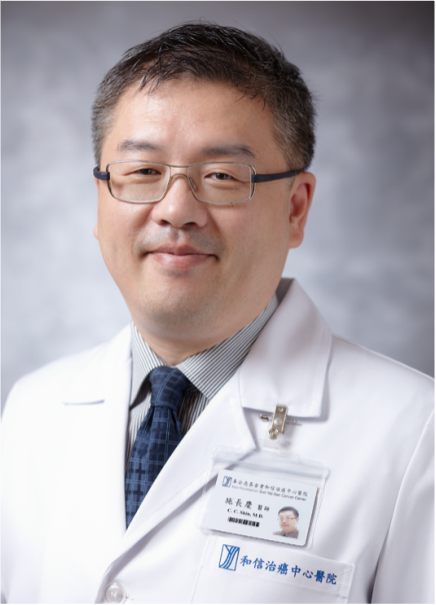
Author: Infection Control Room Head, Dr. Simon Chiang-Ching Shih
Dr. Shih currently serves as the Chief of General Medicine at KFSYSCC and the main attending physician in the Infectious Disease Department. His expertise lies in infectious diseases, general internal medicine, and infection control. He holds a Bachelor of Medicine from Taipei Medical College and an EMBA degree from National Taiwan University. He began his career in 1989 at the Provincial Taipei Hospital and moved to the National Taiwan University Hospital in 1993. In 1995, he started his service at KFSYSCC. Dr. Shi furthered his studies in the U.S. at Duke University in 1998, and has held teaching positions at various medical institutions in Taiwan.
Good Infection Control Equals Patient Safety and Peace of Mind
KFSYSCC is primarily a cancer specialty hospital, with over 90% of its patients being cancer patients. Due to the weakened immune systems of these patients, they are far more susceptible to infections than the average person. This means that infection control within the hospital must adhere to the highest standards. The goal is to protect every patient, staff member, and visitor from potential infections, ensuring that harmful pathogens do not spread through any means.
Protecting Cancer Patients with Diligence:
Cancer patients generally have weakened immune systems. For example, while an average person might not easily succumb to an infection by Pseudomonas aeruginosa, a cancer patient exposed to the same bacterium would face a doubled risk, which in many cases equates to facing mortality. Another prominent example is mold, which is common in the air. Taiwan's humid and warm climate ensures a substantial presence of mold.
Under these conditions, a healthy individual, who isn't undergoing chemotherapy and has normal white blood cell counts, might at most suffer from allergies or sneezes. However, if these molds enter the lungs of a cancer patient, they could easily cause pneumonia with a mortality rate reaching up to 80%.
The hospital's director is acutely aware of the infection risks faced by cancer patients. He emphasizes stringent infection control and offers full support in this domain. He often reminds the staff of the vulnerability of the patients, emphasizing the utmost care. Director Huang's unwavering belief has motivated frontline medical staff, making them feel that the director supports all infection-related measures whole-heartedly. Wang Jingyi, the Assistant Chief of Nursing who has served for almost 25 years, believes that the top management's support is crucial for the consistent implementation of infection controls.
Thus, all staff members at KFSYSCC work diligently and cautiously to ensure the safety of their cancer patients. Recent statistics from national hospitals reveal that KFSYSCC’s rate of superbug infections is significantly lower than most other medical centers. For instance, out of every ten patients infected with Staphylococcus aureus at KFSYSCC, fewer than three are affected by the antibiotic-resistant strain MRSA. In contrast, other medical centers have an average of five to six. For many other superbugs, He Xin has incidence rates that are half, or even one-tenth of other centers, arguably the lowest nationally. While superbugs are indeed menacing, proper infection control measures, spatial planning, and workflow design can mitigate their impact.
Common Transmission Routes in Hospitals:
Hospitals are gathering places for various viruses, bacteria, and molds. Some pathogens spread through the air, causing infections when inhaled. Others spread through droplets produced by coughing, contaminating our skin, mouth, and nose, or surfaces like tables and chairs, which can then cause infections upon contact.
Airborne transmission is highly contagious and can be mitigated with proper ventilation and air filtration systems. However, such transmission is limited to certain diseases like measles, tuberculosis, and chickenpox. Most infectious diseases spread through droplets and direct contact, making handwashing paramount. The Japanese have a commendable practice: when they return home, they always wash their hands before greeting family members and having meals. In hospitals, where contact opportunities are ample, it's vital to wash hands before and after interacting with patients. That's why He Xin Hospital emphasizes the importance of handwashing and has set up numerous handwashing stations.
As for face masks, wearing them is more effective when done by individuals with contagious diseases or coughs than by everyone. Hence, the hospital stresses the "cough etiquette" which means if you have a cold or cough, besides washing hands, you should wear a mask to protect others.
Specific Measures to Control Infection:
The success of a hospital in maintaining ideal infection control, ensuring the safety of patients, staff, and visitors, heavily relies on the institution's commitment and the resources invested. KFSYSCC, under its director's leadership, has been fully dedicated to both visible and subtle aspects of this endeavor. The Infection Control Department plays a central role in these measures. Apart from monitoring infection rates across departments, they also establish and help implement standard infection control practices while addressing questions and concerns of different departments.
Annual Infection Control Audits: Besides the annual infection control assessments by the Department of Health and Welfare, our hospital undergoes evaluations every three years by the Joint Commission International (JCI). We utilize their advanced tools and methods to conduct comprehensive and systematic evaluations of our infection control measures, diving deep into every detail. We review and make improvements yearly, ensuring that all procedures meet international standards.
Prevention of Cross-contamination: To prevent airborne and contact transmissions, which account for a significant portion of infections, the hospital has heavily invested in equipment, manpower, and design. We provide ample and accessible handwashing facilities, conduct regular checks on staff hand hygiene, and ensure that our wards, at most, accommodate two patients to prevent overcrowding and cross-contamination. Our emergency rooms are compartmentalized to offer patients and families a comfortable environment and to minimize the spread of infections. By not having shopping or dining areas, we aim to reduce visitor and staff density, thus minimizing potential transmission.
Strict Isolation Measures: Patients identified with highly antibiotic-resistant strains or highly infectious pathogens are immediately isolated in separate rooms, preventing bacterial spread and ensuring the safety of other patients and staff. We're grateful for the cooperation of these isolated patients, ensuring a safer environment for all.
Ventilation: Adequate air exchange is paramount for infection control. Our hospital rooms have a minimum of six air exchanges per hour. Operating rooms and bone marrow transplant rooms exceed 20 exchanges, ensuring sufficient fresh air to dilute airborne pathogens. Our 24/7 advanced air exchange system filters bacteria and fungi, maintaining air quality.
Dust Control During Construction: We pay strict attention to dust during construction. As ceilings can easily trap contaminants like mold spores, any construction near patient areas is fully enclosed, maintaining a negative pressure environment to expel contaminated air and prevent mold retention.
Specialized Rooms: For immunocompromised patients, our rooms offer filtered air, removing almost 99.99% of infectious agents. The air in our operating rooms is also filtered to create a sterile zone. Infectious patients requiring isolation are placed in negative pressure rooms to prevent contaminated air from escaping until they're no longer infectious.
Combination Care: We've implemented evidence-backed measures in a combined approach to care, aiming to reduce hospital-acquired infections. We monitor the execution and outcomes, providing feedback to all hospital departments and staff to strive for continuous improvement.
Teamwork for a Safe Environment: Nurses play a crucial role in infection control. In addition to their understanding and adherence to protocols, they also educate patients and families. Our hospital boasts the highest nurse-to-patient ratio in the country, ensuring that nurses can diligently follow infection control measures without being rushed.
Cleaning Initiatives: We've made extensive efforts in maintaining cleanliness, from establishing cleaning protocols to training and auditing the performance of cleaning staff. Strategies like timely patient discharges and outpatient treatments help in ensuring a clean environment, thus reducing the chances of infections.
Antibiotic Stewardship: Our infectious disease specialists and pharmacists play pivotal roles. Misuse of antibiotics can lead to antibiotic-resistant bacteria. Hence, our hospital mandates authorization from infectious disease specialists for certain antibiotics. Doctors are regularly reminded of the importance of proper antibiotic use. Our specialists also investigate the causes of infections to reduce recurrences and unnecessary antibiotic use.
In summary, every member of our hospital, from the director to frontline staff, is committed to providing safe care for our patients. We recognize that treating illnesses like cancer is challenging enough without the added burden of preventable infections. We urge our colleagues to continuously strive for a safer healthcare environment. We deeply appreciate the dedication and cooperation of all our partners in this endeavor.