
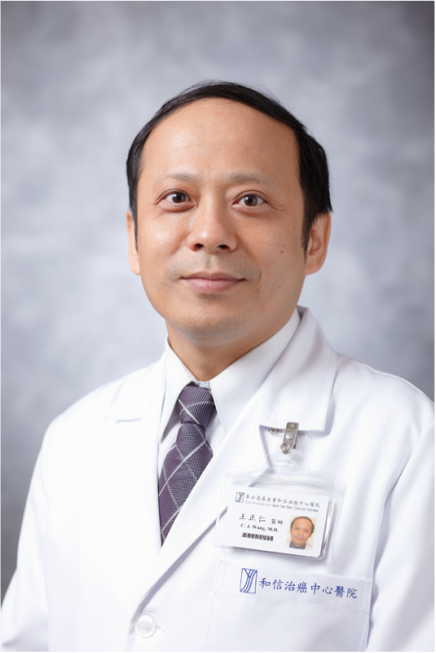
Author: Cancer Pain Management Multidisciplinary Team, Dr. Cheng Jen Wang
Dr. Wang is currently the Senior Attending Physician of Neurosurgery at KFSYSCC’s Surgical Department. He is also the convener of the Cancer Pain Multidisciplinary Treatment Team. His specialties include tumor pain control, and the diagnosis and treatment of brain and spinal tumors. He holds a Bachelor of Medicine from National Taiwan University. In 1989, he served as a resident physician in neurosurgery at National Taiwan University Hospital. In 1995, he became a specialist research physician in neuro-oncology at Duke University in the USA. Since 1997, he has been serving at this hospital. He is involved with the hospital's Neurological Cancer Multidisciplinary Treatment Team, Cancer Pain Multidisciplinary Treatment Team, and the Palliative Care Multidisciplinary Treatment Team.
Pain Management
In the multidisciplinary teams of the Koo Foundation Sun Yat-Sen Cancer Center, the most unique is the Pain Management Team. Rather than focusing on treating a specific type of cancer, their main goal is to control pain, a symptom universally feared, especially by cancer patients.
Over the past 30 years, our team, based on the unique characteristics of this hospital and advancements in medical technology, and drawing from international literature, has established and continuously updated pain management guidelines suitable for our institution. These guidelines serve as a reference for all our staff in terms of pain screening, evaluation, treatment, use of analgesics, follow-up, and prevention for patients admitted to our hospital. For hospitalized patients who endure severe pain for more than 24 hours, our team will be automatically alerted through our information system and will proactively intervene to provide pain management recommendations. For patients with particularly challenging pain management needs, our team discusses their cases in group meetings, pooling our collective wisdom to find the best treatment approach. Our team comprises anesthesiologists, psychiatrists, palliative care doctors, rehabilitation physicians, neurosurgeons, pharmacists, social workers, and nursing staff. We also periodically offer in-service training related to pain management to enhance the professional capabilities of all staff.
All these measures and efforts aim to realize the vision of a "pain-free hospital," ensuring that our patients receive the highest quality of pain management, thereby improving their quality of life and even potentially increasing cure and survival rates. Numerous domestic and international medical reports have confirmed that effective symptom control can enhance cancer cure and survival rates.
The United Nations Charter states that people have the right to be free from pain. Being free from pain is a fundamental human right. Pain is now considered the fifth vital sign, equally as important as heartbeat, blood pressure, respiration, and temperature. Many fear pain even more than death, especially those who have experienced severe pain. This suffering is not limited to physical pain but also encompasses psychological, social, and spiritual dimensions. Based on our hospital's commitment to our patients, our team strives to provide the best holistic care.
An 80-year-old grandfather, with advanced prostate cancer that had metastasized to various bones, came to the outpatient clinic with a saddened face and only had one thing to say, "Living is too hard. Can you let me go quickly?" As a young man, he was a military officer and spoke of how he endured wars and experienced hardships. He feared nothing. Now, in his old age and being ill, he fears neither death nor living but finds living so painful, to the point where he can't eat or sleep and just wishes for a swift end.
The retired general, unexpectedly, shed tears of sorrow. He believed in enduring everything and thought that using painkillers was bad. If he used them now, he would become resistant to them If he needed painkillers in the future. He also thought that if the pain could end him swiftly, he would find relief. As the disease progressed and pain intensified, he couldn't bear it any longer. Hence, after days and nights of torment, he came to the clinic asking how he could hasten his end.
Among all the interdisciplinary teams at KFSYSCC, the most unique is the pain management team. Their objective isn't tied to treating a specific type of cancer, but is established around "pain control," a symptom that everyone, especially cancer patients, fears.
After being hospitalized and receiving care from the Pain Management Team, the elderly man's pain was effectively controlled. He not only regained his quality of life but also became open to further treatment to control his disease's progression. His smile became a great source of motivation for the team.