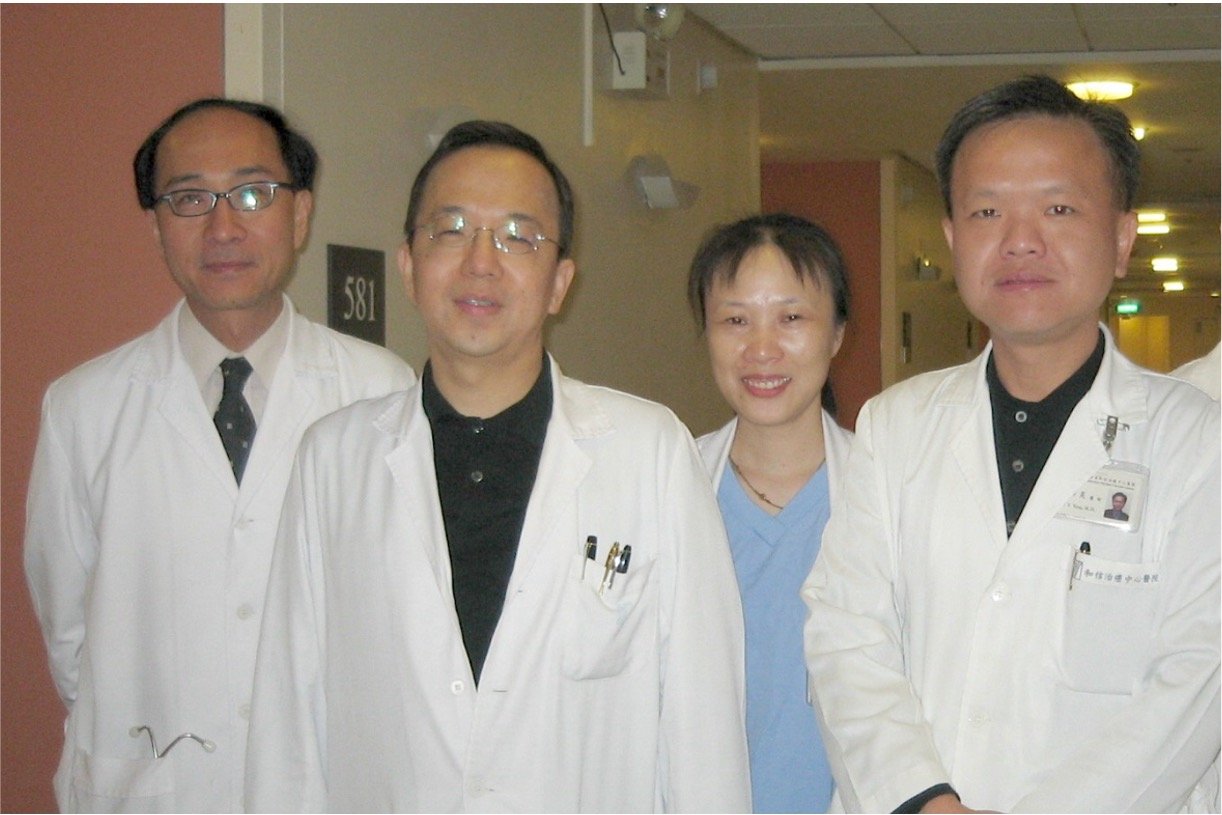
Author: Urological Cancer Multidisciplinary Team, Dr. Lien Yen Yang, Dr. Jian Jer-Min
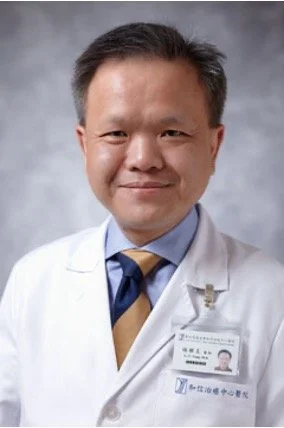
Dr. Yang is currently the Senior Attending Physician in the Urology Department, he also convenes the multidisciplinary team focused on urological cancers. His specialties encompass urological oncology, laparoscopic surgeries, and the treatment of prostate enlargement. A medical graduate of Taipei Medical University, Dr. Yang's journey began in 1990 at Taipei Veterans General Hospital in the Urology Department and later became chief resident at VGH. Since 1995, he has been an integral part of KFSYSCC. Moreover, in 1996, he lent his expertise as a clinical researcher at the Baylor Medical Center's Urology Division and continues to play a pivotal role in the hospital’s urological cancer multidisciplinary team.
A Friend of KFSYSCC: A Fighter Against Four Different Cancers
Mr. Lin has been gone for eight years. During nearly 20 years of his life, he was diagnosed with four different types of cancer. His indomitable spirit in fighting cancer is truly admirable. With the unwavering support of his devoted wife, he was able to overcome the challenges he faced. The journey of the couple supporting each other in their fight against cancer offers many lessons for us.
Mr. Lin, a determined and successful small to medium-sized business owner, faced his first cancer diagnosis in 1991 at the age of forty-seven. He was diagnosed with nasopharyngeal carcinoma due to hearing loss in his right ear and blood in his phlegm. . Since his Japanese restaurant was located next to Ren'ai Hospital, and at that time, the Koo Foundation Sun Yat-sen Cancer Treatment Center was located on the 8th and 10th floors of Taipei City Ren'ai Hospital, he decided to seek treatment at Taiwan's first specialized cancer hospital..
At the time, KFSYSCC had Taiwan's first MRI machine. After the exam, he center diagnosed Mr. Lin with stage II nasopharyngeal cancer. He underwent a rigorous seven-week regimen of combined radiotherapy and chemotherapy regimen, tailored specifically for his condition. Although his disease was brought under control, because the radiotherapy techniques of the time was limited to three-dimensional spatial therapy instead of the current intensity-modulated radiation therapy, his salivary glands could not be spared. This resulted in chronic dry mouth for Mr. Lin. Nonetheless, subsequent 12-year follow-ups revealed no other significant health issues.
Later, during a health check-up, an abdominal ultrasound revealed kidney stones in Mr. Lin. Upon further examination in urology, it was found that the kidney stone was less than 0.5 cm. It was decided to monitor the stone, but a cystoscopy revealed a bladder tumor. A biopsy confirmed it as stage I urothelial carcinoma.
In February 2003, Mr. Lin's urothelial carcinoma was endoscopically excised, followed by 15 intravesical chemotherapy treatments over a year. Subsequent endoscopic follow-ups showed no local recurrence.
In March the following year, during a routine check-up, a small lesion was detected in Mr. Lin's right upper lung through a chest X-ray. A CT-guided biopsy confirmed it as lung adenocarcinoma. On May 21, 2004, he underwent endoscopic resection of the right upper lobe of the lung and lymph node dissection. The pathology report showed a 2 cm lung adenoma and a metastatic nodule in a mediastinal lymph node. He then underwent localized radiation therapy of 5000 cGy in 25 sessions.
Unfortunately, in December 2004, another nodule was discovered in Mr. Lin's right upper lung during a chest X-ray examination. An endoscopic biopsy revealed it to be a tuberculous nodule, not a recurrence of lung cancer. As it was confirmed to be tuberculosis, Mr. Lin took anti-tuberculosis drugs for a year. Under careful supervision, he spent the next two years in good health.
During a routine check-up in June 2006, it was found that Mr. Lin's Prostatic Specific Antigen (PSA) levels were elevated. After a transrectal ultrasound combined with a prostate biopsy, it was confirmed that Mr. Lin had prostate cancer. MRI and bone scans showed that the lesion was confined to the prostate, indicating stage II prostate cancer.
The treatment options for stage II prostate cancer include surgical removal or seven weeks of radiation therapy. After discussing with Mr. Lin and his family, Mr. Lin decided to undergo surgical removal. We then scheduled a radical prostatectomy combined with a pelvic lymph node dissection for him in six weeks. After the surgery was completed, the pathological report indicated stage II. He recovered well after the operation, and there was no sign of urinary incontinence.
Even after undergoing four cancer treatments, Mr. Lin continued to live his ordinary life, running a Japanese restaurant and continuing to travel abroad. Due to Mr. Lin's frequent visits to KFSYSCC over the past ten years, he has become acquainted with many doctors, nurses, medical and administrative staff in the hospital.
Over the years, everyone who met him always reminded him to quit smoking, but he just couldn't give it up.
As a result, a year and a half after Mr. Lin's prostate cancer surgery, he was hospitalized again for pneumonia. This time, his hospitalization was primarily due to bronchiectasis combined with bacterial infection, clearly related to smoking. After two calm years, Mr. Lin was admitted again for gallstone surgery, followed by a successful discharge.
In July 2011, when Mr. Lin underwent a chest X-ray examination, we discovered a 2.8 cm tumor in his right upper lung. After further CT scans, we suspected lung cancer. Subsequent biopsy examinations under CT guidance confirmed a secondary lung tumor, a recurrent lung adenocarcinoma, seven years after his first lung tumor surgery.
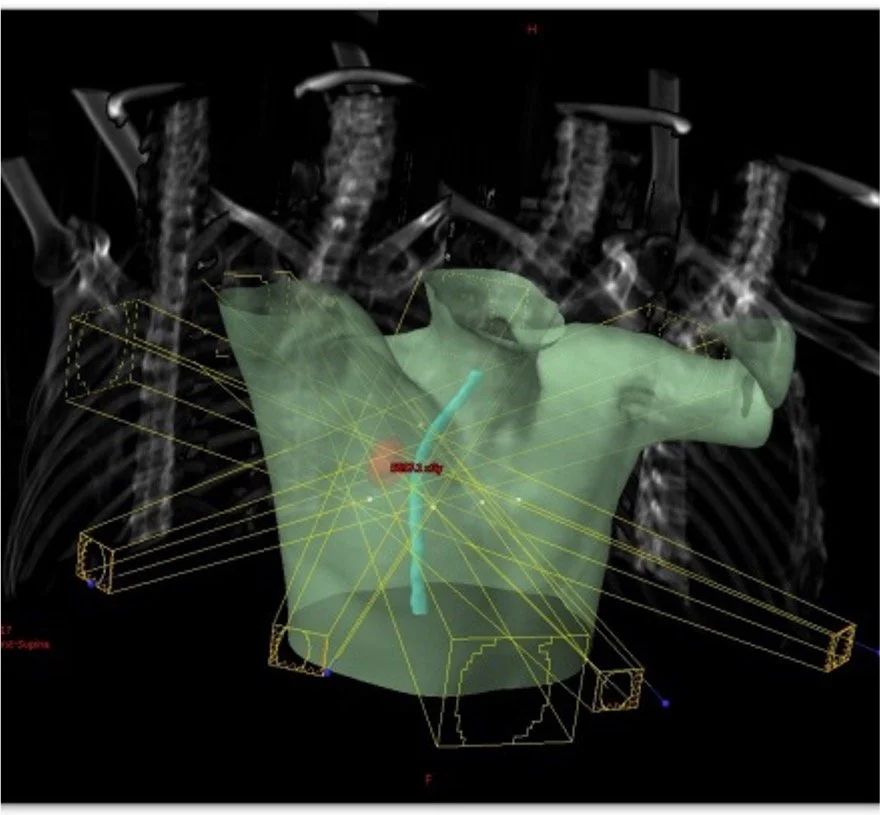
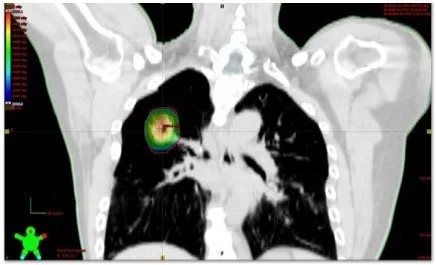
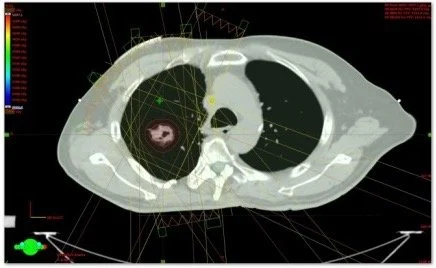
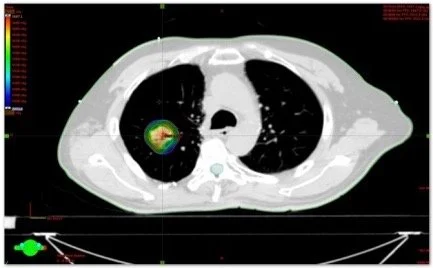
Because of his previous surgery and radiation therapy, Mr. Lin's lung function was impaired, making another surgery unsuitable. After team discussions, we decided to use localized radiation treatment, delivering high doses of radiation within the tumor region. He received treatment seven times over two weeks, 600cGy each time, totaling 4200cGy.
After the treatment, Mr. Lin was stable. Unfortunately, a month later, he went to a convenience store but forgot to buy cigarettes. When he was about to check out after returning to purchase them, a car suddenly crashed into the store, breaking the shinbone of his left leg. This accident meant he had to use crutches for more than a month. Truly, when it rains, it pours.
A year after the second lung adenocarcinoma treatment, in August 2012, Mr. Lin and his wife traveled to Northern Europe. Amid the beautiful scenery, he suddenly felt unwell. He was rushed to a local hospital but unfortunately passed away. The diagnosis was a heart attack, and he was 67 years old.
Of all the days we spent with Mr. Lin, one of the most interesting is that after the Koo Foundation Sun Yat-Sen Cancer Center moved from Ren Ai Hospital to its current location in Guandu in 1998, Mr. Lin had a wish. He wanted to close his Japanese restaurant next to Ren Ai Hospital and relocate to KFSYSCC in Guandu to serve the staff, patients, and their families.
At the time, there was available space on the first floor of the hospital. We fulfilled Mr. Lin's wish and allowed him to set up his Japanese restaurant on the right side of the main entrance. Looking back on the 30 years since the establishment of KFSYSCC, Mr. Lin had been with the hospital for over 20 years.
Given his journey with cancer, it's not an exaggeration to say he was a dear friend of KFSYSCC.