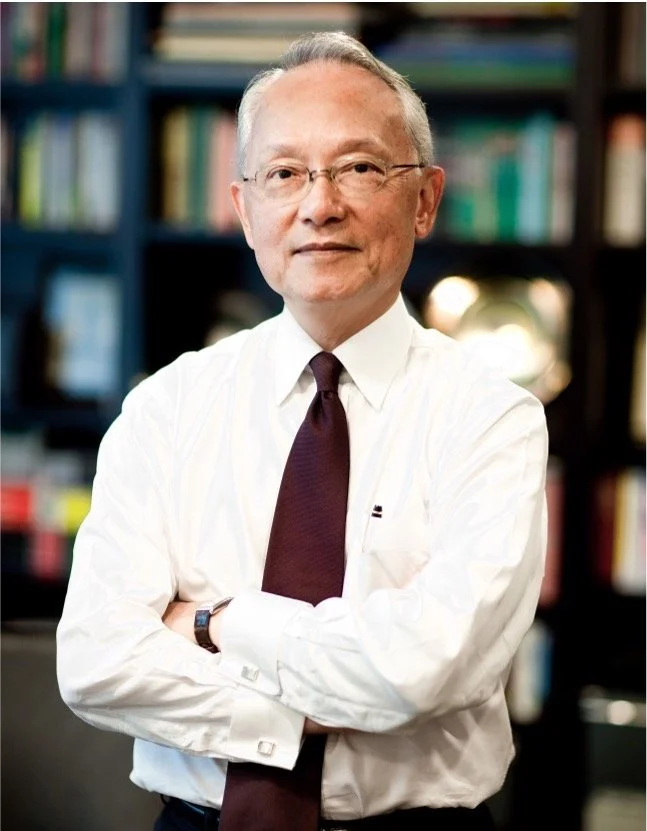
Author: President/CEO, Dr. Andrew T. Huang
Dr. Andrew T. Huang was born in Taipei and received his medical degree from National Taiwan University College of Medicine in 1964. He subsequently pursued postgraduate training at the University of Pennsylvania and Duke University. He joined the faculty at Duke University School of Medicine in 1971. During these formative years, Dr. Huang had the opportunity to work closely with many distinguished clinical professors and researchers who deeply influenced his approach to medical education and patient care. He started the innovative multi-disciplinary, patient-centered care model at the Duke Comprehensive Cancer Center in 1976 and later became its clinical director. Dr. Huang was appointed a full Professor of Medicine in the Department of Hematologic Malignancies and Cellular Therapy at Duke in 1983.
Dr. Huang returned to Taipei at the end of 1989 with the vision to transform health care in Taiwan by establishing Taiwan’s first free-standing cancer hospital in 1990. He served as the President of the Chinese Oncology Society from 1993 to 1995. In Taiwan, he was a key member of the Residency Review Committee in the Forum on Medical Specialty Training at the National Health Research Institutes from 1998 to 2008, also serving as its Chairman from 2004 to 2008.
His editorial prowess is evidenced by his role on the Editorial Board of Breast Disease from 1998 to 2005. He chaired Taiwan's National Committee on Quality of Health Care from 2000 to 2006 and has been a pivotal figure in medical education accreditation, serving on the Taiwan Medical College Accreditation Council from 2000 to 2012, including a term as Chairman from 2009 to 2012.
He has since served as the Chairman of the Committee on Medical Science for the ROC-USA Business Council, Co-Chairman of The Duke Colloquium, and a Member of the Advisory Board of Duke Institute of Global Health. His varied roles and enduring commitment to medical excellence make him a cornerstone in both American and Taiwanese medical communities.
30th Anniversary: President/CEO’s Preface
Multidisciplinary Integrated Healthcare Teams: The Secret to Improved Cancer Survival Rates
Having witnessed half a century of developments in cancer care, I am convinced that the key to improving cancer survival rates is a multi-disciplinary, integrated healthcare team. During the 1970s, when I was working at the Duke University Cancer Center in the United States, we first pushed for the implementation of this team-based healthcare model. I was personally in charge of a team caring for challenging cases of head and neck cancers. A decade later, we observed that the five-year survival rate for patients with head and neck cancers had increased from 30% in 1976 to 68% (a finding published in the New England Journal of Medicine). During this time, there were no significant advances in chemotherapy drugs, surgery or radiation therapy methods. What made the difference was the team approach, which allowed more eyes to observe, more minds to think, and collaborative brainstorming, resulting in more accurate diagnoses and precise treatments. In this process, the team jointly decided on the most appropriate treatment plan for the patient, including the sequence of chemotherapy, radiotherapy, or surgery. The team consisted not only of diagnostic and oncology physicians but also nutritionists, social workers, psychologists, psychiatrists, pharmacists, and nurses, providing holistic care for all aspects of patients' physical and mental well-being, which further promoted their early recovery. Coupled with an all-out effort to prevent and control hospital-acquired infections, the results were unexpectedly excellent.
Recently, someone asked me what I am most proud of at the Koo Foundation Sun Yat-Sen Cancer Center (KFSYSCC) has reached its thirtieth anniversary. Without hesitation, I said it was our treatment outcomes; we have changed the lives of many patients. According to the latest statistics from the Health Promotion Administration, the average five-year survival rate for all patients (from stage 0 to stage 4) at KFSYSCC is 74%, while the average five-year survival rate in Taiwan is 52%. This difference of over 20% is significant, meaning that for every five patients treated, KFSYSCC can save one additional life.
Over the course of thirty years, the various cancer treatment teams at KFSYSCC have honed their skills and collaboration, reducing inter-disciplinary gaps, improving synergy, and consequently, advancing medical outcomes. After the hospital's inception, the average five-year survival rate for patients in the first eight years (1990-1997) was 57%. In the second five-year period (1998-2002), it was 58%. In the third five-year period (2003-2007), it increased to 64%. In the fourth five-year period (2008-2012), it rose to 69%. In the most recent five years (2013-2017), it reached 74%, indicating a steady upward trend. Therefore, I firmly believe that multidisciplinary integrated team healthcare is the key to improving cancer survival rates. The secret lies in harnessing the professional value of different healthcare personnel, rather than investing in expensive equipment.