
Routine Pap‐Smears Aren’t Enough: They Need a Watchful Eye

A 49-year-old woman had always played by the rules: every year or two she booked a Pap smear, convinced this habit would shield her from cervical cancer. For several rounds the reports carried only minor abnormalities, nothing her doctors considered urgent. Then, in November 2023, a routine smear at a neighborhood clinic flagged something more serious. She was sent to a tertiary medical center, where colposcopy, high-risk HPV testing and endocervical curettage confirmed cervical intra-epithelial neoplasia grade 2 (CIN 2). A cold-knife conization followed. The surgical specimen told a grimmer story, CIN 3 with dysplastic cells right up to the cut edge. Despite that positive margin, her physician suggested nothing more than a repeat visit six months later.
By April 2024 the follow-up Pap still showed CIN 2, yet no extra intervention was arranged. Four months after that, the smear had deteriorated to CIN 3. In September she underwent a second conization; pathology now revealed squamous-cell carcinoma with a stromal invasion depth of 3.03 mm—at least FIGO stage IA2—and once again malignant cells touched the specimen margin, proof that cancer remained in the cervix.
Alarmed, she sought a second opinion at the end of September. The KFSYSCC tumor board, reviewing outside pathology slides, immediately spotted the danger signs that had been overlooked elsewhere. An MRI in October displayed a 3.3-centimetre mass occupying the cervix and likely invading the left parametrium. Her squamous-cell carcinoma antigen had climbed to 10.5 ng mL⁻¹, signaling active disease. Final staging settled at FIGO IIB, a moderately differentiated squamous-cell carcinoma. The treatment plan shifted to concurrent chemoradiation, a far cry from the limited excision that might have sufficed ten months earlier.
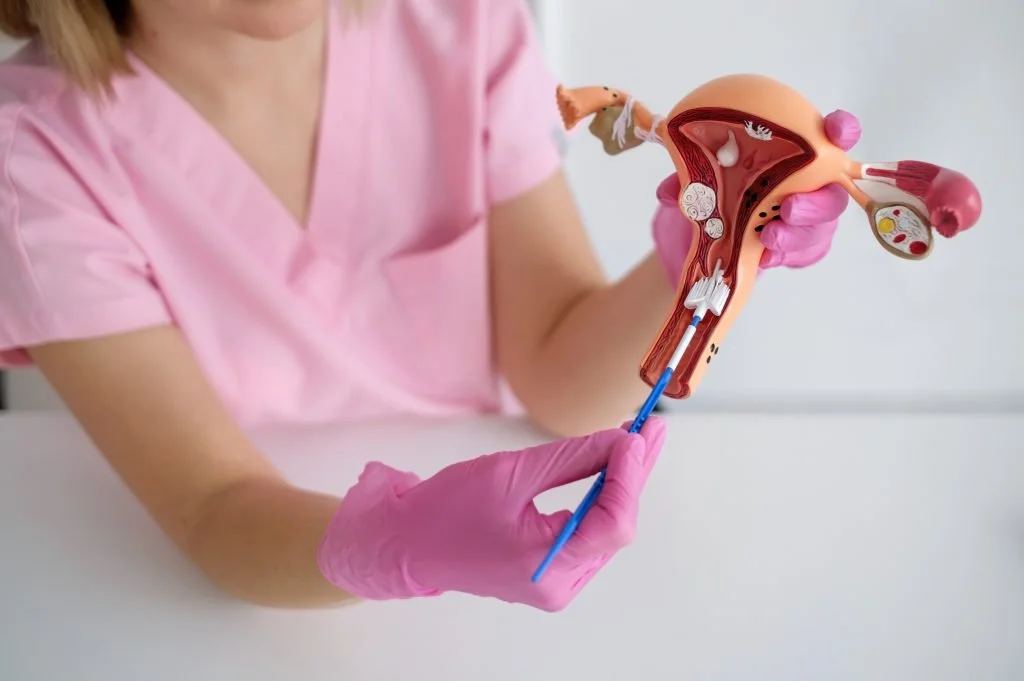
Cervical dysplasia progresses along a predictable ladder. CIN 1 is usually linked to low-risk HPV and often regresses on its own. CIN 2 represents deeper epithelial change and carries a higher chance of evolving into cancer; older patients or those finished with childbearing are commonly offered excisional therapy. CIN 3 involves almost the full thickness of the cervical lining and is perilously close to invasive cancer, making prompt, margin-negative excision essential. When a conization shows CIN 3 at the cut edge, guidelines advise re-excision or at least repeat Pap, HPV testing and colposcopy within three months—not six.
The Missed Window
The clock started ticking in November 2023, the moment the pathologist’s report landed: CIN 3 right up to the edge of the cone biopsy. That finding meant abnormal cells almost certainly lingered inside the cervix, and guidelines call for a second look—Pap, HPV test, and colposcopy—within three months, not six. Had those steps been taken, another conization or a deeper excision could have cleared the danger while it was still confined to the surface.
Instead, half a year slipped by. During that lull the lesion quietly broke through the epithelium, invaded three millimetres into the stroma, and crept toward the parametrium. By the time the patient returned in April 2024, the smear again showed high-grade change, yet no action followed. Four more months passed; the next Pap finally revealed invasive carcinoma, and the race was lost. In October she faced a 3.3-centimetre tumour, FIGO stage IIB, and the harsh regimen of chemoradiation.
Her story proves that screening works only when someone acts on the red flags. Pap smears are powerful, but their power depends on a clinician who refuses to postpone follow-up and on a patient who knows enough to ask, “Why are we waiting?” Cervical cancer usually moves slowly; with prompt management, nearly a year of unchecked growth could have been avoided. Vigilance is a shared duty: physicians must push for timely reassessment when margins are positive, and patients must feel entitled to question any delay that drifts from established standards. Had those two forces aligned, the malignant cells might never have found the time they needed to break free.