
Remarkable Recovery: Lutetium-177-PSMA Therapy Helps 85-Year-Old Prostate Cancer Patient Thrive
As Taiwan's population ages, the incidence of prostate cancer is rising. According to the latest cancer registry report from the Ministry of Health and Welfare, prostate cancer ranks as the fifth most common cancer among men. Early-stage prostate cancer symptoms are often unclear and similar to those of benign prostatic hyperplasia, leading many patients to be diagnosed at an advanced stage.
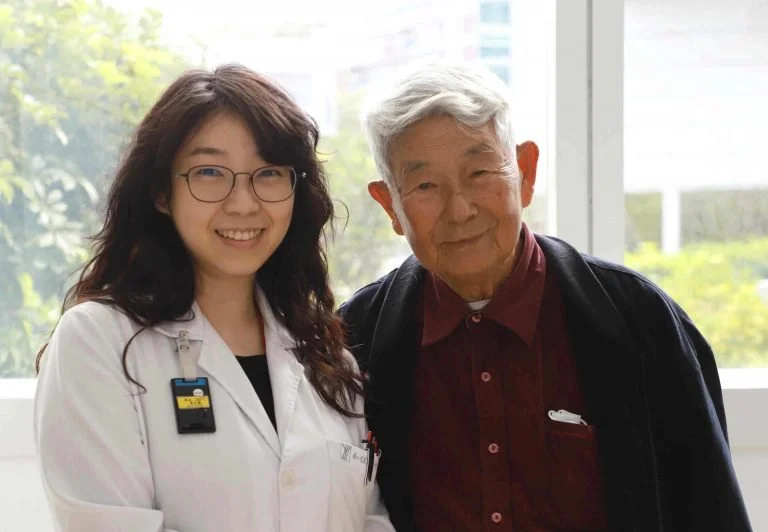
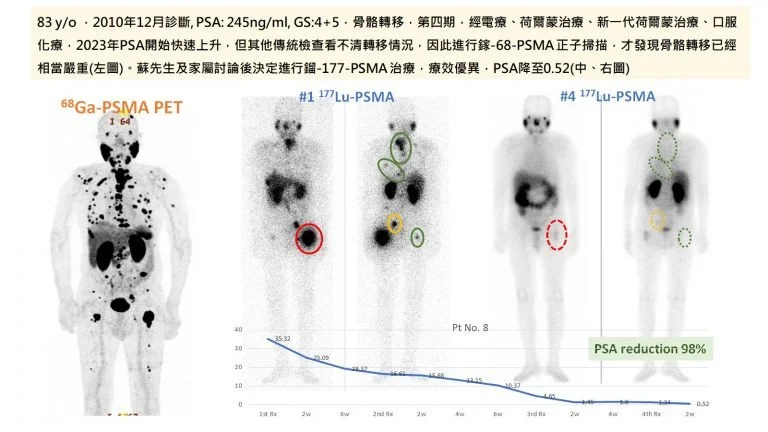
Mr. Su, 85, experienced frequent urination and difficulty urinating, visiting several hospitals before being diagnosed with Stage IV prostate cancer in 2011. His PSA (Prostate-Specific Antigen) level was as high as 245 ng/ml, with bone metastasis. His doctor at the time determined that surgery was not an option, and his life expectancy was less than two years. After undergoing a series of radiation, hormone, and oral chemotherapy treatments, Mr. Su's condition remained stable for 12 years. However, last year (2023), his PSA level rapidly increased to 73 ng/ml. Dr. Yu-Yi Huang of the Nuclear Medicine Department at Koo Foundation Sun Yat-Sen Cancer Center took over his treatment. Dr. Huang explained, "Traditional scans couldn't clearly show the metastasis, so we used a Gallium-68-PSMA PET scan, which finally revealed the extent and location of the bone metastasis. After discussing with Mr. Su and his family, we decided on Lutetium-177-PSMA therapy. Given Mr. Su's advanced age, we carefully adjusted the treatment dosage and follow-up plans according to his physical condition. After four treatments, his PSA level dropped to less than 1 ng/ml, demonstrating the excellent efficacy of Lutetium-177-PSMA for advanced prostate cancer, allowing Mr. Su to maintain a very good quality of life."
Dr. Huang added, "Currently, Lutetium-177-PSMA therapy is indicated for metastatic prostate cancer patients who have not responded to hormone therapy and taxane chemotherapy. However, many patients cannot undergo chemotherapy due to liver, kidney, or other health issues, and in such cases, Lutetium-177-PSMA therapy can be considered earlier."
Mr. Su shared, "I receive Lutetium-177-PSMA therapy every six weeks and have been undergoing it for six months now without experiencing any side effects. I continue to work daily, inspecting my fish ponds in the morning and afternoon. Since my cancer diagnosis, I've changed my diet and now eat a large plate of raw vegetable salad every morning, a habit I've maintained for many years. Although I am a Stage IV cancer patient, I've taken good care of myself!"
Dr. Huang expressed, "We are very pleased with Mr. Su's excellent treatment outcome and are grateful for his courage and optimism. In treating advanced cancer, patients and medical teams always support and encourage each other as great partners."
Dr. Huang concluded, "Lutetium-177-PSMA therapy is currently a later-line treatment for metastatic prostate cancer, primarily aimed at extending patient survival. Recently, clinical trials have begun investigating the use of Lutetium-177-PSMA therapy at earlier stages of diagnosis to see if it can improve cure rates. We hope that ongoing research on Lutetium-177-PSMA therapy will benefit more prostate cancer patients, helping them enjoy better quality of life and extended longevity during treatment."