
Lu-177-PSMA Treatment: A Few Things You Might Want to Know
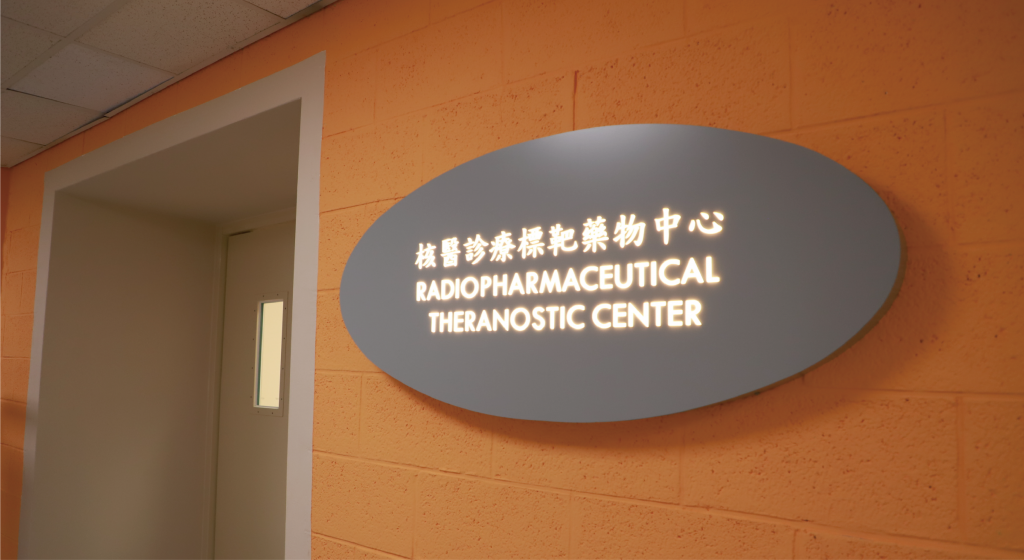
Since August 2022, KFSYSCC has embarked on Taiwan's first Lu-177 (Lutetium-177) PSMA treatments. To date, ten patients have been treated, adding to the eight referred for treatment in Singapore since the end of 2018. This has given us considerable hands-on experience with Lu-177-PSMA therapy. Unlike the simplified conclusions of research reports, each patient presents a unique case in the real world, necessitating personalized treatment plans based on their specific condition.
The Lu-177-PSMA treatment merges the concept of targeted drugs with the principles of radioactive treatment. The manifestation of therapeutic effects and the monitoring of side effects differ significantly from past treatments, requiring the integration of nuclear medicine, oncology, urology, among other specialties. It's a treatment that truly relies on team support. Our institution also treats patients with complex conditions, such as the elderly and those on dialysis, where the intricacy of treatment and care is indeed very high, demanding vigilant monitoring and adjustment.
Here, I share some of the most common questions from patients and their families in my special Lu-177-PSMA clinic:
When should one consider Lu-177-PSMA therapy?
From the perspective of evidence-based medicine, the current indications for Lu-177-PSMA therapy are for metastatic prostate cancer that has become resistant to anti-hormone treatment and chemotherapy with drugs like Taxol. However, in reality, many patients cannot undergo chemotherapy due to liver, kidney function, or other physical factors, and it is in such cases that Lu-177-PSMA therapy can be considered earlier. Some patients may wish to receive Lu-177-PSMA therapy at an earlier stage of disease recurrence, such as when there are fewer than five bone metastases that still have the chance to be controlled with external beam radiotherapy. Lu-177-PSMA therapy under such circumstances is not unfeasible, it's just that we currently lack evidence to tell us whether it can provide better results. If a patient wishes to start Lu-177-PSMA therapy early under these conditions, I would recommend using quantitative data from Ga-68-PSMA PET imaging to assess the possible therapeutic doses and evaluate whether it can surpass the effects of traditional local external beam radiotherapy.
Furthermore, when bone metastases are particularly severe, the consequent decline in blood cells post-treatment can be significant, affecting the treatment schedule and posing a serious risk of life-threatening complications. Also, with liver metastases, one must be cautious about the speed of liver disease progression. Lu-177-PSMA therapy usually takes about 6 to 8 weeks to take effect, so in cases where the disease progresses too rapidly, it might be too late to control. Based on these experiences, I also recommend not waiting too long to start preparing for Lu-177-PSMA therapy.
Can we predict the effectiveness of the treatment in advance?
Before Lu-177-PSMA treatment, a PSMA PET scan is required to evaluate suitability, which is a significant reason why the chances of effective treatment with Lu-177-PSMA can exceed 50-70%. Currently, in Taiwan, there are two types of agents available for PSMA PET scans: Ga-68-PSMA and F-18-PSMA. Even when PSMA PET scans suggest suitability, a minority of patients may experience less effective results than expected. If one wishes to have an expectation of the treatment outcome beforehand, studies have found that quantitative data from Ga-68-PSMA PET scans can assist in evaluating the likelihood of achieving good therapeutic effects (for example, a PSA reduction of more than half). This is because the distribution characteristics of Ga-68-PSMA are the closest to Lu-177-PSMA; the more Ga-68-PSMA is absorbed, the more Lu-177-PSMA is likely to be absorbed. Additionally, research indicates that combining this with the previously most commonly used glucose-based (FDG) PET scans can also assist in evaluating treatment effectiveness, where FDG PET lesions can serve as a counter-indicator of therapeutic outcomes.
How many treatments are required, and is hospitalization necessary?
The recommended standard course of treatment for Lu-177-PSMA therapy, as suggested in the medication guide, is 4 to 6 sessions, administered every six weeks. Since Lu-177 PSMA is a radioactive isotope preparation, according to Taiwanese regulations, treatments involving doses greater than 30 millicuries must be conducted in a specialized nuclear medicine isotope therapy ward (or treatment room). However, it is generally completed on the same day, with no overnight stay required.
Is it necessary to complete 4 to 6 sessions for it to be effective? Not necessarily. A minority of patients respond exceptionally well after treatment and may consider concluding the treatment phase after 2 to 3 sessions. We indeed have had a patient achieve such remarkable results; after just one treatment, their PSA levels fell below 1 ng/ml, and imaging showed complete remission. After the second dose, they were able to rest and follow up.
Can one be completely cured after the treatment?
Currently, the role of Lu-177-PSMA treatment is still in the later stages for metastatic prostate cancer, where the goal is to extend survival, not to cure.
New clinical trials are investigating whether the use of Lu-177-PSMA treatment in the early stages of diagnosis could increase the cure rate. We are awaiting the results of this research!
Is it effective for pain relief? Is the treatment process very tough?
Based on the experiences of a small number of patients currently, the pain relief effect of Lu-177-PSMA therapy appears to be quite good and acts swiftly, with the analgesic effect being sustainable.
The most common side effects of Lu-177-PSMA treatment are mild fatigue, dry mouth, dry eyes, nausea, or loss of appetite, followed by a decrease in blood cells. These side effects almost always resolve on their own after rest and do not pose a significant health threat or impact on quality of life. Patients find the side effects to be very mild, making it an exceptionally easy treatment. However, attention must be paid to complications arising from the side effect of decreased blood cells, which requires the vigilance of the physician and cooperation of the patient and their family.
Is it possible for the treatment to be ineffective?
According to research findings, indeed, about thirty percent of patients may experience no effect from the treatment.
Observations of our current patients undergoing treatment indicate symptom relief or a decrease in PSA levels during treatment, but a longer observation period is necessary to determine how good the ultimate outcome can be and how long the therapeutic effect can last.
Are there any newer treatment methods?
Many people may have heard about "α (alpha)" PSMA treatment. The currently used Lu-177 belongs to "β (beta)" particles, whereas α particles have at least 20 times more destructive power than β particles. Studies have found that when Lu-177-PSMA treatment is ineffective, linking PSMA with α particles, such as Actinium-225 (Ac-225), allows about two-thirds of patients to still achieve very good therapeutic effects. Currently, Ac-225-PSMA treatment is also undergoing large-scale clinical trials, and we are looking forward to seeing the results in the near future.
Article by Dr. Yu-Yi Huang from the Department of Nuclear Medicine.