
What You Should Know About the Latest Advances in Lu-177-PSMA Therapy
Written by Dr. Yu-Yi Huang, Director, Department of Nuclear Medicine, Koo Foundation Sun Yat-Sen Cancer Center (KFSYSCC)
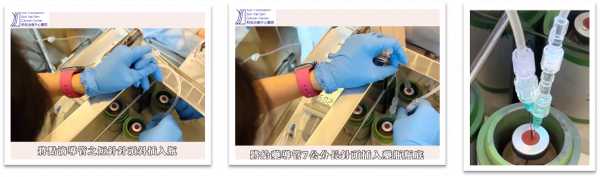
KFSYSCC performed Taiwan’s first Lutetium-177 PSMA (Lu-177-PSMA) treatment in August 2022, and the program is now approaching its third anniversary. Long before that milestone, in 2019, the center had already begun arranging referrals to Singapore, becoming the earliest institution in Taiwan to focus on. and ultimately master, this pivotal therapy for prostate cancer. Today, the hospital holds the nation’s most extensive clinical experience with Lu-177-PSMA.
Lu-177-PSMA merges the precision of targeted drugs with the power of radionuclide therapy. Its benefits and side-effect profile differ markedly from conventional treatments, demanding seamless collaboration across nuclear medicine, medical oncology, urology, and other specialties. Over the years, the team has treated many severe and complex cases, even setting a global precedent by successfully treating patients on dialysis, while building a trove of valuable clinical evidence.
During the first year, most patients presented with extremely advanced disease, making every treatment session a high-stakes exercise in vigilance, exact monitoring, and rapid strategy adjustments. By the second and third years, the team could pinpoint the optimal treatment window with confidence and refine approaches to side-effect prevention. A commonly cited concern, salivary-gland damage leading to dry mouth, has not surfaced in any patient treated at KFSYSCC, thanks to meticulous preventive protocols and attention to clinical detail.
Bone-marrow suppression is another potential adverse effect. Leveraging in-house data analysis and artificial-intelligence tools, the center identified key predictors for this complication and tailored therapies accordingly; today, clinically significant marrow toxicity is exceedingly rare. Continuous assessment of therapeutic response remains vital, especially because Lu-177-PSMA is not yet covered by Taiwan’s National Health Insurance and thus represents a significant financial commitment. Decoding lab markers, deciding when to adjust regimens or add combination therapies, and determining whether to halt or continue treatment are all crucial decisions. KFSYSCC’s depth of experience enables informed guidance before and during every therapy cycle.
The field itself is moving quickly. First, the Lu-177-PSMA drug—marketed locally as “鎦必妥”, has secured official approval in Taiwan, allowing physicians nationwide to offer the treatment. Second, large-scale studies have shown that Lu-177-PSMA-617 benefits patients who have not yet undergone chemotherapy. The global randomized PSMAfore trial enrolled men with metastatic castration-resistant prostate cancer (mCRPC) who had failed a first androgen-receptor pathway inhibitor (ARPI such as enzalutamide or abiraterone). Interim results released in 2023 revealed that compared with switching to another ARPI, Lu-177-PSMA-617 nearly halved the risk of radiographic progression or death (hazard ratio 0.49).
Further, a company update this March reported a statistically significant overall-survival advantage (hazard ratio 0.51), translating into a 49 percent reduction in mortality for the same patient group. As a result, the U.S. FDA has authorized Lu-177-PSMA-617 for use before chemotherapy, broadening its clinical reach.
A third, soon-to-be-announced development involves first-line treatment for patients who present with metastatic, castration-sensitive prostate cancer. Details remain under wraps, so stay tuned for the next report.
Lastly, understanding the injection procedure itself forms an important part of the patient journey and will be covered in detail in future updates.