Coming Home to Give Back
35th-Anniversary Spotlight | Guang-Yu Chan, MD
Chief, Department of Diagnostic Radiology
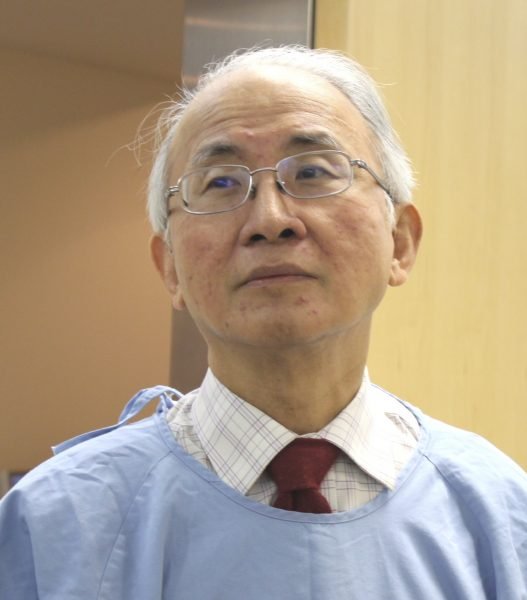
I left Taipei in the mid-1980s for one reason: MRI hardly existed here and I refused to practice yesterday’s medicine. Because I already spoke French, I chose France, spending five intense years soaking up physics lectures in morning cafés, shadowing radiologists in dim control rooms, and watching the first generation of whole-body magnets reveal anatomy no CT scanner could show. By March 31, 1989, I had learned what I came for and felt a tug I could not ignore: take it home. Taiwan had educated me; it was time to return the favor.
A Sunlit Meeting That Changed Everything
Back in Taipei, Veterans General Hospital offered me the new post of MRI section chief. I toured the department, thanked them—and sensed the rigid public system would clip my wings. While I hesitated, my phone rang. Professor Andrew T. Huang introduced himself: Taiwan was about to build its first hospital dedicated entirely to cancer care, and he wanted my help.
We met at National Taiwan University Hospital. Afternoon light poured through the high windows, and in that golden rectangle he laid out a vision of medicine I had never heard in Mandarin: patient-centered, human-first, quality before volume. He spoke five minutes; I asked no questions about salary or title. “That,” I thought, “is where I belong.”
Three Borrowed Desks and a Dream
There was no hospital—only a draft of floor plans and three loaner desks in a downtown office building. I sat in the middle; the future administrative director faced me; the incoming chief of nursing sat behind. From that little triangle we chose an empty plot in Taipei’s Nangang District, argued over corridor widths, and decided how many power outlets a CT room really needs. Most evenings I drove to the site, hardhat on, to make sure the shielding around the future scanners matched our drawings.
When Koo Foundation Sun Yat-Sen Cancer Center (KFSYSCC) opened its doors we had eight beds—total. Seven years later we still had barely thirty. Other hospitals debuted with hundreds and filled them by Christmas, but Dr. Huang’s rule was ironclad: “Admit only the number of patients we can treat well.” I had never seen a Taiwanese institution refuse growth on principle; it convinced me I had chosen well.
Taiwan’s First Leading-Edge MRI—and Everyone Could Use It
Our MRI scanner was the most advanced on the island—one of only two nationwide—yet we never kept it for ourselves. Referring hospitals sent patients; we scanned them, wrote reports, and sent both patient and images back. The machine belonged to Taiwan, not to KFSYSCC.
Teamwork in Nineteen Seconds
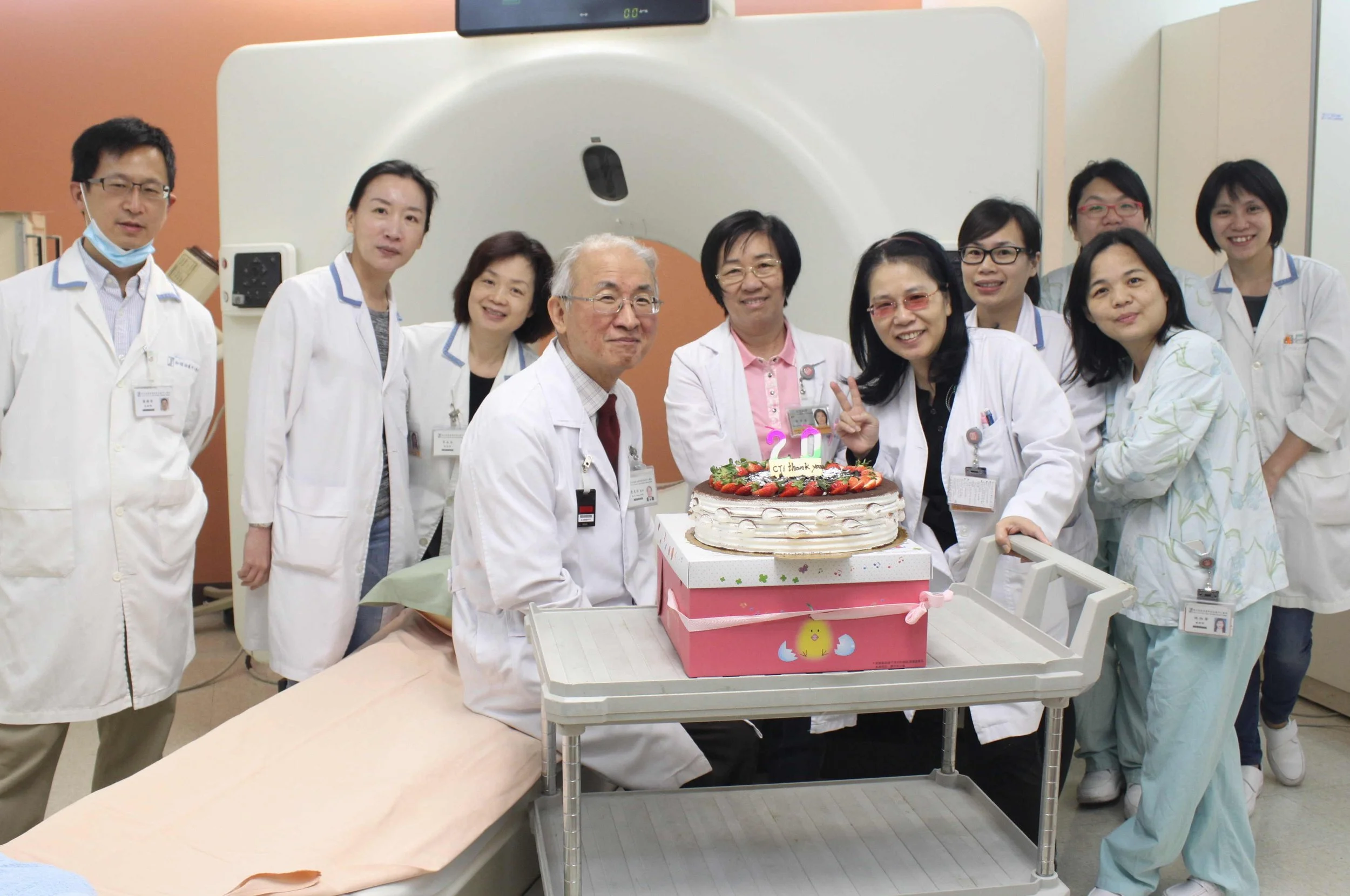
One night a man arrived agitated and half-conscious; we needed a head scan immediately to decide between surgery and medicine. I called an impromptu huddle. Technologists pre-loaded the sequence, nurses stabilized the IV, anesthesia stood by. From the moment the sliding table clicked into place until I spotted a basal-ganglia hemorrhage on the console, exactly nineteen seconds ticked by. It wasn’t my brilliance—it was a symphony of colleagues who knew each other’s rhythms.
The Value of Listening
After another scan a mother’s three daughters handed me a note: “Our whole family agrees—you’re the doctor who really listens.” Their mother regretted delaying imaging and losing three golden months. That line stung and inspired me. Any physician can talk; few master the art of listening to patients, to nurses, to their own doubts. I pinned the card above my desk as a daily reminder.
Building a Culture, Not Just a Department
Our department has no resident physicians, so I mentor technologists, nurses, and clerks as if they were residents. We review films together, dissect mistakes, invent better protocols. Every Friday we shut down the magnets, wipe control panels, mop floors, scrub contrast drips from the linoleum. The machines look as spotless as the day they rolled off the truck because everyone feels they own a piece of them.
A Word to Today’s Staff
I know the work can feel invisible, but without your images surgeons fly blind and oncologists shoot in the dark. Do the job right, again and again, and the value of your effort will shine through.

My Fourth Medical School
Medical school, residency, fellowship in France—those were my first three schools. KFSYSCC is the fourth. Daily morning meetings and cross-disciplinary debates are continuing education for all of us. I tell trainees the same thing I tell myself: “Hear the patient, observe carefully—that is your best diagnostic tool.”
The Essence of Medicine
If I could leave junior colleagues one sentence, it would be: “Listen—really listen—to the patient, the team, and your own conscience.” Knowledge matters, but sincerity matters more. Hold fast to that, and KFSYSCC will remain the refuge it was meant to be.