
Two Years with Lu-177-PSMA Therapy: Easy on Paper, Demanding Behind the Scenes

In August 2022 Koo Foundation Sun Yat-Sen Cancer Center (KFSYSCC) launched Taiwan’s first treatment course with lutetium-177–labeled PSMA, marrying a small-molecule “guided missile” with therapeutic radiation. Two years on, the program has grown from a single‐patient milestone to a precision-medicine service that relies on seamless teamwork among nuclear medicine, medical oncology, and urology.
From ‘Last-Chance’ Rescue to Timely Intervention
The earliest candidates were men in dire straits—frail, dialysis-dependent, or burdened by bulky metastatic disease. Careful monitoring gradually proved the therapy could be offered sooner, to patients whose disease was serious but not yet overwhelming. Rapid recognition and management of side-effects have boosted both confidence and outcomes.
A Hidden Price: Bone-Marrow Toxicity
Even a “smart” radiopharmaceutical carries risk. Global phase-3 data from the VISION trial secured the first PSMA approval for Lu-177-PSMA-617, yet only 20 of the 831 participants (2.4 %) were Asian, leaving marrow-toxicity patterns in that population largely uncharted. Early at KFSYSCC, several men with extensive tumor burden responded dramatically—but also suffered significant hematologic toxicity that delayed later treatment cycles and invited complications.
Turning to Artificial Intelligence for Answers
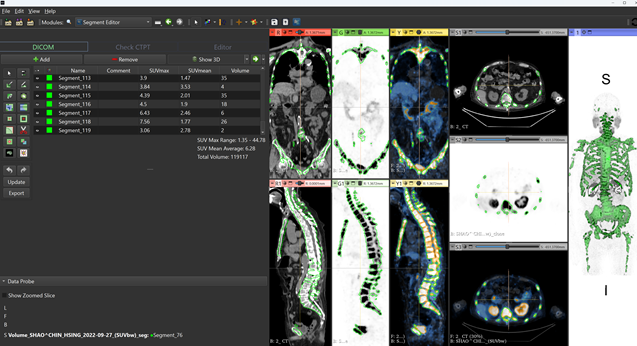
Analyzing those cases with ASUS engineers, the KFSYSCC team trained an AI engine to auto-detect tumor volume on PSMA imaging and flag marrow-risk variables. Doses are now tailored in real time, cutting both the frequency and severity of cytopenias. The same AI module, built into a 3D-Slicer platform, instantly extracts key imaging parameters to support treatment planning.
Where the Field Is Headed
For now, Lu-177-PSMA is reserved for metastatic prostate-cancer patients whose tumors have escaped hormone therapy and chemotherapy. Upcoming clinical trials aim to push the drug earlier in the disease course, especially for men who cannot tolerate chemotherapy, and even to test it in the diagnostic window when cure may still be possible.
Mr. Su’s Story—Living Proof at 85
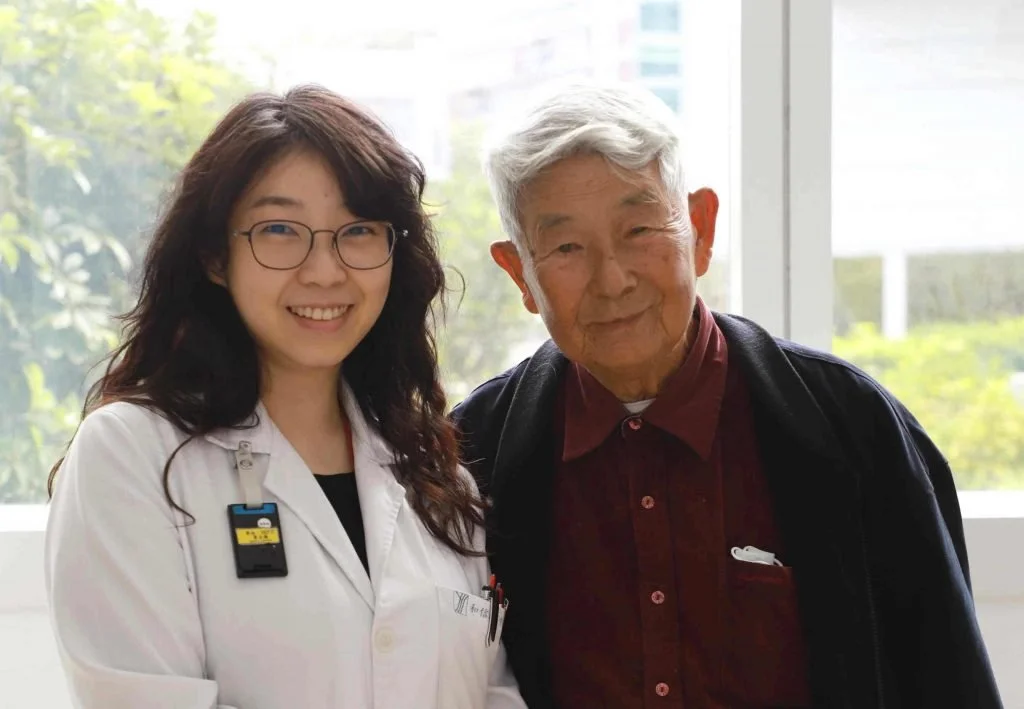
Diagnosed in 2011 with stage-IV prostate cancer, Mr. Su came to KFSYSCC after hormones and chemotherapy failed to subdue a PSA that once hit 245 ng/mL and widespread bone metastases. Four cycles of Lu-177-PSMA dropped his PSA to < 1 ng/mL. He reports no notable side-effects and still inspects his fishponds daily—proof that targeted radiotherapy can control cancer without stealing quality of life.
“I hardly felt a thing,” he says. “The treatment finished, and I went right back to my rounds.”
A Bright Horizon for Precision Nuclear Medicine
By fusing nuclear technology with multi-disciplinary care, KFSYSCC has delivered safer, more effective options to men with late-stage prostate cancer—and pointed the way to broader applications across oncology. Ongoing research promises to refine dosing, identify new targets, and extend the benefits of Lu-177–based therapy to other tumor types. For patients who once had no good choices, that progress is nothing short of a dawn.
Further Reading
3D Slicer platform: https://www.slicer.org/
Fedorov A. et al. Magnetic Resonance Imaging 2012; 30:1323-1341. doi:10.1016/j.mri.2012.05.001